December 22nd, 2016
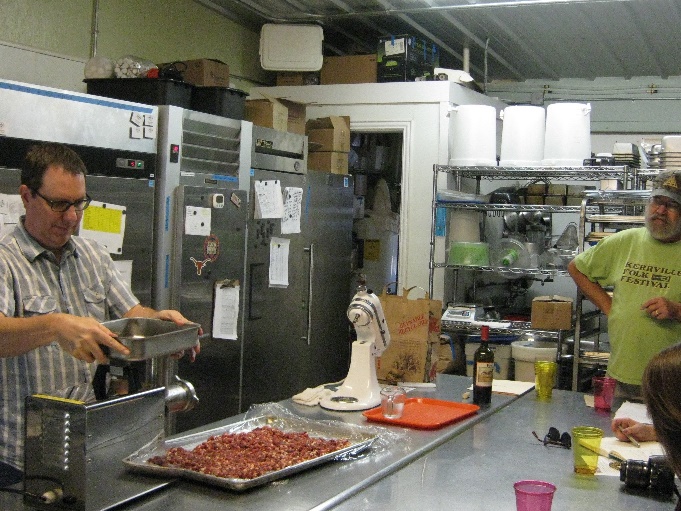
Making sausage in the Feral Austin Commercial Kitchen.
This is Passport to Texas
Chris Houston of Austin is a hunter and home cook; he butchers and processes what he harvests; but that’s not always been practical.
We have a decent sized [kitchen] counter space, but certainly a limited area and limited equipment.
Hunters, says Houston, go to processors because of limited workspace, equipment, and a lack experience. He adds processors are decent folks who provide a good service – but he still wonders what comes back to him.
Am I getting back my animal in the sausage? Am I getting all the meat that I had taken in there?
Houston taught himself to butcher and process, and excels at it now. To empower others to do the same, he offers a fully equipped commercial kitchen and his knowledge as Feral Kitchen, a wild food workspace.
Butchering and sausage-making tends to feel complicated. However, it can be really simplified. And so, we really want to pass on that education and that confidence to others. We’ve been offering some classes on general game butchering, and some other classes on sausage-making to kind of help people take that step in the learning curve to doing it themselves. And, really, to just try and simplify the entire process.
Learn more about butchering and processing wild game on the Texas Parks and Wildlife website.
That’s our show… For Texas Parks and Wildlife…I’m Cecilia Nasti.
Posted in Food, Hunting, Venison | Comments Off on Processing What You Hunt
December 21st, 2016
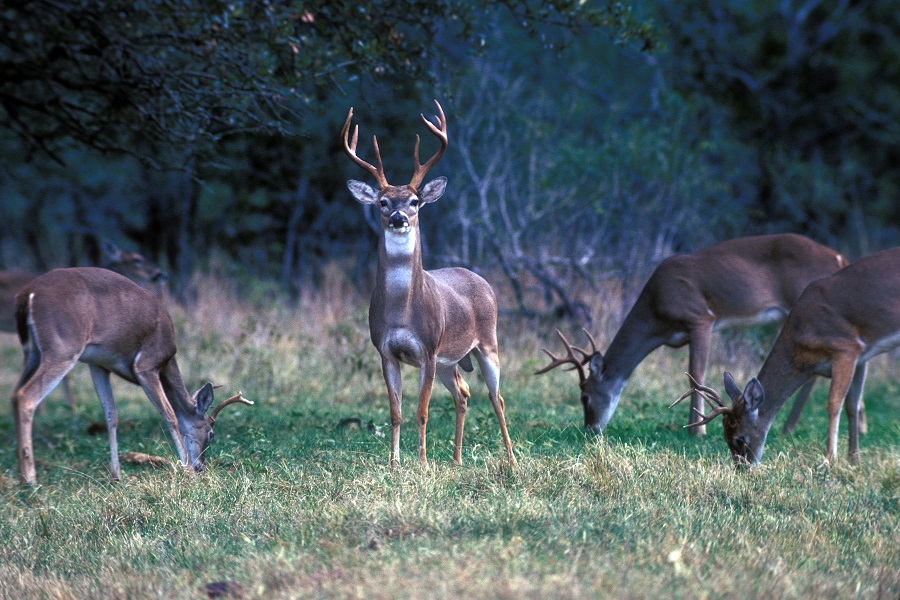
Hunting big bucks (and other game) means big bucks for Texas.
This is Passport to Texas
If you haven’t been deer hunting yet, according to wildlife biologist Alan Cain, you have a good season ahead of you.
Hunters can expect a great season this year. The deer population—we estimate—around four-million white-tailed deer.
Cain is white-tail program leader for Texas Parks and Wildlife. Because of well-timed rainfall this year, habitat in Central and South Texas is in great shape, and sets the stage for prime white-tail hunting. Out west, that region’s habitat and wildlife benefited from rainfall as well.
Hunters that are out in West Texas pursuing mule deer and pronghorn will have an excellent year.
And who else will have an excellent year? The small towns whose economies depend on hunting and hunters.
Deer hunting in Texas is a thriving industry, and it brings in about two billion dollars to the state’s economy. And it really helps the rural towns out there where deer hunting is a big part of their everyday life.
Download the Texas Outdoor Annual APP onto your smart phone. Before going on your hunt. It will help you find hunting season dates and bag limits for your county and a whole lot more. Find it on the Texas Parks and Wildlife website.
The Wildlife restoration program supports our series.
For Texas Parks and Wildlife…I’m Cecilia Nasti.
Posted in Hunting | Comments Off on Economics of Hunting
December 20th, 2016
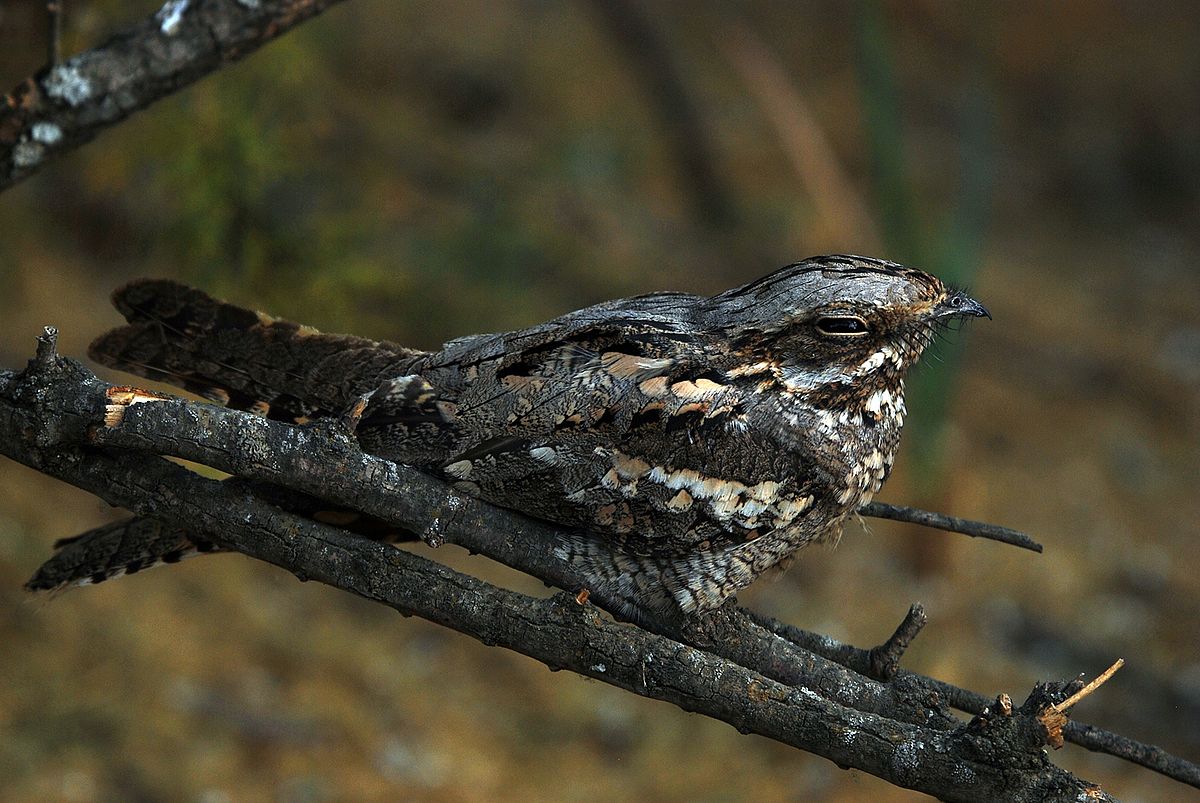
Image of Nightjar by Dûrzan Cîrano, Creative Commons
This is Passport to Texas
Just as purple martins and barn swallows keep insects in check during the day, birds known as nightjars eat bugs that take flight at night.
The graveyard shift is when these birds are active. They sleep all day, and they have super big eyes for night vision. And they’re looking for nocturnal insects—mainly moths.
Texas Parks and Wildlife ornithologist, Cliff Shackelford says it’s not uncommon to confuse the calls of two of these nighttime nibblers: the whip-poor-will and the Chuck Will’s Widow.
The essayists and naturalists of 100 years ago—they would always talk about the whip-poor-will, because they were up in the Northeast US where the whip-poor-will is common. But here in the south and Texas, the dominant bird we have singing is the Chuck Wills Widow. So, if you hear a night bird singing on your property in the warmer months—that’s going to be a Chuck Will’s Widow.
That’s not to say the whip-poor-will doesn’t make an appearance in parts of Texas.
Whip-poor-wills do migrate through the eastern third of Texas—the Eastern Whip-poor-will. And that’s going to be a march-April thing. And they sing very briefly as they head north.
So as you dream of spring and summer, make room in your thoughts for nightjars and their melodious music.
The Wildlife Restoration program supports our show.
For Texas Parks and Wildlife…I’m Cecilia Nasti.
Posted in Birding | Comments Off on When a Bird is a Nightjar
December 19th, 2016
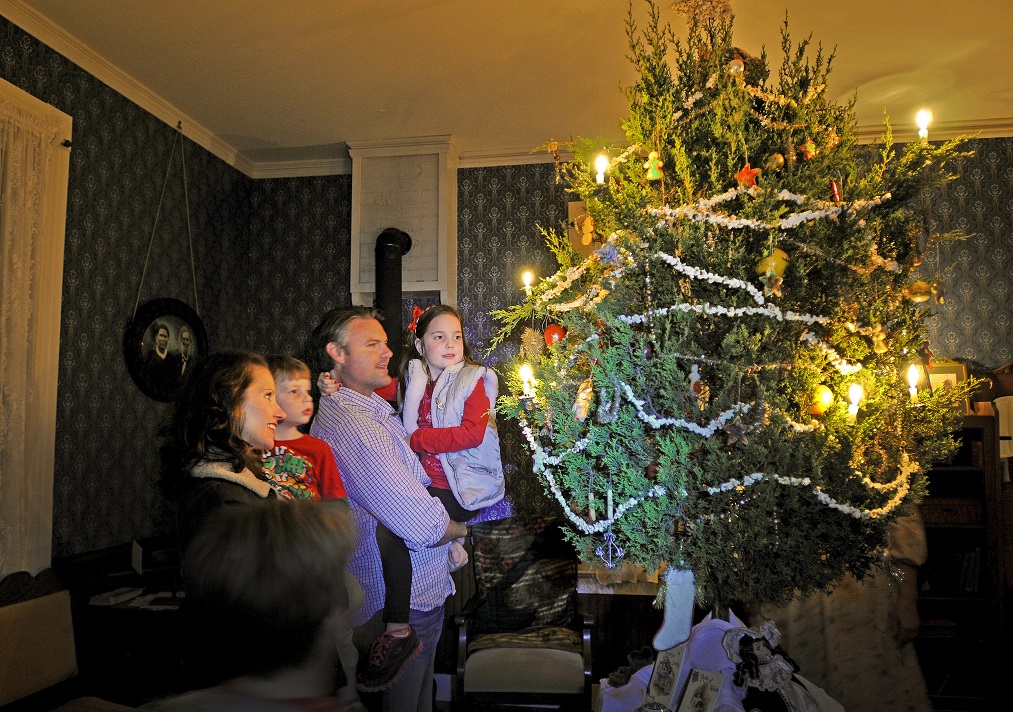
Family enjoying holiday cheer at LBJ State park and Historic Site. Photo: Bryan Frazier.
This is Passport to Texas
The custom of decorating trees for Christmas took root in German villages during the sixteenth century.
A lot of Germans, as you know, settled Texas. And they brought a tradition with them of the tabletop Christmas tree.
Cynthia Brandimarte is program director for Texas historic sites.
When you look at interior photographs of Texas houses, you see many tabletop Christmas trees ornamented for the season, particularly in German households in the late nineteenth century Texas.
Ornaments were handmade then, and small gifts often dangled from branches. Eventually, the tabletop conifer gave way to larger trees that became “floor models,” and the decorations sometimes mirrored the day’s events.
You saw more and more seven or eight feet trees that were placed on the floor. And because we had just ended the Spanish American war in victory, there was a fashion in the early part of the twentieth century to decorate trees with a few American flags here and there. We have photographic evidence for that.
If you celebrate Christmas, we wish you a joyous holiday. And if you do not, then it’s the perfect opportunity to spend time in nature, because Life’s Better Outside.
That’s our show for today… Funding provided in part by Ram Trucks. Guts. Glory. Ram.
For Texas Parks and Wildlife…I’m Cecilia Nasti.
Posted in Christmas | Comments Off on History of the Christmas Tree in Texas
December 16th, 2016
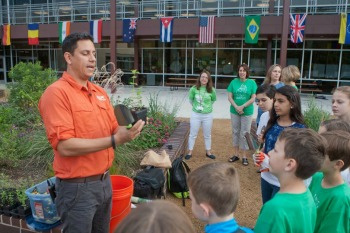
Teaching about prairies. Image: Texas Children in Nature.
This is Passport to Texas
Less than 1% of the original 20 million acres of Texas’ tallgrass prairie remains. But restoration efforts are ongoing, and even small pockets of prairie have value.
Our vision for this prairie is that eventually we get back to what it was 250 years ago which would have been six to nine foot tall grasses mixed with forbes and other wildflowers.
Carolyn Klein teaches science at Westside High, in Houston, along with her colleague Lawrence Spence. The land that sustains this pocket prairie was originally destined to be a school parking lot.
Having a prairie here on campus enables us to bring students out during the school day. We don’t have to rent a bus. We just walk them outside and we have access to wild spaces.
In a segment airing this month on the Texas Parks and Wildlife TV Series, you’ll meet Westside educators, students and the prairie. Counselor, Jaime Gonzales is also on the show.
I’m trying to fix a broken relationship between people and nature. I think we’re working in a hybrid world. Technology’s cool, but Nature—which is very ancient and a part of us—I think needs to be a part of our lives, too, because it keeps us grounded and healthy.
These plant communities sustain pollinators and other wildlife. The pocket prairie segment airs on the Texas Parks and Wildlife TV series on PBS the week of December 18. Check your local listings.
The Wildlife Restoration program supports our show.
For Texas Parks and Wildlife…I’m Cecilia Nasti.
Posted in Conservation, TPWD TV | Comments Off on TPW TV – Pocket Prairies


 Passport to Texas is a
  Passport to Texas is made available by: