According to the World Health Organization: Zika virus is an emerging mosquito-borne virus that was first identified in Uganda in 1947.
It’s one of these tropical diseases that was known in the literature, but there weren’t any outbreaks until more recently.
Mike Quinn is an entomologist in Austin who’s been following reports of the virus and its carrier, often called the yellow fever mosquito.
The consensus is that it’s Aedes aegypti that’s the main culprit. The Aedes aegypti being people specific is an effective vector in that it can bite one person with the disease virus, and then bite another person and transmit that virus.
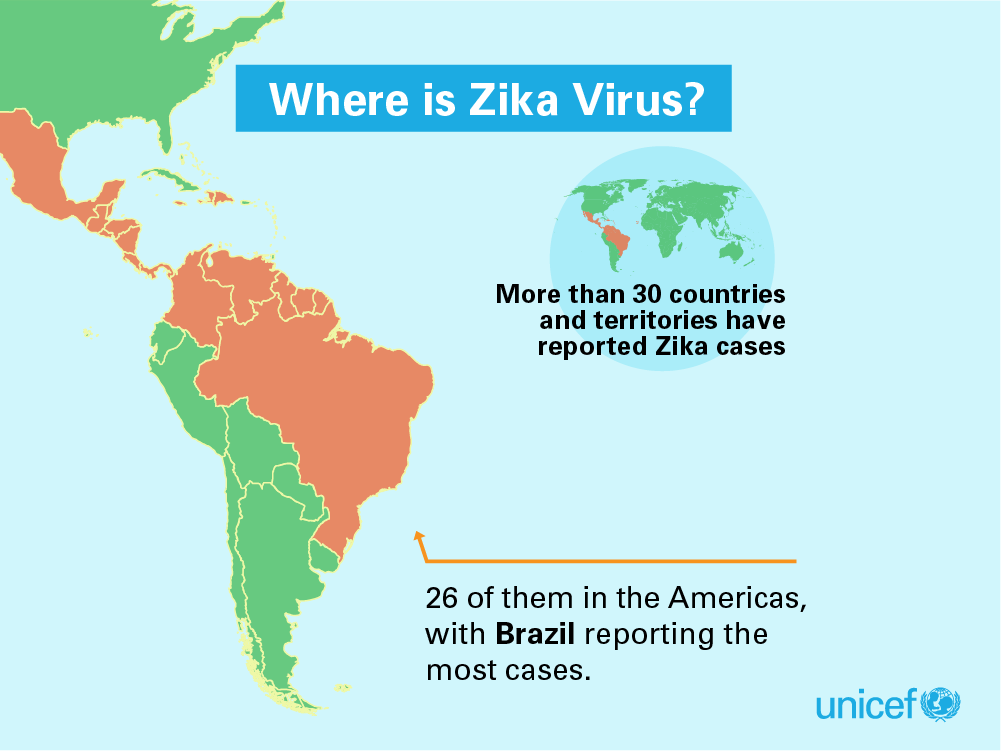
The World Health Organization tells us: Substantial new research has strengthened the association between Zika infection and the occurrence of fetal malformations and neurological disorders. We’ve seen this most markedly in Brazil, with an increase in microcephaly in newborns of infected mothers. Do we need to worry in Texas? Is this mosquito in our midst?
It’s an introduced species. And it is most common around the southeastern gulf coast states, but it’s in the eastern half of Texas.
Direct infection by a mosquito has not occurred in Texas. Reported cases have been in people who traveled to zika hot spots. Tomorrow: what we can do to manage mosquitoes around the home.
For Texas Parks and Wildlife, I’m Cecilia Nasti.
Posted in Education | Comments Off on Should Texas Worry About the Zika Virus?
You don’t have to be a pro to teach angling to others.
I used to be a school teacher, and you just need to know a little bit more than the person you’re instructing. We have people come that have no background knowledge whatsoever in fishing. Picture a scout troop in which none of the leadership has a background in fishing, and yet they want to extend that to their scout troops.
A dedicated volunteer base allows Texas Parks and Wildlife aquatic education training specialist Caleb Harris and his crew to reach a larger audience than they otherwise would.
That’s exactly why we need them. They extend our outreach efforts to hundreds of places a weekend. We’re a staff of four in our outreach office, and so they really multiply our efforts as a department to get the word out.
Harris says becoming a volunteer angler education instructor begins with a weekend workshop.
Our instructor workshops are normally on Saturdays, and they’re held all over the state. They’re listed on our Texas Parks and Wildlife calendar of events, and they’re free for anyone that wants to attend them. And they normally last about six hours, five hours. They’re, I’d say, about half classroom time and half playing the type of games and learning the type of fishing skills that we’d like our instructors to pass on. So, they’re pretty active workshops.
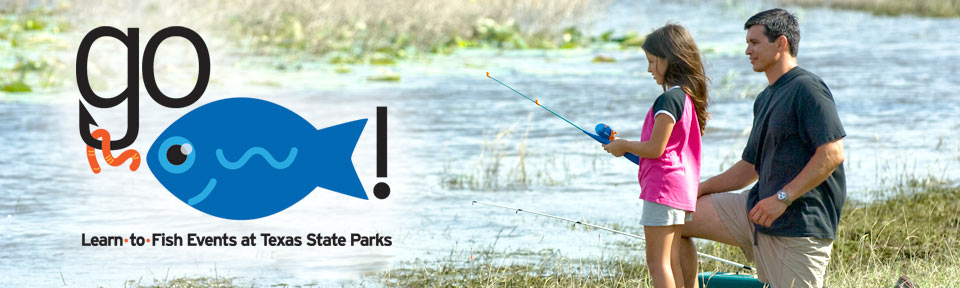
Fishing dates back 40-thousand years. While we started as nomadic hunter-gatherers, archeological analysis indicates most permanent settlements were established near water, where fish became a primary food source. Today, fishing is not so much about survival as it is about connecting with nature and family. But most people are out of touch with the activity. And for them, we have Go Fish! events at State Parks.
At a Go Fish! event, they’re typically going to have a chance—after they’ve gone through learning stations—to borrow some equipment and fish there on the site.
Caleb Harris, Texas Parks and Wildlife’s aquatic education training specialist, says Go Fish! events take place at state parks year-round and are self-paced.
They normally have about five learning stations they learn how to assemble their fishing gear. The next station they may learn how to identify certain fish. So, they’ll go through those learning stations, and when they finish that, they normally have a check-list, and they come back up to the table and get their award for learning how to fish, and then can borrow some fishing poles.
Harris says it takes about 30 to 45 minutes to go through all the stations; those who do get an award and an opportunity to put their new found skills into practice.
We really hope they leave there [the Go Fish! Event] much more comfortable with the sport of fishing, and ready to try it out on their own.
Find Go Fish! events near you in the calendar section of the Texas Parks and Wildlife website…and get ready to get hooked. The Sport Fish Restoration program supports our series.
For Texas Parks and Wildlife, I’m Cecilia Nasti.
Posted in Fishing, howto | Comments Off on Go Fish! Learn to Fish Events Teach New Skills
A generation grew up watching the Texas Parks and Wildlife PBS TV series. Now, a new generation is joining them.
The thing that I consider the most special part about the Texas Parks and Wildlife [TV] show, is that I’ve never seen my daughter’s face light up so much as when she hears that opening song. It doesn’t matter which room in the house my daughter is in, as soon as she hears those opening notes, she comes running in, because she knows the animal show’s on.
Josh Havens, Texas Parks and Wildlife Director of Communications, says 2016 marks the series’ 30th anniversary, and viewers of all ages are invited to commemorate this milestone.
We are holding a contest to commemorate that anniversary; a chance to give our viewers an opportunity to be part of that show that they’ve supported for so long. To enter is simple. In 250 words or less, you pitch us an original story idea for a feature segment. If your idea wins, you get the choice of either being on the show itself, or being on the film crew.
The winner also receives over $2-thousand dollars in prizes.
We’re looking for stories that can take individuals from their everyday indoor life, and introduce them to a world that is outside, and that tells the story of why Texas’ wild places and wild things are so unique.
The night skies sparkle over Texas. In an upcoming segment of the Texas Parks and Wildlife PBS TV show, you’ll meet folks like Bill Wren, who work tirelessly to keep the skies dark.
“Dark sky” just means the lack of any artificial light sources; man-made, human-origin light sources. It’s a relatively recent phenomenon, I mean, astronomers are kind of like the canaries in the coal mine, we’re the first ones to say “hey, wait a second. The skies aren’t as dark here as they used to be.
We waste tens of billions of dollars a year worldwide lighting up the night sky. Davis Mountains SP ranger, Tara Poloskey, calls this misdirection of wattage, light pollution.
And when I talk about the dark skies, I try to help people to understand how easy it is to preserve them. All it is, is a choice you make at Home Depot to buy the light that points down instead of up.
The MacDonald Observatory in Fort Davis depends on dark skies. Larry Francell says the surrounding community is on board, but they can only do so much.
We, as a group, keep our night lights either directed downward or don’t use them. But it’s encroaching from other areas, particularly the oil patch in the Permian Basin. The only way to keep McDonald Observatory working and safe and viable is for dark skies.
Catch the Texas Parks and Wildlife TV segment called The Night’s Watch the week of May 8th on PBS stations statewide. Check your local listings.
For Texas Parks and Wildlife…I’m Cecilia Nasti
Posted in TPWD TV | Comments Off on TPW TV: The Night’s Watch


 Passport to Texas is a
  Passport to Texas is made available by: