Prescription to Burn

February 18th, 2016
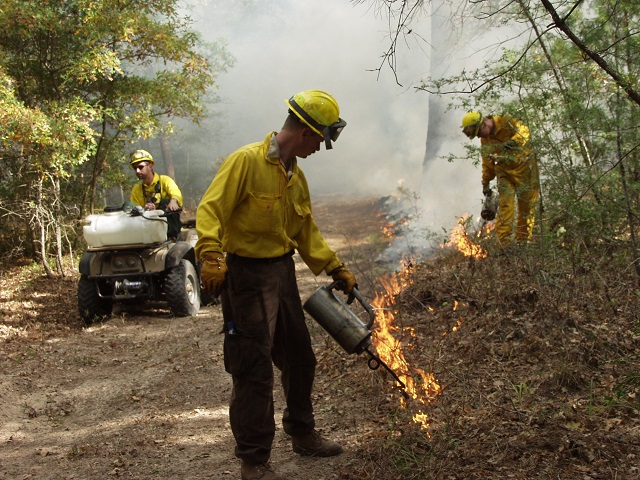
Prescribed burn underway.

Prescribed burn underway.

This is Passport to Texas

Man mimics nature when he uses fire as a land management tool. One way to use fire is through controlled burning; another way is to use prescribed fire.

According to David Riskind, director of natural resources for state parks, there is a difference between the two.

Controlled burning is a term that people use that you start at part A, and you burn until you get to part B. Professional land managers use the term prescribed fire because you have specific objectives, you have specific outcomes, you burn under very specific conditions. And so a prescription is a planning document… you lay everything out ahead of time and you then implement it with very specific objectives in mind.

Riskind adds that those objectives usually have to do with land management.

There can be a whole series of objectives. From very simple things like fuel load reduction. You can have specific habitat objectives…to change the vegetation structure and composition to support waterfowl, or to support antelope, or lesser prairie chickens…or Houston toads for that matter.

Learn more about prescribed burns on the Texas Parks and Wildlife website.

The Wildlife and Sport Fish Restoration Program supports our series and works to increase fishing, hunting, shooting and boating opportunities in Texas.

For Texas Parks and Wildlife…I’m Cecilia Nasti.
Benefits of Winter Beachcombing

February 17th, 2016
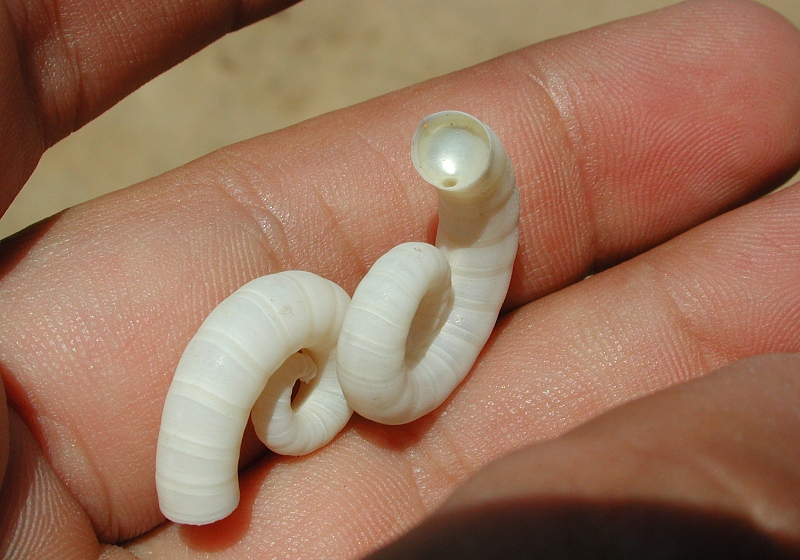
Spirula shells. Photo credit: Fritz Geller-Grimm

Spirula shells. Photo credit: Fritz Geller-Grimm

This is Passport to Texas

Before you sell seashells by the seashore, you first have to find them. Surprisingly, summer beachcombing may not yield the results you desire.

I feel the best time to go shelling is in the wintertime.

Paul Hammerschmidt is a lifelong shell collector and former coastal fisheries biologist with Texas Parks and Wildlife. He says winter storms churn up the Gulf bottom, sending marine critters and their calciferous containments onto the beach. To improve your chances of finding a variety of intact shells, Hammerschmidt says stay clear of crowded beaches.

If you get a chance to go to some more isolated beaches, like down on Padres island, or something like that, where the population of humans is not quite so thick, you’ll have a much better chance of finding some really unusual shells.

Such as a pretty little shell called baby ears—which looks like…well…baby ears. Or, there’s another special shell worth searching for called spirula.

And it’s a coiled, snail-like shell. But it doesn’t belong to a snail—it belongs to a little squid. And it’s inside the squid, and when the squid dies, that little thing has a lot of chambers in it with gas, and it floats and washes up on the beach. Those are very pretty, bright white, and they’re very fragile, so you have to be careful with them.

This time of year, before it warms up, is a terrific time to go beach-combing.

That’s our show for today…remember: Life’s Better Outside.

For Texas Parks and Wildlife…I’m Cecilia Nasti.
Shell Collecting Tips

February 16th, 2016
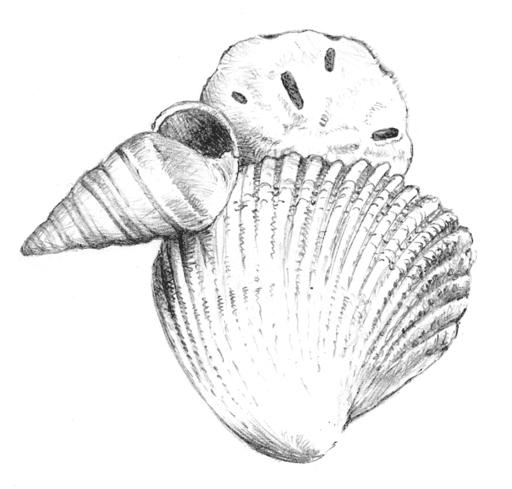
Shells one might find on the Texas coast.

Shells one might find on the Texas coast.

This is Passport to Texas

Nobody thinks twice about collecting shells from the beach. But I started to wonder if it’s really okay since beaches are public land.

It’s okay to collect shells. The ones that are broken and come apart, they create the sand that’s out there, but there is no law against it [collecting].

Paul Hammerschmidt is a lifelong shell collector, and former coastal fisheries biologist with Texas Parks and Wildlife. He says collect responsibly to avoid creating problems for the environment or marine animals.

I highly recommend that you only take shells that are from dead animals—not live animals.

How can you determine if something is still alive? In the case of the popular sand dollar, small spines cover the shells of living animals…so look for smooth, spineless shells. If, like me, you’ve never found a sand dollar on the beach—there’s good reason for it.

I think it’s because everybody wants to get a sand dollar. And, too, they’re another very fragile shell. And when the waves are strong, they’ll get broken up, and you’ll just see fragments of them. A lot of times, the best time to find a sand dollar, is after a storm—and then very early in the morning—before anybody else gets out on the beach.

When and where to go shelling on tomorrow’s show.

For Texas Parks and Wildlife…I’m Cecilia Nasti.
Rock On: Because You Can

February 15th, 2016
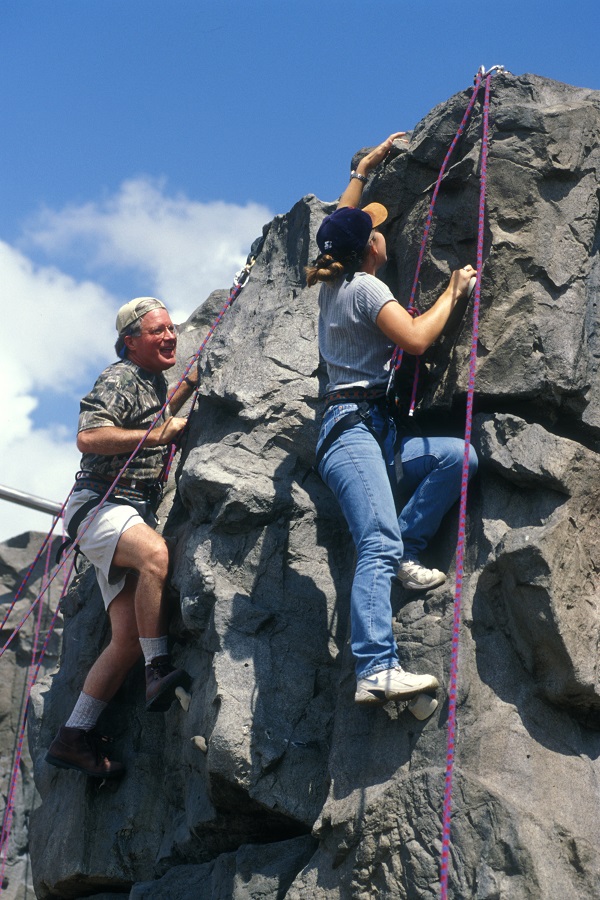
Learning to rock climb.

Learning to rock climb.


This is Passport to Texas

Brad Bell doesn’t think twice when you ask him why anyone would climb a rock.

Why would someone wanna…Because a it’s there (laugh)…

The Austin resident teaches the sport of rock climbing. He says although you don’t need rock-hard abs to climb — before you attempt this sport — a little weight training may be in order first…

Upper body strength is good and leg strength is even more of a plus. (Nat sound) “There ya go…push your hand and then move your hand up to the next one…there ya go (screams) pull on up…good!

And even though rock climbing offers climbers a feeling or solitude, it’s critical – whether you’re a novice or a seasoned climber — never go alone.

You should always have team partners… because you have to have a partner to help you belay and help you repel down and basically it’s a team effort all the way up.

Four Texas state parks offer rock climbing: Enchanted Rock, north of Fredericksburg, Hueco Tanks, just north of El Paso, Caprock Canyons southeast of Amarillo and Lake Mineral Wells.

Find your next climbing adventure on the Texas Parks and Wildlife Website.

That’s our show…Funding provided in part by Ram Trucks. Guts. Glory. Ram.

For Texas Parks and Wildlife, I’m Cecilia Nasti.

TPW TV: Oil Spill Team

February 12th, 2016
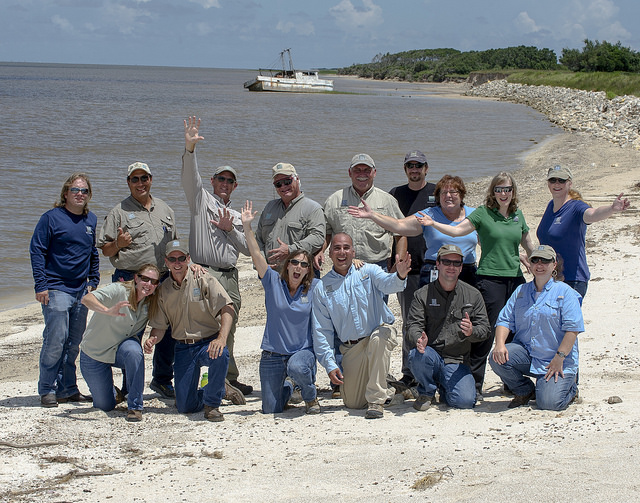
TEXAS CITY Y OIL SPILL RESPONSE TEAM GROUP PHOTO

TEXAS CITY Y OIL SPILL RESPONSE TEAM GROUP PHOTO


This is Passport to Texas

On March 22nd, 2014 two vessels collided in the Houston ship channel. And that’s when the TPW Oil Spill Response team sprang to action.

[Winston Denton] There was a timing issue with an incoming inbound ship and a barge and tug crossing the channel.

[Steven Mitchell] The crew members started reporting that they had oil leaking from the barge.

[Rebbecca Hensley] We had about 170,000 gallons of fuel that was spilled into the ship channel.

[Don Pitts] Any large spill like this, we get notified by the Coast Guard or the General Land Office to come and assist in the role of Natural Resource Advisors.

[Heather Biggs] Since it was a large event, we did pull people from Austin, from Corpus, even down from Brownsville we had folks coming in to help us.

[Angela Schrift] We coordinated, figured out what we’d need. Got the materials together and got down to the coast as soon as we could.

Meet the team, and find out what happened next, when you view their story next week on the Texas Parks and Wildlife TV Series on PBS.

For Texas Parks and Wildlife…I’m Cecilia Nasti.
___________________________________________________
