February 4th, 2016
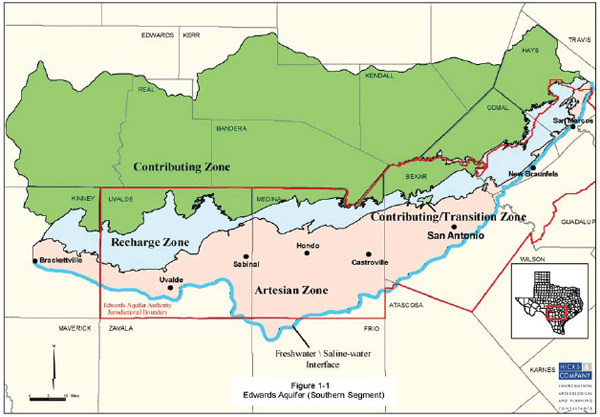
Edwards Aquifer map. Photo credit: National Academies Press
This is passport to Texas
Two million people – from Central to Southwest Texas – depend on the Edwards Aquifer for their drinking water.
It also supplies important water sources for industry, agriculture, recreation…a number of things.
Cindy Loeffler, water resources branch chief at Texas Parks and Wildlife, says eight federally listed endangered species call the aquifer home; some of them exist in this location only. The Edwards Aquifer Habitat Conservation Plan intends to protect them, and allow Texans’ continued use of the shared resource by implementing a mixture of strategies.
Water conservation is a key part of it…but also [part of it is] looking at different ways to manage water. For example, we do currently have different levels of conservation that kick in to action as drought increases, and also many measures to help make the ecosystems more resilient. Things like removing non-native species, [and] helping to restore habitat that’s been compromised. One notable thing, especially for folks who recreate on the San Marcos River that’s been done, is to create a state scientific area that makes it unlawful to uproot Texas Wild Rice, a federally protected plant.
It is easy to be dismissive of a plan to protect species which exist in very small numbers or that we do not often see. Tomorrow we talk about the value of these species.
The Wildlife and Sport Fish Restoration program…supports our series and funds diverse conservation projects throughout Texas…
For Texas Parks and Wildlife…I’m Cecilia Nasti.
Posted in Conservation | Comments Off on Edwards Aquifer Habitat Conservation Plan
February 3rd, 2016
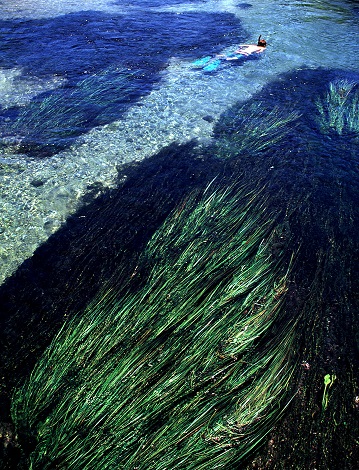
Texas Wild Rice
This is Passport to Texas
An ecosystem is a complex set of interrelationships among plants, animals, microorganisms, land, and water. And Texas Parks and Wildlife is a collaborator on a conservation plan to protect a special ecosystem: the Southern Edwards Aquifer.
The Edwards aquifer is home to many, many rare species, including eight federally listed threatened and endangered species.
Cindy Loeffler is water resources branch chief at Texas Parks and Wildlife.
Some of the most visible endangered species associated with the Edwards Aquifer are Texas Wild Rice – it’s only found in the upper two miles of the San Marcos River. Also, fountain daters, small fish that are found in the San Marcos River and the Comal River, and a number of cave-dwelling species you might not see just recreating in the rivers – but they’re there.
Loeffler worked on the Edwards Aquifer Habitat Conservation Plan. Some of the species she mentioned are unique to the Edwards Aquifer Ecosystem.
It’s important to protect these species for that reason, but also, this is a major water supply for many of us here in Texas, so finding a way to share that resource –finding the proper balance – that’s what the Edwards Aquifer Recovery Implementation Program has been about.
What’s in the plan to help protect endangered species? We look at that tomorrow.
The Wildlife and Sport Fish Restoration program…supports our series and funds diverse conservation projects throughout Texas…
For Texas Parks and Wildlife…I’m Cecilia Nasti.
Posted in Conservation, Wildlife and Sport Fish Restoration Program | Comments Off on Southern Edwards Aquifer
February 2nd, 2016
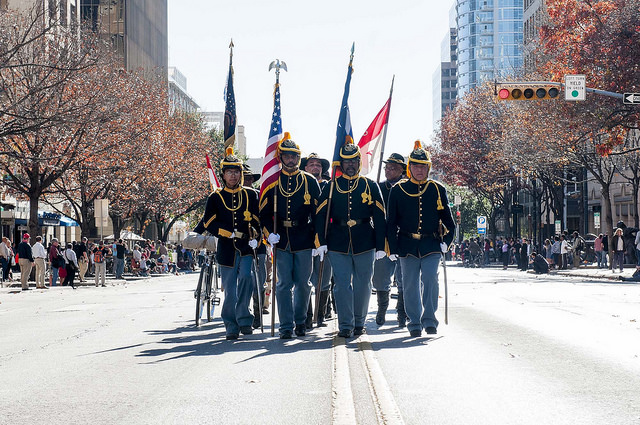
Buffalo Soldier reenactors participating in parade in downtown Austin, Texas.
This is Passport to Texas
Buffalo soldiers were heroes in their time; examples of courage and hard work. But their accomplishments, seldom taught in classrooms, leave many young African American students, like Greg McClanahan, with a limited sense of their history.
They didn’t teach us anything in school but that we were slaves. They didn’t teach us that we were heroes or nothing. In history, all you ever heard about was slaves this, and slaves that. You didn’t hear about no black heroes.
When we met, McClanahan was attending public school in Kerrville, where he was introduced to Buffalo Soldier reenactors from Parks and Wildlife.
What we are doing is taking the legacy of the Buffalo Soldier into the cities and into the schools. And we feel that sharing this story, that we can instill some pride and some resolve in them.
Ken Pollard retired from coordinating Buffalo Soldiers Heritage & Community Outreach for Parks and Wildlife. He said he found out about the Buffalo Soldiers as an adult, but wished he’d known about them earlier.
My relatives and kinfolk were cowboys, man. We didn’t have any black cowboys or soldiers, you know, to really look up to. For me, to have the black heroes there when I was growing up, that sense of pride would have been instilled in me. But if I had grown up with that—they would have been my heroes.
Find information about Buffalo Soldiers Heritage & Community Outreach on the Texas Parks and Wildlife website.
That’s our show… For Texas Parks and Wildlife…I’m Cecilia Nasti.
Posted in Buffalo Soldiers, History | Comments Off on Buffalo Soldiers a Positive Influence on Youth
February 1st, 2016
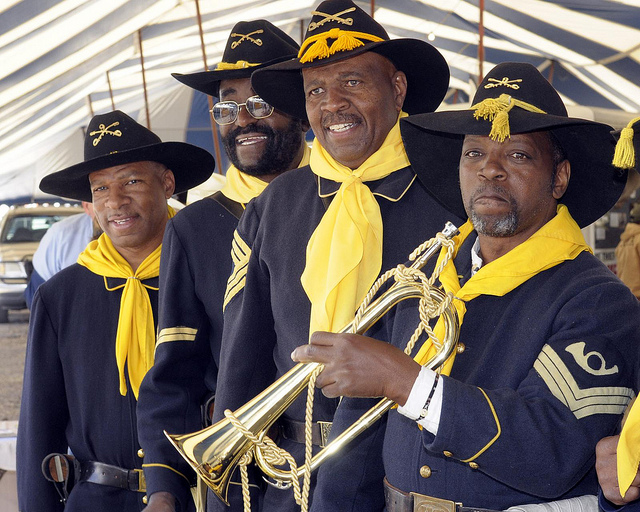
Buffalo Soldier reenactors.
This is Passport to Texas
[singing] I was once a captured slave. Now I’m just a black man who came to be….[fade and play under script]
In the 19th Century, Black men who served in the 9th and 10th Regiments of Cavalry and 24th and 25th Regiments of Infantry of the United States Army were …
I am a Buffalo Soldier!
It’s said the Indians whom they fought during the Indian Wars gave troops the name because of their hair texture and their courage and ferocity in battle.
He feared and respected the buffalo. And he learned to fear and respect the black soldier as well.
That’s Buffalo Soldier reenactor, John Olivera, who says Buffalo soldiers played a major role in settling Texas.
Seventy-five percent of the soldiers that settled this area were Buffalo Soldiers. The only white men that were with them were the commanding officers. Almost all of the forts were manned and built by Buffalo Soldiers.
Texas Parks & Wildlife Department offers Texas Buffalo Soldier Outdoor Educational Programs. Find their schedule on the Parks and Wildlife website.
The Buffalo Soldiers fought not only the Indians, and outlaws, but racism and prejudice. We had a job to do, and we done it.
That’s our show…Funding provided in part by Ram Trucks. Guts. Glory. Ram
For Texas Parks and Wildlife…I’m Cecilia Nasti.
Posted in Buffalo Soldiers, History | Comments Off on Buffalo Soldiers: Unsung Texas Heroes
January 29th, 2016
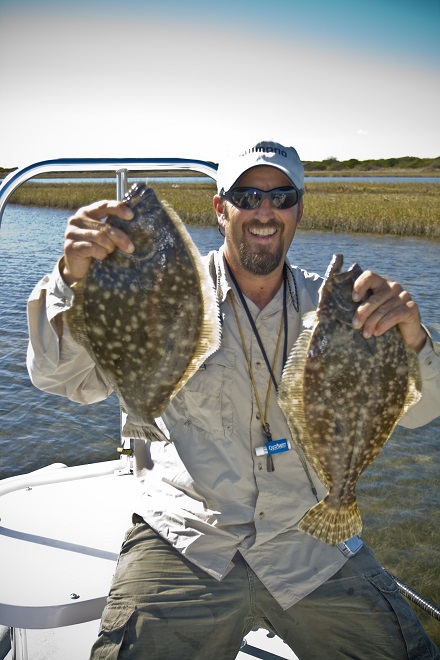
Flounder. Photo credit: Kendal Larson
This is Passport to Texas
Brian Treadway fishes for flounder in Chocolate Bayou in West Galveston Bay.
Chocolate Bayou is an excellent spot for flounder. We have one of the shallowest bays in all the coast. And really and truly, we have the absolute best place to fish in the world right in our own backyard.
Southern flounder accounts for more than 95 percent of the flounder harvest in Texas. Sampling surveys indicate while populations of redfish and spotted sea trout are strong, southern flounder’s in decline.
We’ve had a slow, but steady, decrease in flounder populations throughout the coast of Texas. It’s been worse in some bays than it has in others. But, it’s just been a slow decline.
David Abrego with the Sea Center Texas Fish Hatchery, says data suggests issues affecting southern flounder decline include a lower number of females, overfishing and loss due to shrimp bycatch. Coastal fish hatcheries use brood stock to produce thousands of small flounder that will eventually go back into the bays.
If we’re able to stock fish into areas that are needed. Then, that is just another additional tool that can help the population recover.
Find bag limits and other regulations for fishing for flounder and other species on the Texas parks and Wildlife website.
The Sport Fish Restoration Program supports our series through your purchases of fishing equipment, and motorboat fuels.
For Texas Parks and Wildlife, I’m Cecilia Nasti.
Posted in Fishing, Saltwater | Comments Off on Southern Flounder


 Passport to Texas is a
  Passport to Texas is made available by: