November 12th, 2015

Common Eastern Bubmle Bee (Bombus impatiens) worker in flight
TEXAS: Lamar Co. Camp Maxey National Guard Facility in Paris
27.August.2009 J.C. Abbott
This is Passport to Texas
Honeybees, native bees, bats, butterflies and other insects are pollinators, and are vital to our economy, food security, and environmental health. The Texas Parks and Wildlife Department Landowner Incentive Program, or LIP, can help interested landowners manage their property for pollinators.
09-The LIP program at the moment is prioritizing projects that are directed at pollinators. Pollinators are definitely hot.
Arlene Kalmbach coordinates the program.
33-Pollinators got on the Landowner Incentive priority list based on the funding source. The landowner Incentive Program is funded by the Fish and Wildlife Service–partners for fish and wildlife program. And pollinator projects are a high priority for them, so they are a high priority for us. They would have been a
high priority for us regardless of our funding source. But, it helps that everybody’s on the same page. So, with this next round of projects, we hope to see a lot of pollinator targeted projects.
Something to know about the LIP program is it does not have acreage restrictions.
13-It really just depends on the resources you’re trying to restore or protect. In the history of the program, I’ve seen us work on an urban lot to thousands of acres of West Texas.
Have a project in mind? Find details on the Landowner Incentive Program on the Texas Parks and Wildlife website.
For Texas Parks and Wildlife…I’m Cecilia Nasti.
Posted in Botany, Conservation, Monarchs, Pollinators | Comments Off on Making Pollinators a Priority
November 11th, 2015
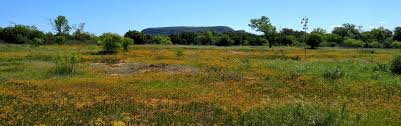
Land well tended.
This is Passport to Texas
The Texas Landowner Incentive Program (LIP) offers funding opportunities for private landowners wishing to implement natural resource conservation practices on
their lands.
05-I usually send them to their local field biologist to start the relationship.
Arlene Kalmbach [CALM-bock] coordinates the program. After the initial phone call, there’s a site visit to…
11-…get the goals that the landowner has for the property, and maybe get the biologist’s perspective on what’s there and what potential there is for some conservation work. And then they go from there.
LIP efforts focus on projects aimed at creating, restoring, protecting and enhancing habitat for rare or at-risk species throughout the state, as well as activities that positively impact riparian areas and watersheds.
10-Sometimes they may bring in other specialists. Riparian specialists–an invertebrate biologist. It really starts with the landowner’s goals and what that property has to offer.
Through funding partnerships, the program offers cost-sharing with private landowners on LIP projects. Texas Parks and Wildlife covers a percentage of the proposed project costs; landowners, meantime, must contribute a minimum percentage through in-kind labor, materials, or finances, for example.
Find Landowner Incentive Program application details on the Texas Parks and Wildlife website.
For Texas Parks and Wildlife…I’m Cecilia Nasti.
Posted in Conservation, Landowner Incentive Program | Comments Off on Helping Landowners do the Right Thing
November 10th, 2015
Landowner Incentive Program
This is Passport to Texas
The Landowner Incentive Program, or LIP, is a way for private landowners to partner with Texas Parks and Wildlife to achieve conservation goals on their
property…
08-…to meet the goals of the private landowners for their property, as well as conservation goals for species of concern.
Arlene Kalmbach coordinates the LIP program for the agency.
16-When we add the conservation layer of their land management plan, we’re often assisting them with erosion control, invasive species control. In some cases prescribed burns. It really varies because every property’s unique.
As 95% of Texas land is in private hands, landowners play a vital role in maintaining the state’s natural resources. Implementing conservation practices can
enhance a landowner’s management goals.
05-Conservation can often enhance the property’s value for the landowner.
Tomorrow: Getting started with the landowner Incentive program.
For Texas Parks and Wildlife…I’m Cecilia Nasti.
Posted in Landowner Incentive Program | Comments Off on Partners in Conservation
November 9th, 2015

This is Passport to Texas
Kids–and even grownups–are spending lots of time in front of screens connected to the internet.
06-Children today are spending on average seven to eleven hours per day indoors with media.
Telling people to go outside and leave the devices at home doesn’t fly.
09-Oh, my gosh. You’re exactly right. We used to tell people all he time: unplug, unplug, unplug. We just can’t say that anymore. We are plugged in and it’s here to stay, And that’s fine.
Jennifer Bristol, with Texas Children and Nature program, which curates the Nature Rocks Texas website, says if you can’t beat ’em, join ’em.
08-There are so many wonderful apps and devices out there now. So there’s all kinds of technology that really can help kids now explore and be outside.
The Nature Rocks Texas website got a makeover and debuts this month.
27-We really wanted to give it a fresh look and really focus on our core concepts, which are: play, explore, and connect. So, we want families where they can find places where they can play in the outdoors and find all those nature based activities that so many of our partners offer. Everything from star parties, to
nature hikes, to group campouts. You name it. There are just all kinds of fun, nature based activities that are happening all the time throughout the state.
A Nature Rocks Texas mobile app is coming in spring.
That’s our show for today– Funding provided in part by Ram Trucks. Guts. Glory. Ram.
For Texas Parks and Wildlife…I-‘m Cecilia Nasti.
Posted in Children in Nature | Comments Off on Nature Rocks Website
November 6th, 2015

Nature Rocks Texas
This is Passport to Texas
In 2009, the Texas Children and Nature program developed a website called Nature Rocks Texas.
10-It’s kind of a one-stop-shopping for families to find all of the nature centers, the zoos, the parks and green spaces that are near them, where they can take their families to get outdoors.
Jennifer Bristol coordinates the Texas Children and Nature program. Parents can use to site to find nearby scheduled nature-based activities for the family to
enjoy, or to the perfect spot to get outdoors and play.
21-Sometimes people think nature is a faraway place; it’s something that have you have to kind of really plan to go do, and spend a whole afternoon driving somewhere to have these larger experiences. We want people to know that nature is in their community. It’s nearby them. It’s in their neighborhood. It’s around the corner. And you don’t have to go far to find it.
Jennifer says before you think Nature Rocks Texas only focuses on Texas state parks and events organized by Texas parks and Wildlife–think again.
10-We also have our city parks, county parks, national parks, national wildlife refuges, nature centers. You name it; if there’s a nature component to it, it is listed on there.
Jennifer Bristol returns next time to tell us how technology isn’t the enemy to the outdoors as once believed.
For Texas Parks and Wildlife…I’m Cecilia Nasti.
Posted in Children in Nature | Comments Off on Nature Rocks


 Passport to Texas is a
  Passport to Texas is made available by: