September 17th, 2015
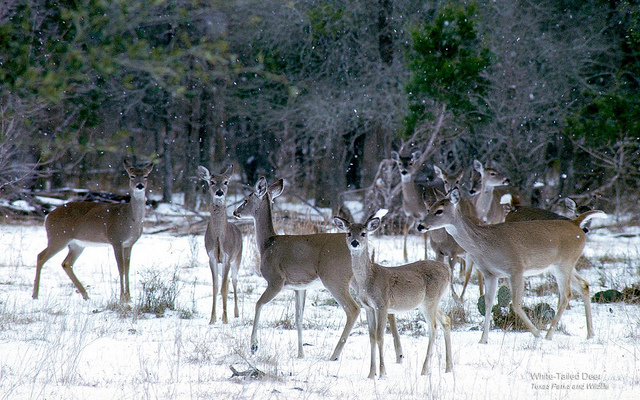
Whitetail deer in snow.
This is Passport to Texas
Spring rains improved habitat in Texas. This is good, of course, except for the resulting population explosion of…
02—Worms. Stomach worms…
Moisture and high humidity create an ideal environment for the worm’s survival, which is bad news for white-tailed deer. Dr. Bob Dittmar, a veterinarian with Texas Parks and Wildlife, says initial testing indicates a high level of worm infestation within the deer population.
07— A lot of these deer were eating close to the ground, and were picking up these parasites which were out there in very high numbers this year.
There are several types of the parasite on the landscape; weight loss in deer is one potential sign of infestation.
14— The really bad ones are bloodsuckers. So, they debilitate the animal by sucking blood, making them become anemic, week, and eventually maybe predisposing them to other things. But they’re just debilitating, and that accounts for the weight loss we’re seeing.
Where are these deer showing up, and what to do if you see one. That’s tomorrow.
The Wildlife and Sport Fish Restoration Program supports our series, and through your purchases of hunting and fishing equipment, and motorboat fuels, funds more than 40 million dollars in conservation efforts in Texas annually.
For Texas Parks and Wildlife, I’m Cecilia Nasti.
Posted in White-tailed deer, Wildlife | Comments Off on Rain was Good and Bad for Deer
September 16th, 2015
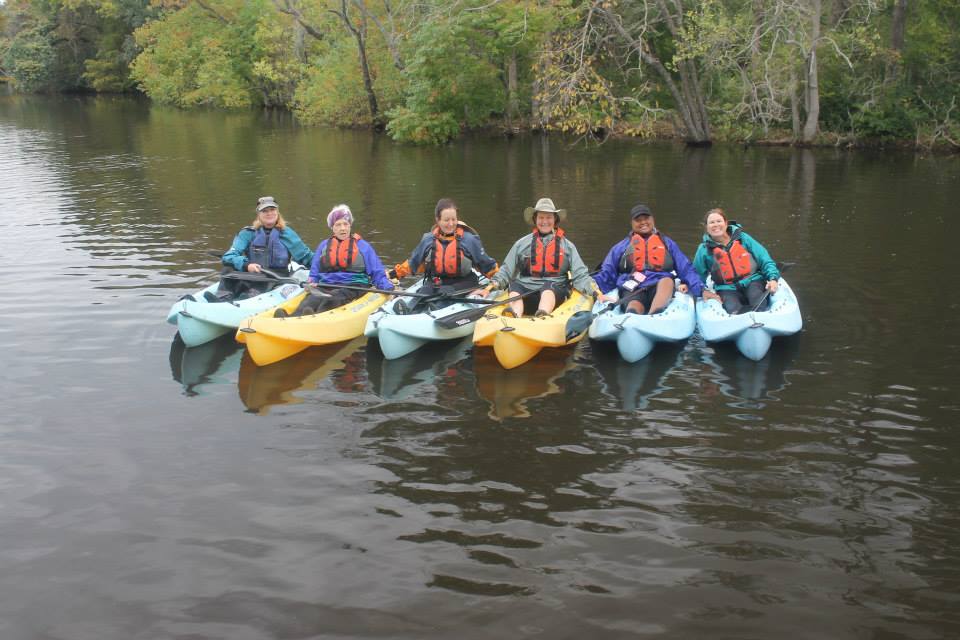
Women on the water at a BOW Workshop.
This is Passport to Texas
Autumn is gaining on us…and no self-respecting Texan would allow an entire summer to go by without spending time in or on the water.
Fortunately, state parks provide opportunities for both.
Want to do a little canoeing, but don’t want to go it alone? This month you can join a ranger for a two-hour, three mile long guided canoe trip through the Martin Dies Jr.’s State park’s swampy marshes and the Neches River. Be on the lookout for wildlife such as bald eagles, belted kingfishers, herons, turtles and alligators. Find the schedule on the calendar at texasstateparks.org.
Make tracks – or is that waves – to any Texas inland or coastal paddling trail. These trails provide well-mapped accessible day trips in a variety of settings, for all levels of paddling experience. Find trail maps online.
Anglers experience a new perspective on the sport by casting a line from a kayak or canoe. It’s simple to do, and you can find tips on the Texas Parks and Wildlife website.
There’s still time to get neck-deep in cool water, as the hot days are quite over. No matter where you live in Texas, there’s a state park with a pool, lake, river, creek, or even ocean just waiting for you to dive in.
Find information about all the wet and wild opportunities in Texas on the Texas Parks and Wildlife website.
For Texas parks and wildlife…I’m Cecilia Nasti.
Posted in Boating, Fishing, Kayaking, State Parks, Swimming | Comments Off on Before Summer’s Truly Gone–Get Wet!
September 15th, 2015
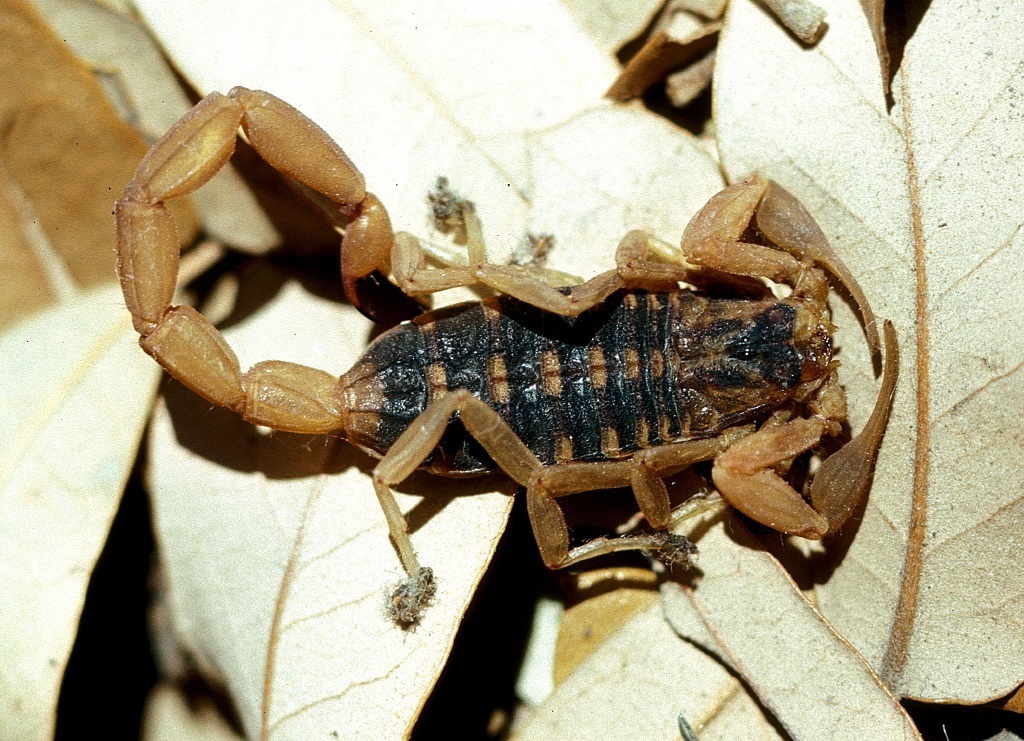
Scorpion on leaf litter.
This is Passport to Texas
Texas boasts a fair number of scorpion species.
06— There are about 18 species in Texas. Depending on where you’re at – you may have more or less.
Ben Hutchins is an invertebrate biologist at Texas Parks and Wildlife.
10— In all of Texas, we don’t have scorpions that are considered life threatening. As with any animal that has venom, there’s always the possibility of an allergic reaction.
To healthy non-allergic people a scorpion sting may simply cause short-term discomfort. In nature, scorpions are highly beneficial.
23— Scorpions are predators, and so they feed on a variety of potential pest organisms. Some scorpions also feed on other scorpions, so they do have an important role in the environment potentially controlling pest populations…insects…spiders…other arachnids. There’s also potential medical utility for scorpions as well – using venom to treat medical conditions.
Therefore, if a scorpion inadvertently wanders into your home some evening while foraging…
12— There’s really no cause for alarm. What I usually do is use a cup [and place it over the scorpion and use a] piece of paper that you kind of slide under there to pick up the scorpion. And then you can just remove it and put it in an area where it can do its business.
That’s our show…For Texas Parks and Wildlife, I’m Cecilia Nasti.
Posted in Invertebrates, Scorpions, Wildlife | Comments Off on Benefits of Scorpions
September 14th, 2015
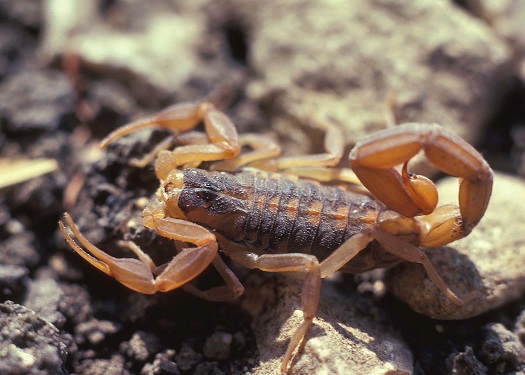
Scorpion in Texas
This is Passport to Texas
I find scorpions in my house from time to time. With their crablike pincers and barbed tails, they’re scary little guys.
04— I think we have a natural reaction to anything with different body morphology.
Ben Hutchins is an invertebrate biologist at Texas Parks and Wildlife. He says scorpions dwell in a wide variety of habitats.
03— Pretty much any habitat except Alpine environments.
Although we have several species this arachnid in Texas, Hutchins says we’re not likely to run into them.
18— Usually, we don’t run into them that often because they’re mainly active at night; during the day they’re usually hiding under rocks, under logs – deep in leaf litter as well. So, we don’t run into them a lot, except when perhaps we’re in the yard gardening, or they might wander into our house at night.
Why do they come into our homes?
08— It’s not really intentional; during their foraging, they might see a crack under your door as just another crevice that they’ll be traveling through in search of prey.
Once they’re inside, they could make themselves comfy.
08— If you have a room with the lights off and lots of boxes – places to hide – that mirrors their natural environment with lots of secure hiding place for them.
How scorpions are beneficial in the environment. That’s tomorrow.
For Texas Parks and Wildlife, I’m Cecilia Nasti.
Posted in Invertebrates, Scorpions | Comments Off on Scorpions: Cool or Creepy
September 11th, 2015
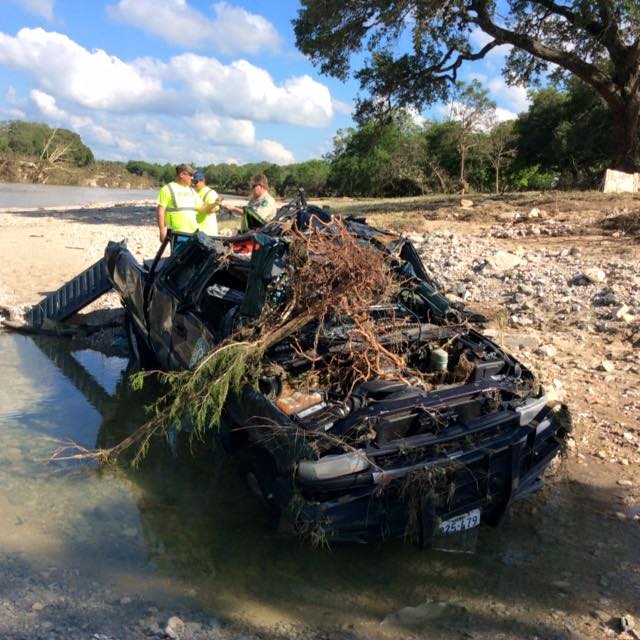
Blanco State Park damage
This is Passport to Texas
Over Memorial Day weekend, 12 inches of rain fell in Central Texas, causing the Blanco River—which runs through Blanco State Park—to crest at 40 feet.
13—The water rose very quickly, so it basically tore through the park. The park was destroyed. There were trees up in trees 20 feet high. Our office building—we had seven feet of water in there. So, we have to completely rebuild everything.
Park interpreter, Kate Boysen, says portions of the park reopened for visitation in August.
12— It was a lot of work, and we had a lot of help. We had the Texas A&M Forrest Service, and different fire departments from all around the state come and help us to remove debris, cut down trees, cut trees out of trees…
Staff and volunteers disposed of debris, leveled the ground, and replaced picnic tables and signage. There’s more work to do, but visitors are welcome.
20— The HQ building where you enter, that’s currently open. That’s where you can pay your day use fees and get your registration for camping… And then as you enter the park, the south side of the river, which is the side where the camping is—and then we have a day use section there—and that’s the only side that’s open right now. And that’s the only side that people can access the river from.
For the most up to date information about the current status of all state parks, visit texasstateparks.org.
For Texas Parks and Wildlife, I’m Cecilia Nasti.
Posted in State Parks | Comments Off on Blanco State Park Reopens


 Passport to Texas is a
  Passport to Texas is made available by: