Parks: Every Kid in a Park

April 2nd, 2015
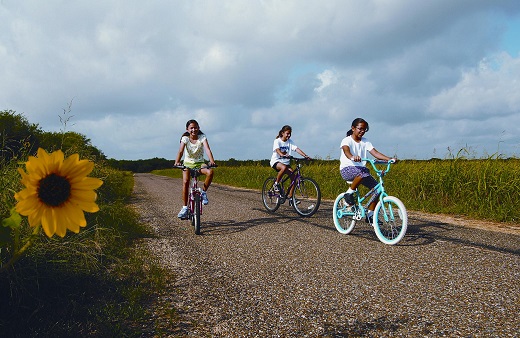
Girls riding bikes at Resaca de la Palma State Park

Girls riding bikes at Resaca de la Palma State Park


This is Passport to Texas

In February 2015 the White House announced a new initiative called Every Kid in a Park.

06— It’s a very exciting initiative. It is something that really ties in with what we’re working so hard with here in Texas.

Jennifer Bristol coordinates the Texas Children and Nature Program at Parks and Wildlife. The new initiative waives national park entrance fees for every child in the fourth grade. Why fourth grade? Jessica says kids are still willing to spend time with mom and dad, and that it’s an impressionable time.

25—It is really the time when children connect probably the most with nature. It’s called the age, or development time, of joy and wonder of discovery. And it’s when kids really make that connection – especially with wildlife. They care about something; they understand that the actions that they take can have an impact either on the environment; it can have an impact on wildlife. And so, they want to care for it, and they start building up those bonds with it.

Texas currently waives state park entrance fees for children 12 and under, and the new White House initiative dovetails nicely with the Texas program.

06— This is just one more way that families can have those barriers reduced to access to the outdoors.

And as we all know: Life’s better outside. Discover ways to engage the outdoors when you visit the Texas Parks and Wildlife website.

For Texas Parks and Wildlife…I’m Cecilia Nasti.
Event: Children and Nature Conference

April 1st, 2015
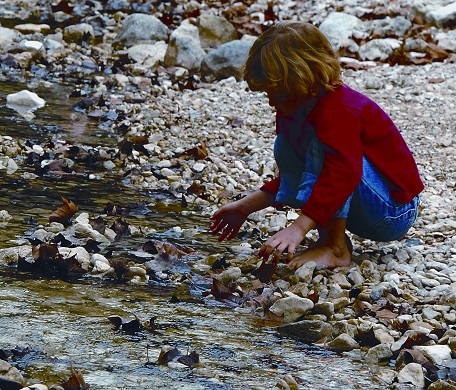
Girl exploring stream at Lost Maples State Natural Area

Girl exploring stream at Lost Maples State Natural Area


This is Passport to Texas

It takes a village to get kids and families outside these days; Jennifer Bristol, coordinator of Texas Children and Nature, is part of the tribe ushering them outdoors.

09— We are a network of organizations around the state of Texas; and we focus on connecting more children and families with the outdoors so they are happier, healthier, and smarter.

Next week, Jennifer tribe and their supporters gather in Bastrop for the Children in Nature Conference, to share ideas, successes, and future plans.

08—To really highlight all the issue and all the solutions that surround why it is important for children and families to have access to nature.

The theme of the conference is “Inspiration to Action”.

13— And it centers around our four concentration areas, which is health, education, community and access. So, we have everybody from architects who focus on bringing the outdoors in, to urban planners, to the health community….

In addition, they devote the first day to technology.

17— We know that we can’t get away from technology. We used to tell people all the time: unplug and get outdoors and things like that. That’s still an important message. But, it’s also important to say, ‘Hey, you know what? What can we do to let them use that smart phone in their hand or tablet in their hand that builds that confidence in the outdoors, too?’

We’ll check in with Jennifer after the conference for an update. Texas Children in Nature is co-hosting the conference with Westcave Outdoor Discovery Center and Children & Nature Network.

For Texas Parks and Wildlife…I’m Cecilia Nasti.
Wildlife: Legality of Helping Wildlife

March 31st, 2015
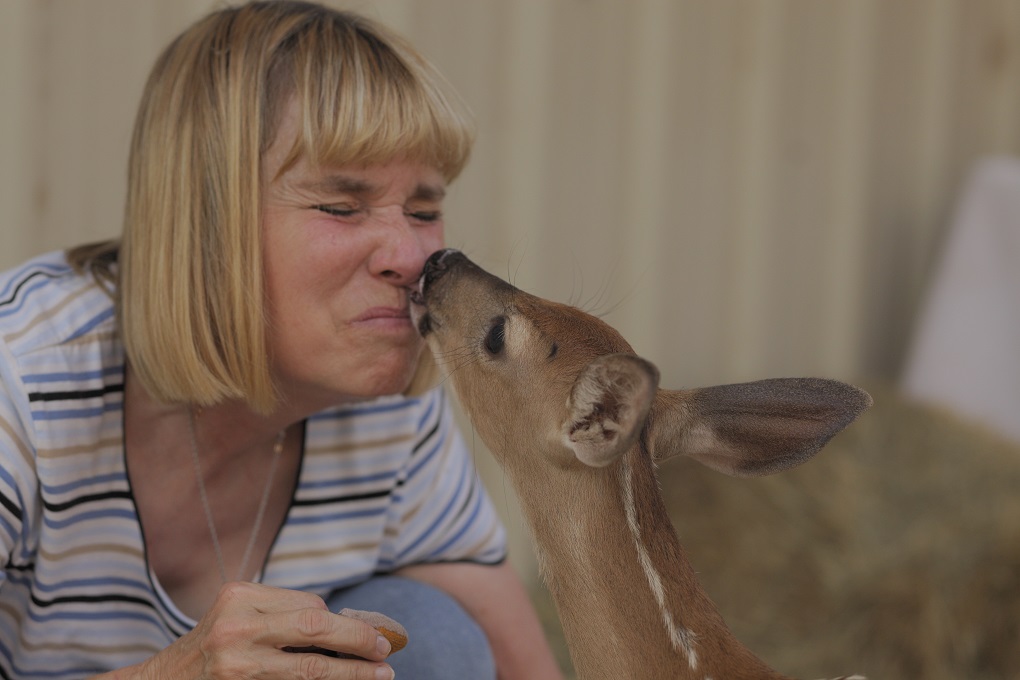
Animal rehabilitator Gail Barnes with fawns at South Plains Wildlife Rehabilitation Center, Lubbock, TX.

Animal rehabilitator Gail Barnes with fawn at South Plains Wildlife Rehabilitation Center, Lubbock, TX.


This is Passport to Texas

Spring is about reawakening, renewal, and baby animals. That last part – baby animals – can be tricky. You see, sometimes we find infant wildlife when we’re outdoors, and want to “rescue” them, which might actually be more like kidnapping.

08—For example, a baby dear [or fawn] will hide quiet and mama will almost always come back. That’s their strategy.

Jonah Evans, a mammalogist at Texas Parks and Wildlife, says unless an animal is injured or in distress, leave it alone. Monitor it at a safe distance if you’re concerned, but even then…

06— I recommend, before touching an animal, call a rehabilitator and ask them.

Licensed rehabilitators know animal behavior and can provide guidance, which may also include instructions to leave the animal alone because of legal considerations.

12—There are actually some regulations about possessing certain wildlife that you have to make sure you’re not violating. Possessing a non-game animal without a license, could be in violation of
certain laws.

You’ll bypass a life of crime when you know who to call. Find a list of licensed wildlife rehabilitators—by county—on the Texas Parks and Wildlife website.

The Wildlife and Sport Fish Restoration program supports our series and funds diverse conservation projects in Texas.

For Texas Parks and Wildlife, I’m Cecilia Nasti.

Wildlife: Leave Baby Wildlife Alone

March 30th, 2015
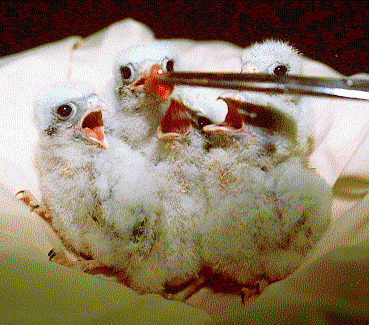
Orphaned Kestrels being cared for by a licensed wildlife rehabilitator.

Orphaned Kestrels being cared for by a licensed wildlife rehabilitator.


This is Passport to Texas

Springtime brings with it reports to Parks & Wildlife from people certain they’ve found abandoned baby animals.

09—What could have happened is you walked up there, and mama ran off and hid – and baby is hiding there. And, as soon as you leave, mama will come back.

That’s not true in every case, says Jonah Evans, Texas Parks and Wildlife mammalogist. For example, if you see an abandoned baby possum, mom may be gone for good.

14—With 184 some odd mammals in the state, it’s probably pretty difficult to give you a list of which mothers will come back wand which ones won’t. So, what I recommend is before touching
and animal – call a [wildlife] rehabilitator.

Licensed rehabilitators know animal behavior and can tell you which ones could benefit from intervention.

09—If you contact one of the many throughout the state – and there’s a whole long list of them on our website – they are really the experts in this. Not Parks and Wildlife.

Jonah Evans says although he researches and studies warm-blooded animals, rehabilitators have skills suited to helping citizens’ where abandoned baby animals are concerned.

Find a list of licensed rehabilitators by county on the Texas Parks and Wildlife website.

For Texas Parks and Wildlife, I’m Cecilia Nasti.

TPW TV: Collegiate Climbers

March 27th, 2015
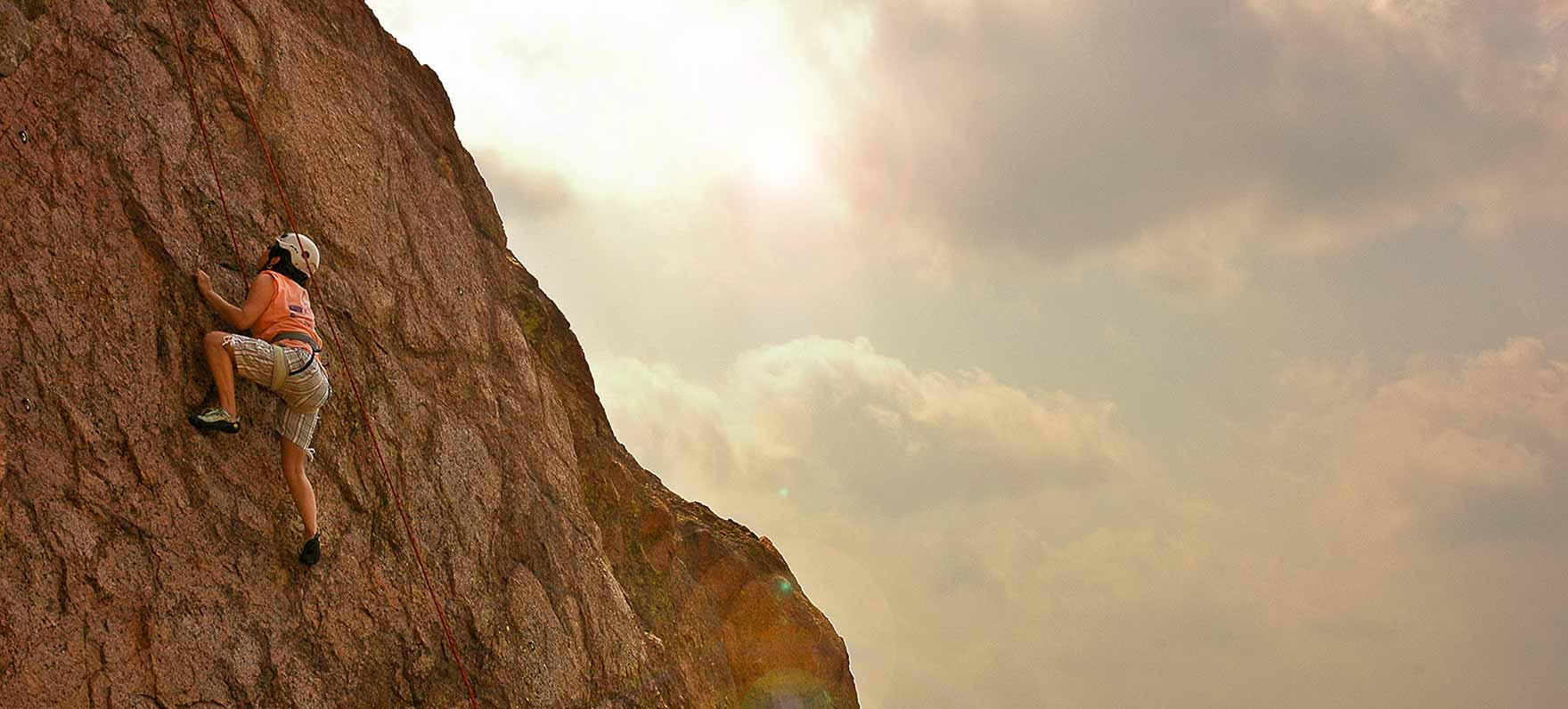
Rock climbing in Texas

Rock climbing in Texas


This is Passport to Texas

To these University of Texas at Austin students, climbing to the top takes hard work, but in the end, it’s about fun.

04— I’m Will Butcher; I’m Christina Nguyen; I’m Zephyr Suerte Lutz-Carrillo, and I’m a member of the UT Rock Climbing Team.

They are all members of the team, and you’ll meet them in a segment on the PBS Texas Parks and Wildlife TV series next week.

05— I enjoy rock climbing because it’s really just you and the rocks; so, it’s very meditative in that sense.

Collegiate climbing didn’t exist until this guy came along:

13— I’m John Myrick, the head coach of the climbing team at the University of Texas. Collegiate climbing didn’t exist until 2008 when I started the pilot series here in Texas. And in 2009, the
nationwide collegiate climbing series was born.

During the TV segment, watch these climbers compete against other schools on an indoor rock climbing course.

13— Whenever you see your teammate on the wall, just cheering them on; because that, really, is what helps them get to the top. You push a little further – maybe it’s to the top, maybe it’s not –
but you definitely get a second wind by them cheering you on and having your back.

Find out how the UT Climbing team did at the most recent collegiate championships, next week on the PBS Texas Parks and Wildlife TV show.

Check your local listings.

For Texas Parks and Wildlife, I’m Cecilia Nasti.