The key to healthy habitat and wildlife populations rests in the hands of landowners. In Texas, we honor their skillful management.
09—Lone Star Land Steward is an award program where we recognize those landowners in Texas who are doing an exemplary job of managing their habitats and their wildlife.
Linda Campbell oversees the state’s Private Lands and Public Hunting programs.
13—We have all kinds of focus on these landowners. We have a great diversity of people. We have a regional award for each of the ten eco-regions. And then we have an overall award, the Leopold Conservation Award, for the overall statewide land steward.
Nominations for the awards opened June first, and will continue until the end of November.
23—Nominations can come from the landowners themselves, or those that assist them. We will take nominations from any member of the public. All of those nominations are evaluated, and we do site visited on those. We just want to make sure that we hold up those who are doing such an excellent job managing the resources of Texas.
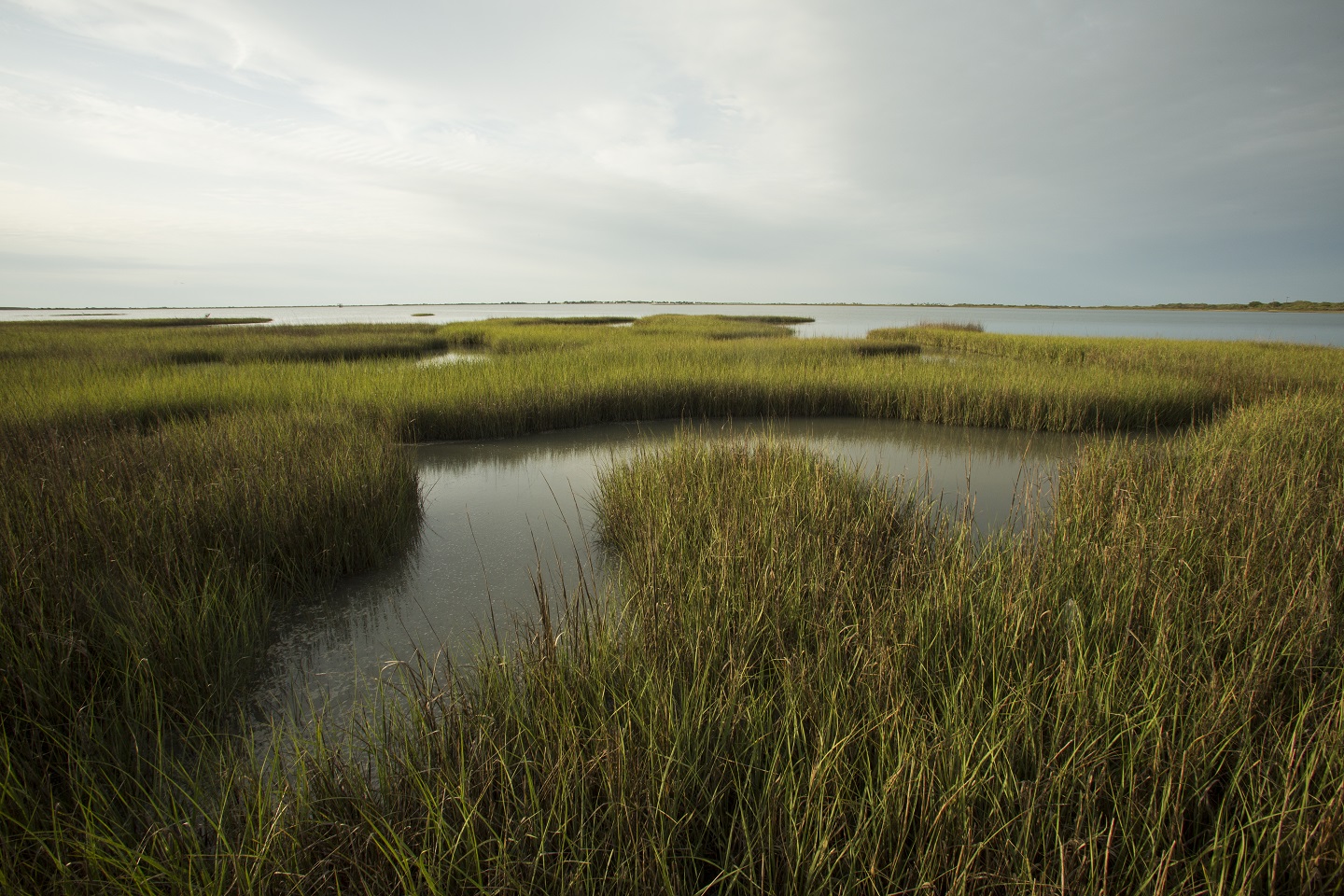
The 17-thousand acre Powderhorn Ranch in Calhoun County has a long, fascinating past, and a bright future, thanks to a coalition of partners that raised nearly 38-million dollars to help purchase the land.
04—This really took the proverbial village to help put this project together.
Texas Parks and Wildlife Executive Director, Carter Smith says the expansive tract of pristine coastal prairie will be preserved for all Texans, including native flora and fauna.
18— The Powderhorn Ranch has been the dream of the conservation community for almost a quarter of a century. And, everybody has recognized its scale, its incredible ecological integrity and biological uniqueness. And, as we see more development, more activity, we’ve recognized the criticality of protecting places that scale like the Powderhorn.
The Texas Parks and Wildlife Foundation raised most of the money for the $50 million project, which includes an $8 million endowment to fund ongoing habitat management and restoration.
17— Every single attitudinal survey shows that Texans care about their coast. They’re passionate about it. It’s conservation. They value the water that flows into it, and is present there. And so, this is one of those places that are going to be there for future
generations. And, there’s just a special comfort in knowing that.
For more information about the Powderhorn Ranch project, visit the Texas Parks and Wildlife website.
For Texas Parks and Wildlife, I’m Cecilia Nasti.
Posted in Conservation | Comments Off on Conservation: Powderhorn Ranch Acquisition
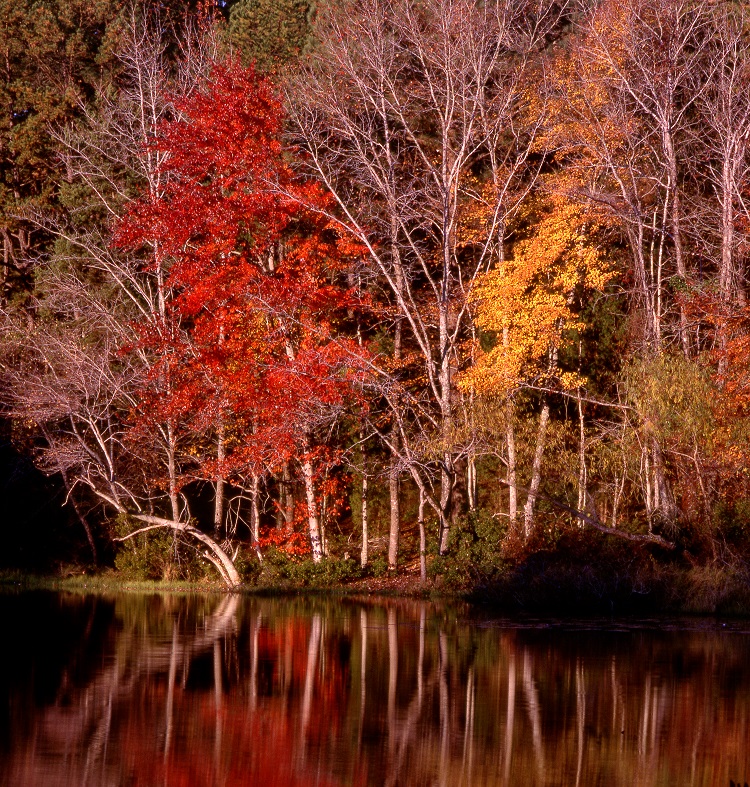
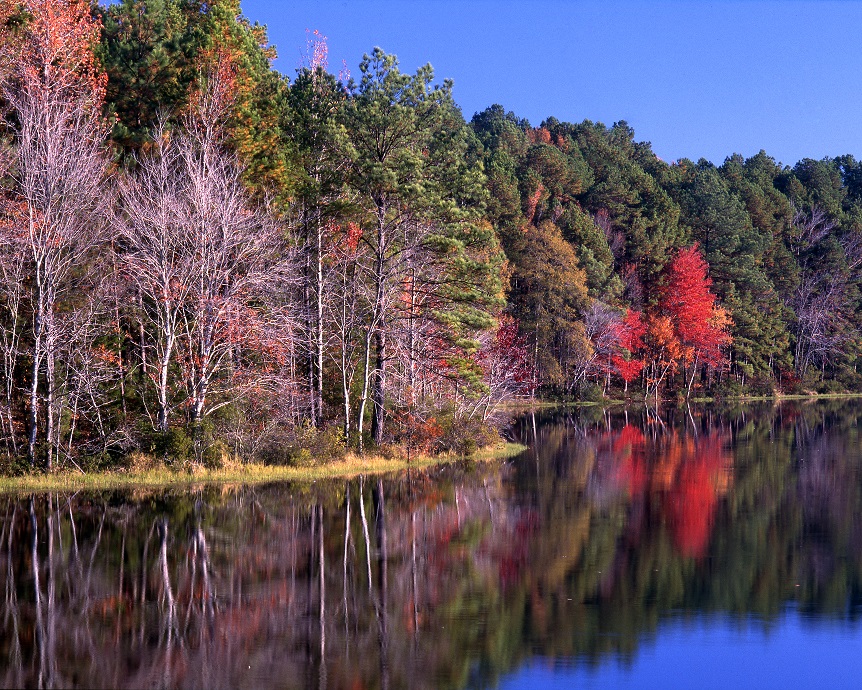
Why is the sky blue? Why do birds sing? Why do leaves turn color in fall? We’ve got you covered on fall foliage. It begins with longer nights…
16— …which is a signal that winter is coming. And, a consequence of that is the leaf is no longer making chlorophyll and other pigments start to show up. Some are already there, some are produced after the leaf stops making chlorophyll.
Damon Waitt (WAIT) is senior director and botanist at the Ladybird Johnson Wildflower Center in Austin. Another part of the “coloring” process is when leaves seal themselves off from the trees.
22— And it’s during that time that the leaves are changing color. Because one of the coolest colors, of course, is red and purple. You know, the Big Tooth Maple colors. That’s actually a pigment called anthocyanin, and it’s produced when that leaf is cut off from the rest of the plant. And the sugars that are still left in that leaf will actually convert to this pigment and turn red.
A chemical process (triggered by longer nights) causes leaves to change color. However, other variables affect the depth of color.
10— So, there are a lot of things that can affect how deep the reds are: temperature, sunlight…all these things have an effect on the expression of these different colors. And, that’s why each fall is different.
Now, go forth and amaze your friends with your new found knowledge.
‘Tis the season when we see foliage turn colors. If you’re like me, you wonder why, and what purpose it serves.
13— Right. It’s kind of like, why is the sky blue type question. But the interesting thing about fall color is it doesn’t really have a purpose. It’s the result of some chemical processes that occur in the leaf.
Damon Waitt (WAIT) is director and senior botanist at the Ladybird Johnson Wildflower Center in Austin.
11— When you think about being a leaf during the wintertime… it’s not a good time to be a leaf. Especially if you’re a thin flat one. Because, cold temperatures are going to kill that leaf.
So, these trees cut their losses as seasons change.
21—They want to capture all those good chemicals out of the leaf before winter and put them back in the tree and store them in the roots. And so that’s what they start to do when the nights get longer, which is a signal that winter is coming. A consequence of that is the leaf is no longer making chlorophyll; other pigments start to show up.
Damon Waitt likens this process to recycling.
17—Yes, trees are great recyclers. They don’t want to waste all those great chemical compounds that are out in the leaf that have been doing work all summer long, and in the spring, causing the plant to grow. So, they recycle the chemicals they can, and then dispose of the leftover material that’s in the leaf.
That leftover material is what you rake every fall. More fall foliage tomorrow.
For Texas Parks and Wildlife, I’m Cecilia Nasti.
Posted in Education | Comments Off on Nature: Why Leaves Turn Color in Fall
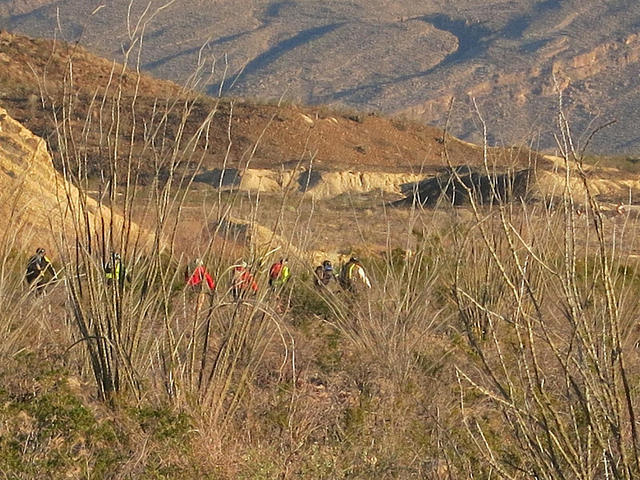
Say the word desert, and –and an image of a bleak and lifeless place may come to mind. That may be true for some deserts – but it’s not true for the Chihuahuan Desert Region.
07—It’s one of the most diverse places for both plants and animals in this country, and frankly, in the world.
That’s not including tropical and subtropical regions, of course. Cynthia Griffin is Executive Director of the
Chihuahuan Desert Research Institute, or CDRI, in Fort Davis…located within the 220-thousand acre ecosystem.
29—There are over 3-thousand plant species on the Chihuahuan; it is a center of diversity for cacti. Our cactus greenhouse has some of the most rare and best examples of cactus found in the Chihuahuan Desert. There are more reptiles on the Chihuahuan than there are on the Sonoran. There are more birds on this desert [region] than in the Everglades. And in the Davis Mountains, we have 16 of the 18 species of North American Hummingbirds.
The Chihuahuan Desert Region has an elevation range from 1-thousand to 10 thousand feet above sea level, and it is isolated from other North American deserts.
10—So there’s not the bleeding over. And, so because it’s large, and because of its range of elevation, you will find species here that you will not find anywhere else.
Learning about deserts isn’t as dry as you once thought.


 Passport to Texas is a
  Passport to Texas is made available by: