May 30th, 2013
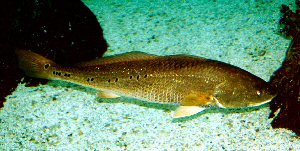
Red Drum
This is Passport to Texas
It’s illegal to commercially fish red drum, or redfish, in Texas. In the 1970s, during routine monitoring of bays, biologists discovered a serious decline in the number of the species caught by commercial fishermen.
06- So, we started looking into it very carefully, and started implementing bag and size limits on these animals.
Paul Hammerschmidt, with coastal fisheries, says the new restrictions were just the beginning of a lengthy and involved process to help increase populations of the species.
12-The legislature actually required us to establish quotas on commercial fishing. And we were allowed to modify those quotas depending on the amount of fish that were being caught on a day-by-day basis.
Most commercial anglers cooperated with Texas Parks and Wildlife by reporting the redfish caught in their nets….
26-Annecdotally, we had heard that red drum being landed and sold to fish wholesalers were actually reported as another species. What that did, is that showed fewer and fewer redfish were being caught in a particular bay. And that impacted the formula that we used to establish the quotas. So, the fewer and fewer fish that they got, the next year the fewer and fewer fish they were allowed to catch.
This marked the beginning of what would become known as The Redfish Wars; we’ll have more tomorrow.
The Wildlife and Sport Fish Restoration project supports our series…and funds the operations and management of fish hatcheries in Texas. For Texas Parks and Wildlife…I’m Cecilia Nasti.
Posted in Conservation, Events, Fishing, Saltwater | Comments Off on 50th Anniversary: Redfish Wars, 1
May 29th, 2013
.jpg "Bolivar Peninsula after Ike 2008, Image from http://www.srh.noaa.gov")
Bolivar Peninsula after Ike 2008, Image from http://www.srh.noaa.gov
This is Passport to Texas
Texas lost 8-thousand acres of submerged oyster habitat when Hurricane Ike blew into the gulf in 2008. Some reefs will restore naturally; other will receive some help.
24- We are trying to accelerate that that recovery effort by putting some the materials down to allow new oysters to settle on. We also worked closely with the commercial industry and got them involved in pulling their dredges up with bags off of them across some of these reefs that were marginally covered up, and to pull the shell back to the surface to provide that substrate for young oysters to attach to and start growing.
Lance Robinson from coastal fisheries wrote the story. Ike pushed saltwater and debris 15-20 miles inland, which decimated saltmarsh habitat – habitat that’s a marine nursery for sport and commercial species. Restoration work is ongoing.
12—And it took several weeks just for heavy equipment to get into the marshes to remove the mountains of debris before we could get in and assess what the other impacts were. And at that point it was just gut-wrenching.
As bad as the damage after Ike, Robinsons says it could have been worse.
13—…both from a human impact and a natural resource impact had the storm tracked a little bit farther to the north. It would have brought the eye farther into the bay, and we would have seen a much more devastating impact.
Lance Robinson’s story about the “Hidden Damage of Ike” appears in the June issue of Texas Parks and Wildlife Magazine.
The Wildlife and Sport Fish Restoration project supports our series.
For Texas Parks and Wildlife…I’m Cecilia Nasti.
Posted in Conservation, TPW Mag | Comments Off on Conservation: Ike’s Hidden Damage, 2
May 28th, 2013
.JPG "Image from National Weather Service")
Image from National Weather Service
This is Passport to Texas
Few will forget the images from 2008 of the devastation to Galveston Island by Hurricane Ike. An article in the June 20-13 issue of Texas Parks and Wildlife magazine details the damage from Ike we did not see.
06- The article focuses on the losses of some of the invaluable habitat associated with Galveston Bay.
Including submerged oyster habitat. Lance Robinson from coastal fisheries wrote the piece. The hurricane deposited sediment on top of 8-thousand acres of oyster reefs in Galveston Bay. That’s nearly half of the consolidated oyster habitat within the system.
24—That is a huge loss of a valuable resource. Not only from the commercial fishing aspect to it, but for the ecosystem services that they provide that a lot of people don’t really recognize or really see. Such as: water filtration, providing habitat for other fish and crabs and other organisms that are associated with structures. Sort of like an oasis in a desert.
A single adult oyster filters water at a rate of about 50 gallons a day, improving ecosystem water quality.
10—The wastewater treatment plants within Houston filter the same amount of water as a hundred and thirty acres of oyster reef; we lost 8-thousand acres of those reefs.
Restoring the reefs; that’s tomorrow.
Support provided by Ram Trucks. Doing what’s right and good regardless of the degree of difficulty — takes guts. Those are the people who build Ram trucks. RAM.
For Texas Parks and Wildlife…I’m Cecilia Nasti.
Posted in Conservation, TPW Mag | Comments Off on Conservation: Ike’s Hidden Damage, 1
May 27th, 2013
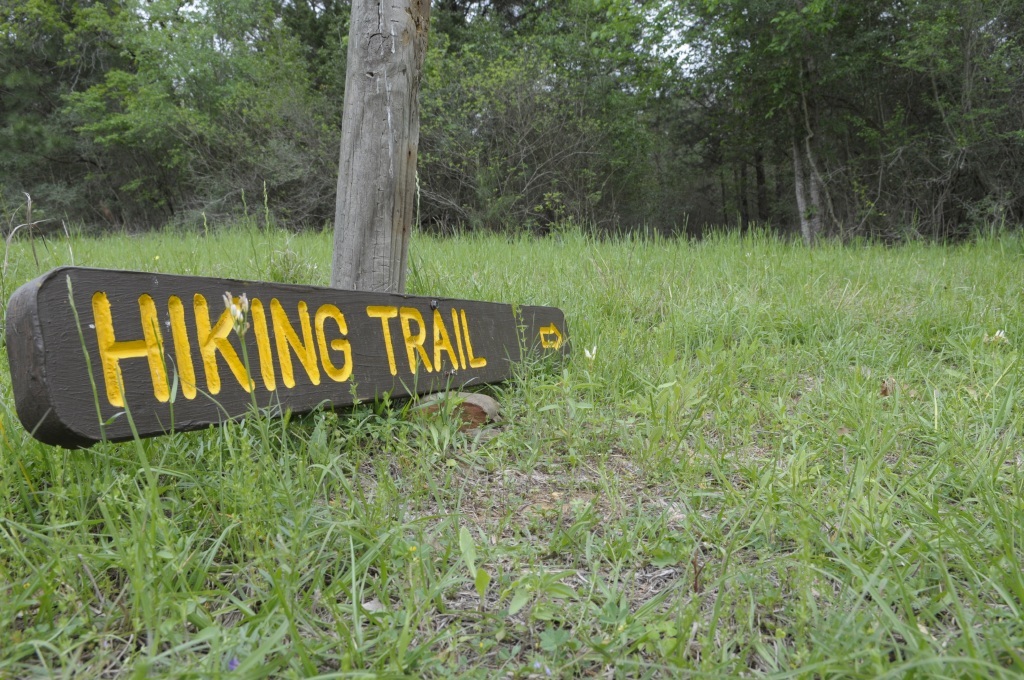
National Trails Day in Texas State Parks © Texas Parks and Wildlife Department
This is Passport to Texas
Clear your schedule on Saturday, June 1, because it’s National Trails Day, and our state park guide, Bryan Frazier, says guided hikes await you at your state parks.
51 – We’ll have dozens of parks that are offering a hike on national Trails Day – it’s a Saturday. And you can get a hike that’s led by a park ranger, or a trained volunteer, or a Master Naturalist. And you can find out the story that that park has to tell. The history, the wildlife, the wildflowers and other plants and all the things that make that park unique and interesting. You’ll get the whole story. And you can take a leisurely hike: there will be hikes on boardwalks, hikes into the mountains, hikes on Hill Country trails and near rives; there will be all kinds of places to go in Texas on National Trails Day. So, check our website: texasstateparks.org; there’s a Trails Day link right there. You can find out all about it. So we want to encourage people….we always want to encourage people…to get outside and see that. And this is an even better reason.
Thanks, Bryan.
Find outdoor adventures at texasstateparks.org.
That’s our show for today…with funding provided by Chevrolet, supporting outdoor recreation in Texas; because there’s life to be done.
For Texas Parks and Wildlife…I’m Cecilia Nasti.
Posted in Events, State Parks | Comments Off on State Parks: National Trails Day
May 24th, 2013

Black Bear image by Alan Vernon
This is Passport to Texas
The Louisiana Black bear is long gone from East Texas, although, small populations exist in its home state. Black bears we might see in NE Texas likely come from Oklahoma and Arkansas.
10- And they are not Louisiana bears. Bears in Oklahoma and Arkansas are probably the sub species Americana or just the plain American Black Bear.
But they’re welcome in Texas just the same, says Dave Holdermann, a wildlife diversity biologist in Tyler. TPW’s management goal is to manage natural re-colonization of the species in NE Texas.
15— And one of the things that we’re doing to support that approach is we monitor black bear sightings – mostly coming in from the public. And we monitor those very closely, and scour them very well, to be sure they are legitimate sightings.
Holdermann encourages the public to contact the wildlife division with black bear sightings at any of its regional offices.
27 — We look for and ask early in the interview [with the person], whether or not they have physical or photographic evidence. Beyond that, we look at details of the observation; how close was the person? What exactly did they see? How many bears were there? Give us the locality as close as you can. By the way, it wouldn’t necessarily have to be a photo of the bear. We might use hair as evidence, or a track.
Find more information about reporting your black bear sighting at passporttotexas.org: Call Dave Holderman with your black bear sighting at 903-566-1626 (ext. 209)
For Texas Parks and Wildlife…I’m Cecilia Nasti.
Posted in Conservation, Wildlife | Comments Off on Conservation/Wildlife: Black Bears in Texas, 2


 Passport to Texas is a
  Passport to Texas is made available by: