May 23rd, 2013
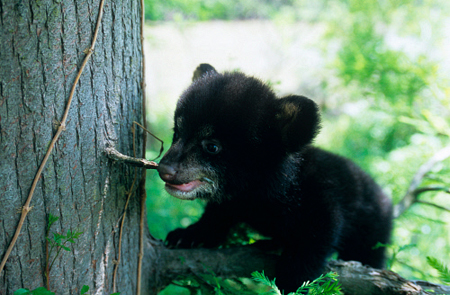
Louisiana black bear cub, image courtesy www.edf.org
This is Passport to Texas
By 1900, Louisiana black bear were as good as gone from East Texas.
15- About that time, or in the late 1800s, as East Texas became more and more settled, black bears were essentially killed out by unregulated hunting and the expansion of farms, towns, cities, roads, etc.
Dave Holdermann is a wildlife diversity biologist working out of Tyler, who keeps track of this federally threatened species.
11— Today we see a few bears venturing out of neighboring states back into Texas, but we have no indication that there’s a breeding population of black bears in East Texas.
The bears entering Texas from neighboring states are likely the sub species Americana or American Black Bear. Parks and Wildlife will carefully monitor and manage natural colonization of the species in East Texas.
22— If bears come into this region – most likely from Arkansas or Oklahoma – we’re going to monitor that process and attempt to deal with any problems that might arise between bears and people. But, we would not intercede, necessarily, to eliminate those bears. So, we would allow that natural colonization process.
How you can help biologists keep track of black bears in Texas – that’s tomorrow.
The Wildlife and Sport Fish Restoration project supports our series.
For Texas Parks and Wildlife…I’m Cecilia Nasti.
Posted in Conservation | Comments Off on Conservation/Wildlife: Black Bears in Texas, 1
May 22nd, 2013
.jpg "Image courtesy of http://blue.utb.edu/jasonproject/photos.html")
Image courtesy of http://blue.utb.edu/jasonproject/photos.html
This is Passport to Texas
Cut off from gulf waters, Bahia Grande, a unit of the Laguna Atascosa National Wildlife Refuge, changed from productive tidal wetland to nuisance dust bowl. The tide started to turn for this basin with the new millennium.
13 – It was not until 2000 when the Fish and Wildlife Service acquired the land surrounding the Bahia Grande Basin that you could start doing something—because the Fish and Wildlife Service was very supportive of restoring the area.
John Wallace Deputy Project Leader South Texas Refuge Complex says the process of re-hydrating Bahia Grande continues.
13 – Restoring ten thousand acres takes quite awhile. We have had to go through an environmental assessment—public hearings—to just make sure what we were planning to do in restoring it was not going to cause some kind of impact.
Wallace says when fully restored, humans and wildlife will benefit.
21 – Besides just reducing the blowing dust, it’s going to increase the number of marine organisms in the area: anything from larval fin fish, to shrimp, to blue crabs that are already in the area. And when we have it fully restored it’s going to do nothing more than become a nice estuarine area to benefit wildlife.
The Wildlife and Sport fish Restoration Program supports our series and provides funding for wetland conservation through the Private Lands Enhancement Program.
For Texas Parks and Wildlife…I’m Cecilia Nasti.
Posted in Conservation | Comments Off on Wetlands: Bahia Grande, 2
May 21st, 2013
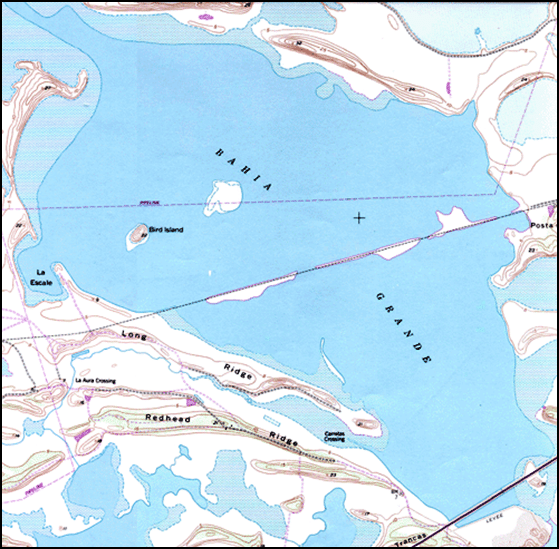
Bahia grande Map, Texas A&M Corpus Christi
This is Passport to Texas
Bahia Grande, the largest tidal wetland restoration project in the state of Texas, is getting closer to completion.
10 – A tidal wetland is normally a coastal wetland that is influenced by the daily tide cycle that would basically push or pull water into that system on a daily basis.
John Wallace, Deputy Project Leader South Texas Refuge Complex, says construction of the Brownsville Ship Channel in the 1930s effectively cut off Bahia Grande from the gulf.
09 – The spoil from that ship channel was piled on the north side, and it blocked off those natural channels that allowed water to flow into the Bahia Grande.
Without water, the basin dried up, and eventually became a nuisance to local residents and businesses whenever prevailing winds came from the southeast.
26 – Normally on a coastal area with prevailing winds, you would get winds ten to twenty miles an hour every day. And these winds would pick up that real fine clay dust, and blow it to the north and northwest. And the local communities north of there were suffering from this blowing dust. It was impacting people that had breathing problems. The local schools, their air-conditioning systems, it was getting into the classrooms. So, it was a major concern for the local communities.
Solving the problem…that’s tomorrow.
The Wildlife & Sport Fish Restoration Program supports our series and provides funding for wetland conservation through the Private Lands Enhancement Program.
For Texas Parks and Wildlife…I’m Cecilia Nasti.
Posted in Conservation, Saltwater | Comments Off on Wetlands: Bahia Grande, 1
May 20th, 2013
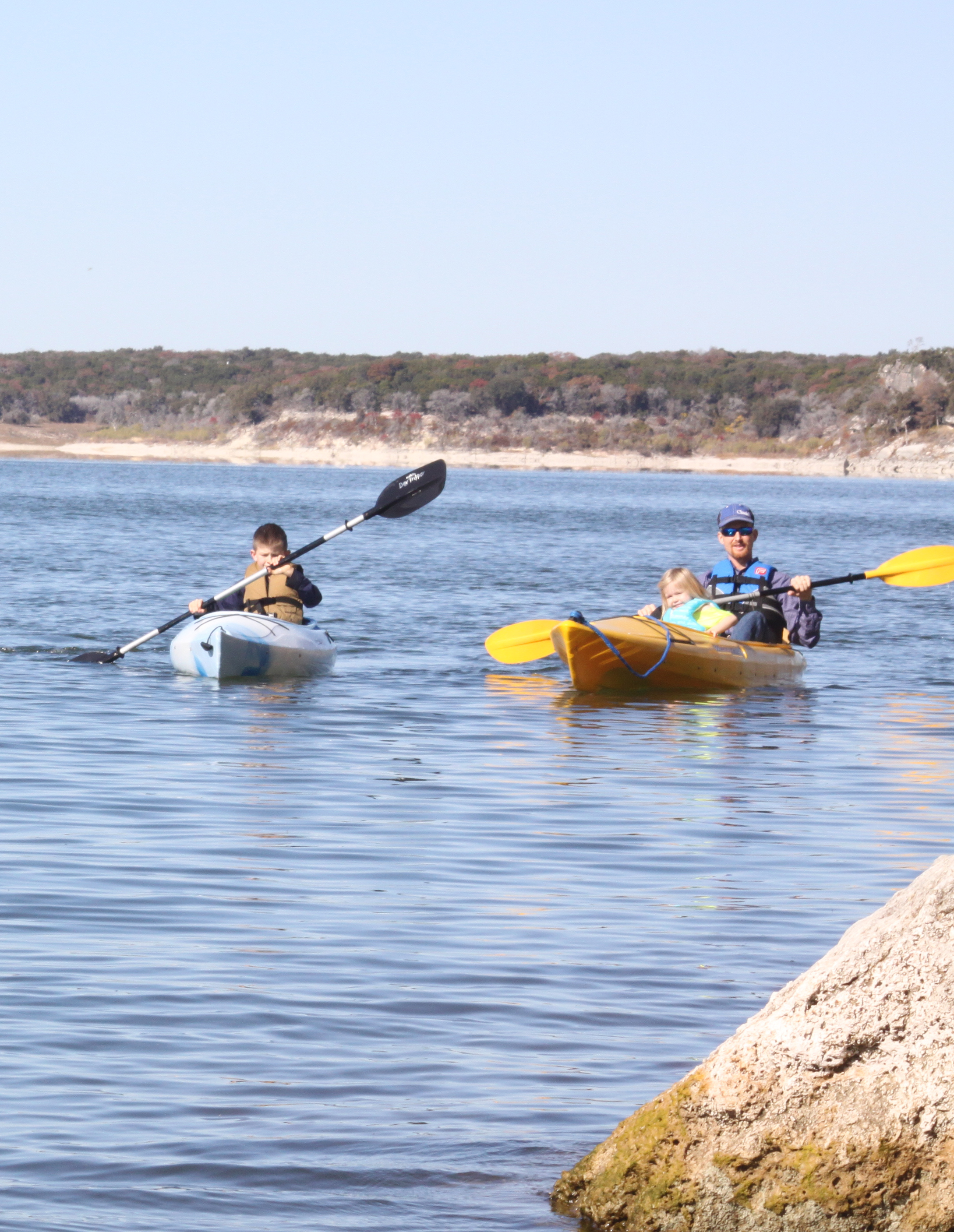
Outdoor family fun
This is Passport to Texas
How will kids occupy themselves now that school’s out? Our state park guide, Bryan Frazier has a few ideas.
57 –Kids have had the calendar for a long time; school is out for summer vacation. And to your point: what do you do? Where do you take them? Where are safe places that are family oriented? Where are places that are reasonably priced? Where can they go frequently? What can we do so that they’re just not watching TV and playing video games? Think about a state park. I would recommend getting a state park pass, and you’ve got the summer covered, whether that’s swimming, hiking, biking, or fishing. It’s an unlimited amount of outdoor recreation, education, something just as simple as a leisurely hike near a creek in a state park, or something that’s planned as a family get together or a weekend. We have the spectrum of outdoor recreation experiences. This summer can be action packed with lots of different things in a state park.
Thanks, Bryan.
Find outdoor adventures at texasstateparks.org.
That’s our show for today…with funding provided by Chevrolet, supporting outdoor recreation in Texas; because there’s life to be done.
For Texas Parks and Wildlife…I’m Cecilia Nasti.
Posted in State Parks | Comments Off on State Parks: Summer Vacation
May 17th, 2013

Image courtesy TPWD
This is Passport to Texas
If you plan on operating a boat this summer—or any time—get to know items important to keep on board for safety while underway.
13—You should have a sound producing device, and you should have a life jacket for person that’s on board. If you’re boating at night, you should have the proper lights—that are working—and we suggest a first aid kit.
Tim Spice, manager of boater education for Parks and Wildlife, says anyone born on or after September 1, 1993 is required to take boater education.
21—We cover lots of different things, including safety aspects of boating; the different types of vessel you may have; the rules of the road; the required equipment. Again, everyone on board a vessel needs to have a lifejacket that’s accessible. We define what accessible means by law so that you don’t get in trouble when you’re on the water and a game warden stops to give you a boating safety check.
In addition, filing a float plan that tells folks on shore where you’ll be and when you plan to return will be vital if an emergency occurs while you’re on the water. Operating a boat has a different set of rules than driving a vehicle.
10—There’s no lines on the road; there’s no speed limits, per se. There are different signs and things you have to look out for that are very different than you would in your car.
By taking a boating safety course—which you can do online or in a classroom setting—you’ll learn what those rules.
The Sport Fish Restoration program supports our series and works to increase fishing and boating opportunities in Texas. For Texas Parks and Wildlife…I’m Cecilia Nasti.
Posted in Boating Safety | 1 Comment »


 Passport to Texas is a
  Passport to Texas is made available by: