May 2nd, 2013
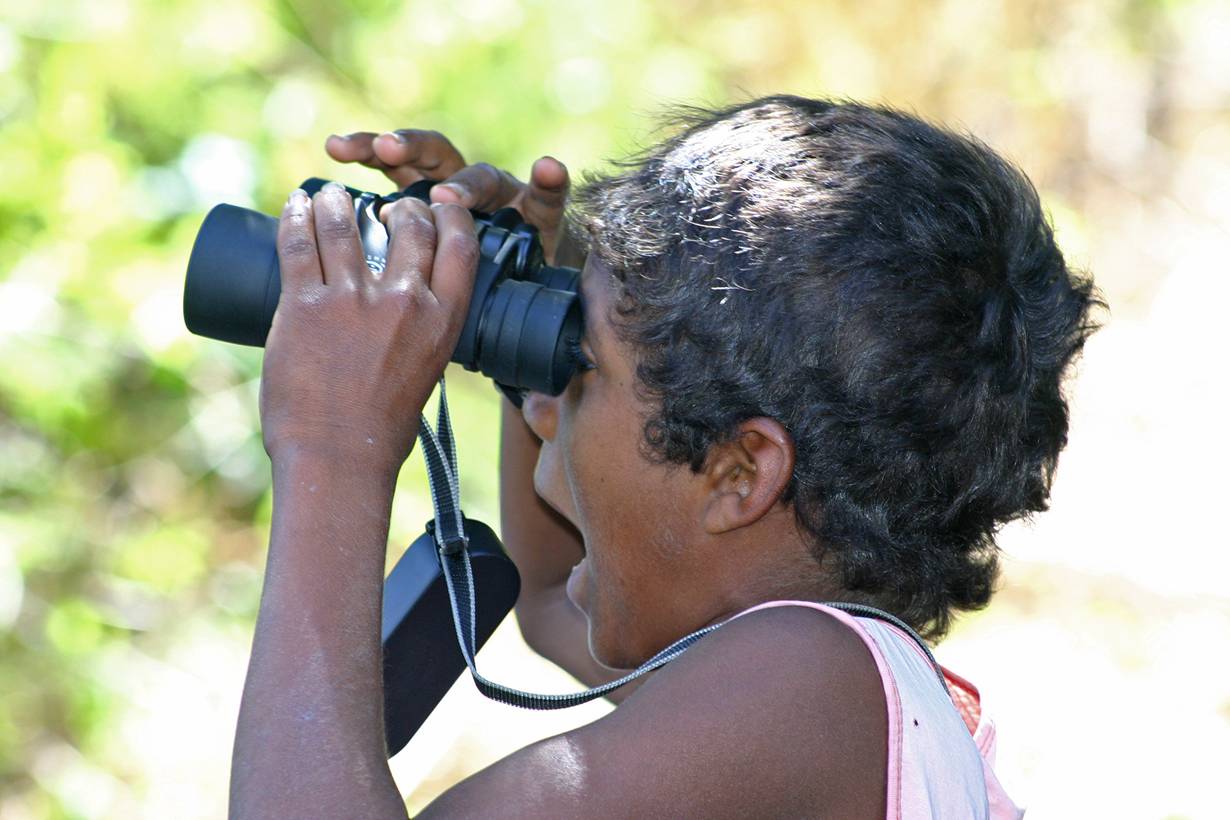
Image Courtesy National Park Service
This is Passport to Texas
In the early 1990s, scientists started noticing that some populations of migratory birds were declining.
10-There was a concern about what these causes were, and at the same time there was considerable interest in getting the public involved in learning more about birds and their conservation…
Susan Bonfield is Executive Director of Environment for the Americas. Her non-profit coordinates International Migratory Bird Day, an event created as a direct result of scientists’ concerns over declining avian populations.
12-Several researchers at the Smithsonian Migratory Bird center came up with the idea of hosting a public event to get communities involved in learning about birds. And that was the origins of International Migratory Bird Day.
It is the second Saturday of May for the US and Canada, and is intended to occur during peak migration. The idea is to give folks an opportunity to see these migrants.
09-That doesn’t work for everyone. So, for example, in some parts of Canada it may too early, and some parts of the United States, even, it’s a little bit too late—migratory birds have already passed over.
This time of year is excellent for bird watching in Texas. Tomorrow: celebrating birds at an event, or your own backyard.
The Wildlife and Sport Fish Restoration project supports our series…and funds diverse conservation projects in Texas.
For Texas Parks and Wildlife…I’m Cecilia Nasti.
Posted in Birding, Events | Comments Off on Birding Event: International Migratory Bird Day, 1
May 1st, 2013
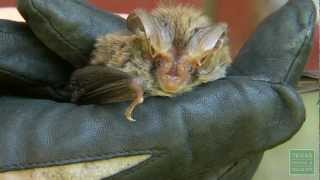
Rafinesque’s Big-eared Bat TPWD YouTube Channel
This is Passport to Texas
Texas is home to some thirty-two bat species. TPW PBS TV producer, Abe Moore, says viewers will meet one of the lesser known bats in a segment airing this month.
56— We did a story on the Rafinesque’s Big-eared Bat. They’re one of the least known bats in the Southeastern United States. And the story looked at one of the largest Big Eared Bat colonies in Texas. The colony’s at the Trinity River National Wildlife Refuge. And it’s in – of all places – in an abandoned mobile home that’s out in the woods. The house was abandoned 18 years ago. We were going to tear it down; we decided that we would rather keep it open for the bats, and actually keep the house in working order enough so they could use it as a roost. It’s this abandoned horror movie type of house. There are rat droppings all over the floor and spider webs everywhere. I mean, it would be the greatest set for a film. But it was the perfect home for the bats. And the refuge built these cool bat roost towers nearby for them to live in the mating season. And they’re close by, and the bats will readily move from here to the towers, depending on the temperature. That story’s going to be on Texas Parks and Wildlife television the week of May 5th through the 11th.
Thanks, Abe.
Support provided by Ram Trucks. Doing what’s right and good regardless of the degree of difficulty — takes guts. Those are the people who build Ram trucks. RAM.
For Texas Parks and Wildlife…I’m Cecilia Nasti.
Posted in Conservation, TPWD TV | Comments Off on TPW TV: Protecting Rare Bats
April 30th, 2013
Freshwater inflow
This is Passport to Texas
Joe Moore, former Executive Director of the Texas Water Development Board, understands the health of bays, estuaries—and us—depends on freshwater inflows; that means freshwater getting to the Gulf of Mexico. Helping folks who live upstream understand this has been a challenge.
49 – A major engineering consulting firm was meeting with an advisory group [in Lubbock] one time, and we were talking about freshwater inflows. He suddenly realized we were talking about assuring freshwater inflows, and he said, ‘You mean you’re going to give the water to a fish before you give it to people?’ They didn’t understand the economics of freshwater inflows. There was a 1957 conference on this campus in which waste was described as a bucket of water that escaped into the Gulf of Mexico. The objective at that point was to dam every river in Texas so that there was not a drop of water that went out of a Texas river into the Gulf of Mexico. So the Trinity would stop flowing before it got to Galveston Bay. Every river in Texas would be so controlled that no water would quote, be wasted into the Gulf of Mexico, end quote. That’s how little understanding there was of the significance of freshwater inflows.
Audio of Joe Moore used in cooperation with the Conservation History Association of Texas.
Support provided by Ram Trucks. Doing what’s right and good regardless of the degree of difficulty — takes guts. Those are the people who build Ram trucks. RAM.
For Texas Parks and Wildlife…I’m Cecilia Nasti.
Posted in Conservation | Comments Off on Conservation: Freshwater Inflows
April 29th, 2013

Snowy Owl
This is Passport to Texas
Birding is one of the fastest growing outdoor hobbies in the United States, and Texas and its parks are major birding hot spots. Our State Park Guide Bryan Frazier tells us more.
51 – You have hundreds of different bird species, and incredibly rich and diverse birding habitats. From the lower Rio Grande Valley, all the way up to the panhandle and east Texas. You have this vast array of colors of birds. Now is the time to get out and enjoy them. You have the great Texas Birding Festival [Classic]; the 17th year it’s going on. It’s tournaments, it’s sit ins. You can do birding checklists, you can help parks do birding counts. There’s lots of different way to get involved in a public way. Or you can just sit in your backyard by your bird feeder and watch the vas array of birds that will come there. But birding, identifying the species…take your binoculars, take your camera, take your kids. And show them just how enjoyable that can be to see those creatures that live here year round or just seasonally.
Thanks, Bryan.
Find additional information at texasstateparks.org.
That’s our show for today…with funding provided by Chevrolet, supporting outdoor recreation in Texas; because there’s life to be done.
For Texas Parks and Wildlife…I’m Cecilia Nasti.
Posted in Birding, State Parks | Comments Off on State Parks: Birding
April 26th, 2013

Blue Mockingbird
This is Passport to Texas
Vagrant birds are those who stray from far outside their expected range. But why do these birds end up so far from home?
04— There are various reasons why a bird might show up in an odd place.
Noreen Damude, wrote an article about vagrant bird sightings for the May issue of Texas Parks and Wildlife magazine.
31— Weather has definitely a lot to do with it. Storms, hurricanes – things like that. Or, extended droughts in certain areas. There was one in Northern Mexico that drove many birds up across the border that we usually don’t see, like white throated robins and masked tyras, and things like that.
But Noreen says Mother Nature can’t take all the credit. Birding is one of the fasted growing hobbies in the US, and more eyes in the sky mean more surprises.
23— There are more birders. And the technology that’s been developed: computers and camcorders, and internet, and there are sites like eBird…. Let’s say you’re going to take a trip to Washington, DC, you can right away find out what’s been seen (besides politicians) in Washington that might be worth looking at.
You’ll find Noreen Damude’s article on vagrant bird sightings in the May issue of Texas Parks and Wildlife magazine.
For Texas Parks and Wildlife…I’m Cecilia Nasti.
Posted in Birding, TPW Mag | Comments Off on Birding: Vagrant Species, 2


 Passport to Texas is a
  Passport to Texas is made available by: