December 27th, 2012
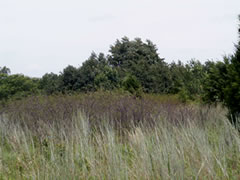
Quail Habitat
Passport to Texas with support from the Wildlife and Sport Fish Restoration Program
When it comes to quail, TPW biologist, Robert Perez, says they’ve had it rough. Habitat fragmentation and drought beat them up in Texas. Working with adjacent landowners to manage their properties for quail is helping to address fragmentation – but what about drought?
26— Where it’s dry, what you can do is be proactive. And so you have proactive strategies for drought, which is leaving residual cover; leaving standing grasses; leaving standing vegetation and not mowing it down; shredding it, or putting cattle on it or other livestock that will remove that vegetation. So you have to have something standing there for them, which is difficult to do in a drought. But there are areas that you can protect. And those quail will kind of hole up in those refugia until things turn around.
Thanks to a new grant from the Wildlife Restoration program, Robert Perez says the agency can now monitor the recovery efforts to help these native game birds.
20–By monitoring I mean you need to go in and count how many animals there are on the front end, and then you have your treatment or your improvements. You then continue counting and seeing if there is actual response by that species. So, we just got a grant from the Pittman Robertson Wildlife Restoration Act Fund – a federal grant – to go in and start measuring the impacts of our works at three different locations in the state over the next four years.
And we’ll follow along and report on their progress.
The Wildlife and Sport Fish Restoration Program supports our series and funds diverse conservation programs throughout Texas.
For Texas Parks and Wildlife…I’m Cecilia Nasti
Posted in Conservation, SFWR, Wildlife | Comments Off on Wildlife: Quail Decline, 2
December 26th, 2012
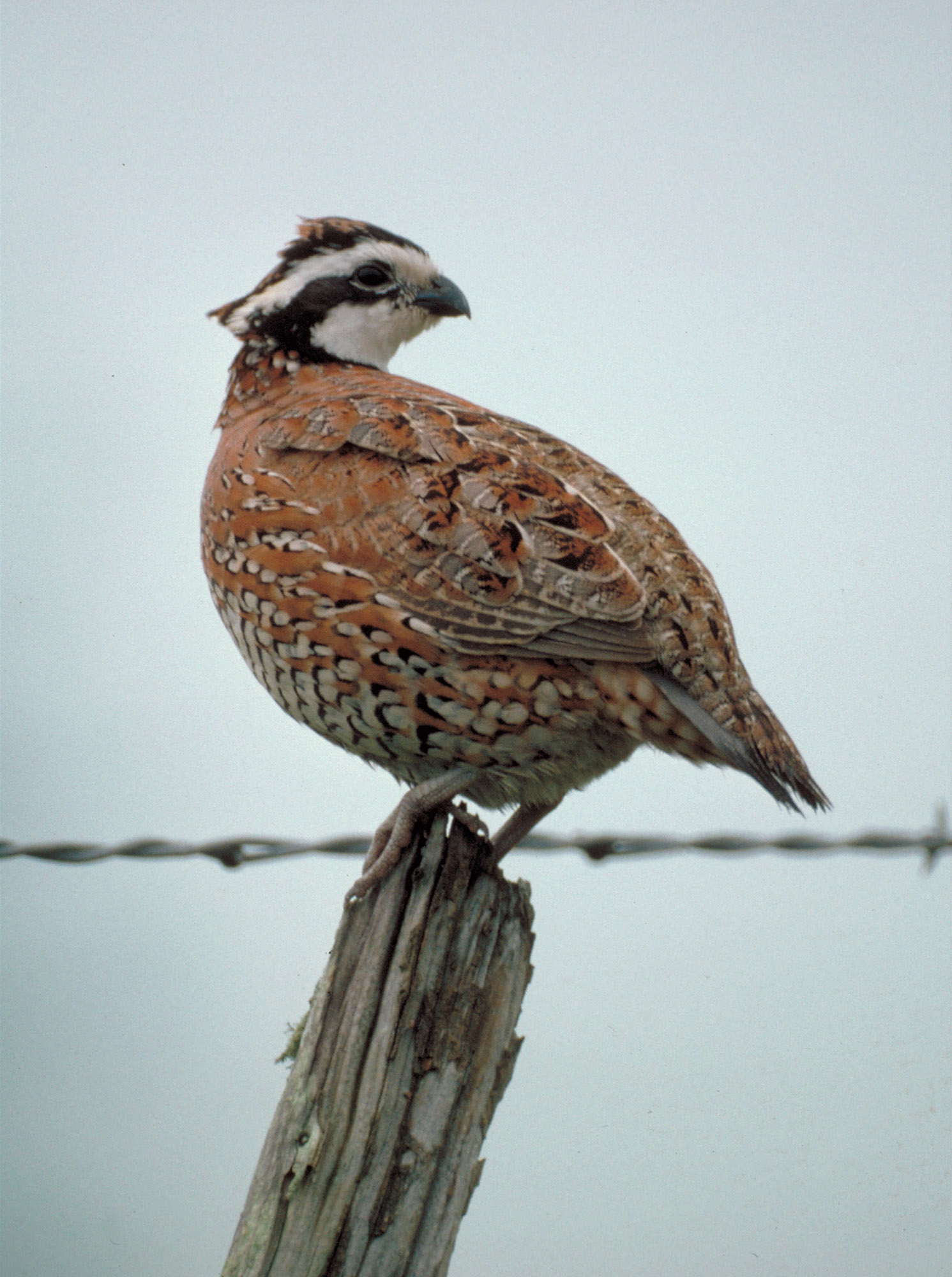
Bobwhite quail, © Texas Parks and Wildlife Department
Passport to Texas with support from the Wildlife and Sport Fish Restoration Program
The northern bobwhite quail may have the largest range among the four quail species found in Texas, but it is also the most threatened.
07— Bobwhites are the big concern as far as our constituents go for parks and Wildlife, and its populations have been in decline range wide.
TPW biologist, Robert Perez, says population decline isn’t new for the bobwhite.
17–In recent history in the 40s, for instance – in the 1940s post WWII – bobwhites were very abundant in east Texas. But since that time they’ve all but disappeared from east Texas and other pine woodlands across the SE United States. And that big decline has continues as you go west across Texas; little by little as time goes by.
If you were to draw a line along the I-35 corridor from Dallas to San Antonio, quail habitat east of that line is highly fragmented.
13– A lot of the native types of grasses and prairies have been replaced by other things; either concrete or by exotic grasses like Mexia or Bermuda, things that quail don’t live in. So, that’s really the main reason of decline in those areas of the state.
Quail need a minimum of 1,000 acres of appropriate, un-fragmented habitat to maintain a viable population. West of I-35, plentiful habitat that includes the bunchgrasses quail need, still exists… but years of drought has taken its toll on the land and the birds.
04– Quail just don’t have that longevity where they can wait through those long drought periods.
More on that tomorrow. The Wildlife and Sport Fish Restoration Program supports our series and funds diverse conservation programs throughout Texas.
Posted in SFWR, Wildlife | Comments Off on Wildlife: Quail Decline, 1
December 25th, 2012

Fulton Mansion, image from www.coastalbendmoms.com
This is Passport to Texas
We have something in common with early Texans.
06 – Christmas and the month of December—in large part—was the time when Texans gathered.
Cynthia Brandimarte is program director for Texas historic sites. Unlike today when a short trip by car or plane will get us to our holiday destination, travel was difficult for early Texans.
09 – And so when you traveled, you tended to stay. People had time at Christmas to do that—to travel and spend weeks.
Which makes the few days that most of us get off at Christmas seem like a rip off. And early Texans made good use of this block of time.
08 – It was then that they celebrated not only Christmas, but other special events, and planned weddings for the month of December.
Since Texas was mostly rural in the 19th and early 20th Centuries, and there wasn’t a lot of farming that could happen in December…
15 – It almost gave 19th Century and early 20th Century rural Texans an excuse not to work. And thus to play a bit more, and socialize a bit more, than they had time to do many other months of the year.
How will you spend your time off this holiday season? How about making a little time to enjoy the great outdoors?
From all of us at Passport to Texas, we wish you a very Merry Christmas and a prosperous New Year…For Texas Parks and Wildlife…I’m Cecilia Nasti.
Posted in Education, Historic Sites | Comments Off on History: Texas Time Off
December 24th, 2012

Image from Hammock Forums, Saab Zombee
This is Passport to Texas
For some, the biggest barrier to overnight camping is sleeping on the ground. What if I told you there’s a new kind of camping allows you to sleep suspended over it instead? Our state park Guide Bryan Frazier has details on hammock camping.
51— I’m a little new to that, and had never really heard much about it. At Fairfield Lake SP recently, they had the fourth annual hammock camping event there – the Texas Society of Hammock Campers – and it’s really something that’s caught on with lots of people. It’s very stewardship driven; there’s extra care taken with nylon straps so that the hammock does not damage the trees. There’s minimal to no damage on ground resources and so the footprint is much, much smaller, and you’re camping suspended in a hammock with a tarp cover. There’s a whole group that’s doing it; you can find out more at www.hammockforums.net. It explains all about it…gives the details of it…talks about some of the events and how you can get involved. It’s an interesting way and a new way to enjoy parks all over. But here in Texas, it’s a growing trend and I think something that’s going to catch on even more.
Thanks, Bryan.
That’s our show for today…with funding provided by Chevrolet, supporting outdoor recreation in Texas; because there’s life to be done.
For Texas Parks and Wildlife…I’m Cecilia Nasti.
Posted in State Parks | 1 Comment »
December 21st, 2012
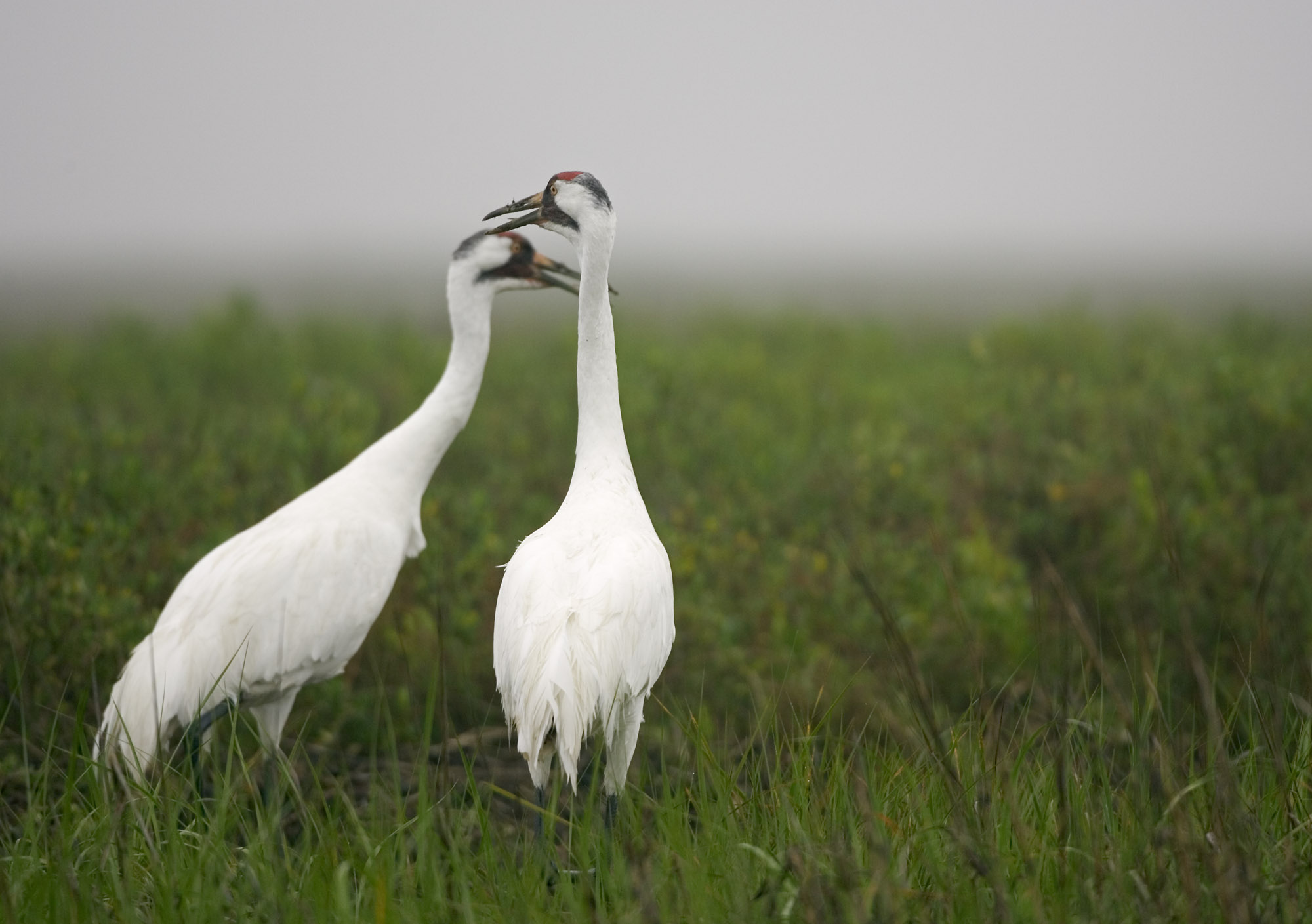
Whooping Crans, photo by Earl Nottingham
Passport to Texas with support from the Wildlife and Sport Fish Restoration Program
Habitat protection and hunting restrictions (in place since the early 20th Century) saved the last wild migratory flock of whooping cranes from extinction.
06— Our whooping crane population in Texas is getting larger. We’re approaching about 300 birds in that population now.
That’s up from a low of 16 birds. Lee Ann Linam, a biologist in the Wildlife Diversity Program, says last year a few whoopers wintered farther inland than usual. To better understand this event, Texas Parks and Wildlife created a new monitoring program called Whooper Watch.
18–If we have whooping cranes that linger either in migration or in some of these non-traditional wintering areas, then we are training volunteers at workshops to go out and to observe those cranes in a way that’s not disturbing to the cranes, but would let them gather some data for us about the habitats they’re using and their behavior in those habitats.
Anyone can and should report a whooper sighting to Texas Parks and Wildlife, but if you want to go deeper, Lee Ann Linam recommends taking the training.
18– We’re using methods that are used by animal behaviorists – especially those who study cranes around the world. So our volunteers are learning some of the real techniques that biologists use. But anybody who enjoys watching wildlife and is a good observer, can learn from us how to gather this data in a way that is really useful to us.
Find information on Whooper Watch at the Texas Parks and Wildlife website.
The WSFR program supports our series and funds diverse conservation programs throughout Texas.
For Texas parks and Wildlife…I’m Cecilia Nasti.
Posted in Conservation, Education, Endangered, Wildlife | Comments Off on Wildlife: Whooper Watch


 Passport to Texas is a
  Passport to Texas is made available by: