You Need Mussels to Make Pearls

October 26th, 2018
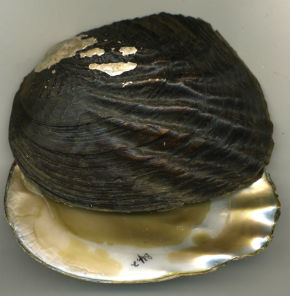
Washboard Mussel

Washboard Mussel

This is Passport to Texas

Though seemingly obscure, freshwater mussels play a vital role in a multi-million dollar industry.

There are at least 300 species of freshwater mussels in North America; Texas is home to more than 50 of those.
Freshwater mussel species are commercially harvested for their shells. Pieces of which become “seed material” for making cultured pearls.

More than 99% of all pearls sold worldwide are cultured.

Most freshwater mussel shells end up in Japan, Australia and Polynesia for the cultured pearl industry. Such a pearl begins with a polished sphere of North American freshwater mussel shell that’s surgically implanted into a marine oyster. The oyster identifies the object as an irritant, and begins to cover it with layers of iridescent mother-of-pearl. After about a year, it’s made a pearl.

Fifteen mussel species in Texas are listed as threatened at the state level. Six of those 15 species are now candidate for listing under the U.S. Endangered Species Act.

Learn more about Texas freshwater mussels and get involved in Texas Mussel Watch on the Texas Nature Trackers page of the Texas Parks and Wildlife website.

For Texas Parks and Wildlife…I’m Cecilia Nasti.
Texas State Reptile — The Horned Lizard

October 25th, 2018

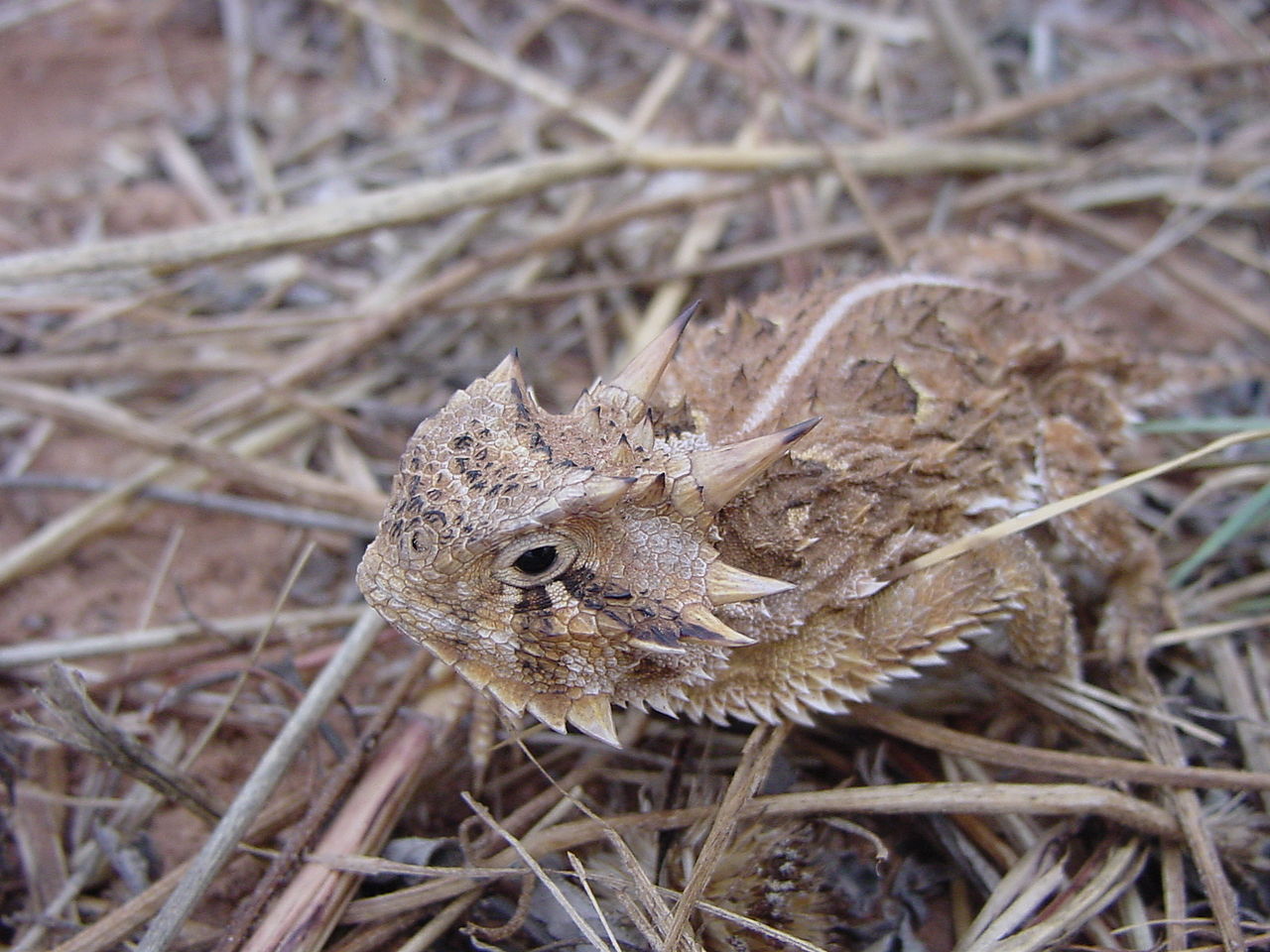
Horned Lizard. Image by: Ben Goodwyn

This is Passport to Texas

The Texas horned lizard or “horny toad” is a flat-bodied, fierce-looking reptile.

Its head is covered with spiky horns, with two central head spines longer than the others. It is brownish with two rows of fringed scales along each side of the body. And this little guy is listed as threatened in Texas.

The horned lizard is Texas’ official state reptile, thanks to two young brothers back in 1993. Abraham and Noah Holland, then of Pleasanton, became concerned about the fate of this creature they loved.

At the time, the boys were members of the Horned Lizard Conservation Society. They convinced their local State Representative to submit a Bill in the Texas Legislature to honor the Texas Horned Lizard with the status of State Reptile. And so it was done.

As if that weren’t enough, the brothers spent several years touring the state as the Traveling Toads. They presented educational programs to thousands of kids and parents throughout Texas.

So, if you’re a kid listening to this, and think that you are too young to have grownups take you seriously or to make a difference…talk to the toad. The horny toad. He might convince you otherwise.

Our show receives support in part from RAM trucks: built to serve.

For Texas Parks and Wildlife…I’m Cecilia Nasti.
Welcoming Bighorn Sheep Back Home

October 24th, 2018
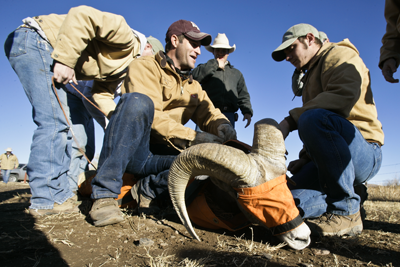
Relocating Desert Bighorn Sheep, photo by Earl Nottingham, TPWD

Relocating Desert Bighorn Sheep, photo by Earl Nottingham, TPWD

This is Passport to Texas

There’s a special quality about Far West Texas; and, as Froylan Hernandez can tell you. When Desert Bighorn Sheep are on the landscape, it’s awe-inspiring.

When I’m up on top of Elephant Mountain, my first glimpse of them, it’s overwhelming. Even if it’s just a single animal.

Hernandez is Desert Bighorn Sheep Program Leader for Texas Parks & Wildlife.

Historically, the native Texas Desert Bighorn Sheep occurred in about 16 mountain ranges out here in the Trans Pecos. Mainly due to unregulated hunting, diseases associated with the introduction of domestic sheep and goats, and net wire fencing – they brought the demise of the Desert Bighorn. And by the early 1960s, they were all gone from Texas.

For more than fifty years, Texas Parks and Wildlife and partners have worked to restore the Bighorn to its home range in Texas.

Luckily, the population in Texas is now big enough, we’re using those sources to transplant the animals to Big Bend Ranch State park.

And Big Bend Ranch SP superintendent Ron Trevizo welcomes them to a new home on the range.

When we started talking about the release coming in – to release the Desert Bighorn Sheep at Big Bend Ranch, I’m like – Yea, that’s great!

See how agency biologists translocate Desert Bighorn Sheep when you check out the Texas Parks and Wildlife YouTube Channel.

The Wildlife restoration program supports our series.

For Texas Parks and Wildlife…I’m Cecilia Nasti.
Landowner Incentive Program

October 23rd, 2018

This is Passport to Texas

With more than 95% of Texas’ land in private hands, it’s crucial that landowners participate in the protection, restoration and maintenance of our state.

Texas Parks and Wildlife wants to help with the Texas Landowner Incentive Program, or LIP.

LIP’s goal is to meet the needs of private, non-federal landowners that wish to enact good conservation practices on their lands, for the benefit of healthy terrestrial and aquatic ecosystems.

Landowners must apply for the program. The first step is to contact your local TPWD office and speak with a staff biologist. They will help with an ecological assessment of your land, review your goals, and provide you with information on the various incentive and assistance programs available.

LIP is a cost-share reimbursement program. Depending on the funding series, TPWD will contribute between 50% and 75% of a total project cost. The applicant is expected to contribute the balance; materials or in-kind services are acceptable match.

If together you and your biologist decide that the LIP program could help you meet your management and restoration goals, your biologist will help you to prepare and submit a project proposal packet. Find more information on the LIP program on the TPW website.

The Wildlife Restoration program supports our series, providing support for private lands initiatives.

For Texas Parks and Wildlife…I’m Cecilia Nasti

Technical Guidance for Landowners

October 22nd, 2018

cinega

This is Passport to Texas

Subdivisions seemingly sprout from fields overnight, pushing wildlife to the fringes. People have to live somewhere, but so does wildlife—and wildlife was here first.

As more than 95% of Texas land is privately owned, it’s vital that landowners play an active role in conserving habitat for creatures great and small.

Texas Parks and Wildlife has dozens of biologists across the state that work with landowners to help them manage their properties for wildlife.

When thoughtfully managed, acres of “undeveloped” land support a wide variety of plant and animal communities, providing habitat for wildlife in tandem with opportunity for both consumptive and non-consumptive recreation.

Through the Private Lands and Habitat Program, landowners receive technical guidance to help them develop a wildlife management plan specific to their location and their goals; the service is free.

Find contact information for Technical Guidance Biologists or Private Lands Biologists near you on the TPW website.

The Wildlife Restoration Program supports our series.

For Texas Parks and Wildlife, I’m Cecilia Nasti.
