October 19th, 2018
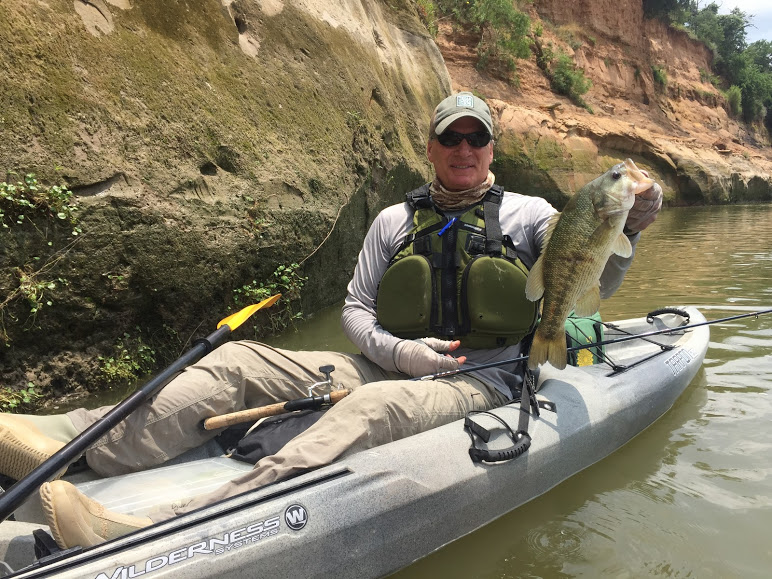
Probably not the smartest bass in the lake.
This is Passport to Texas
Researchers discovered that catching a bass may have more to do with the genetics of the fish than the skill of the angler.
A genetics experiment conducted on largemouth bass at Heart of the Hills Research Center in Kerrville, had researchers attempting something unusual. They wanted to find out if genetics, passed down through generations, played a role in whether a fish would take a baited hook.
For the experiment, researchers placed 110 bass in a large pond. Each time they caught a fish, they marked it, and then returned to the pond.
At the end of four weeks, ten percent of the bass had been caught three or four times…while 20 percent had never been hooked. These two groups were then placed in separate ponds and allowed to breed amongst themselves. In the end, the offspring of fish that were easily caught… were much more easily caught… than were the offspring of fish that had been hard to catch.
The differences became more noticeable with each successive generation, thus proving that the likelihood of a fish being caught on rod and reel is in fact an inheritable trait.
Now you have something fascinating to tell people at the next gathering you attend.
The Sport Fish Restoration Program supports our series. For Texas Parks and Wildlife…I’m Cecilia Nasti.
Posted in Fishing, Freshwater, Research, SFWR | Comments Off on Genetics and Smart Bass
October 18th, 2018
Sport Fish Restoration Program helps make fishing better for all.
This is Passport to Texas
If you’re an angler or boater, you will be interested to know that every time you purchase fishing tackle or motor boat fuel, you contribute to a trust fund that helps support quality sport fishing and boating access in Texas.
It’s the Dingell-Johnson Act. Also called the Federal Aid in Sport Fish Restoration Act; it is a national program.
It began as an excise tax on rods, reels, creels, and fishing lures; the tax money was used to help fund US efforts during World War II. In 1950 it was redirected, thanks to the efforts of Congressman John Dingell of Michigan and Senator Edwin Johnson of Colorado.
Texas receives a 5% maximum apportionment of all of these federal taxes, and it is matched on a 3 to 1 basis with the sale of state fishing licenses.
In Texas, a little over one-third of the funds support fisheries management. One-fifth, hatchery operations; followed by boating access, aquatic education, habitat protection, sport fishery research and public outreach.
These funds help make fishing and boating better in Texas for everyone—from urban neighborhood fishin’ lakes to…well…this show.
Sport fishing is good for the Texas economy as anglers and boaters spend billions of dollars annually for goods and services. Besides, they get to go fishing. I call that win-win.
The Sport Fish Restoration program supports our series.
For Texas Parks and Wildlife…I’m Cecilia Nasti.
Posted in Angler Education, Fishing, Freshwater, Saltwater, SFWR, Stocking | Comments Off on Federal Aid in Sport Fish Restoration
October 17th, 2018
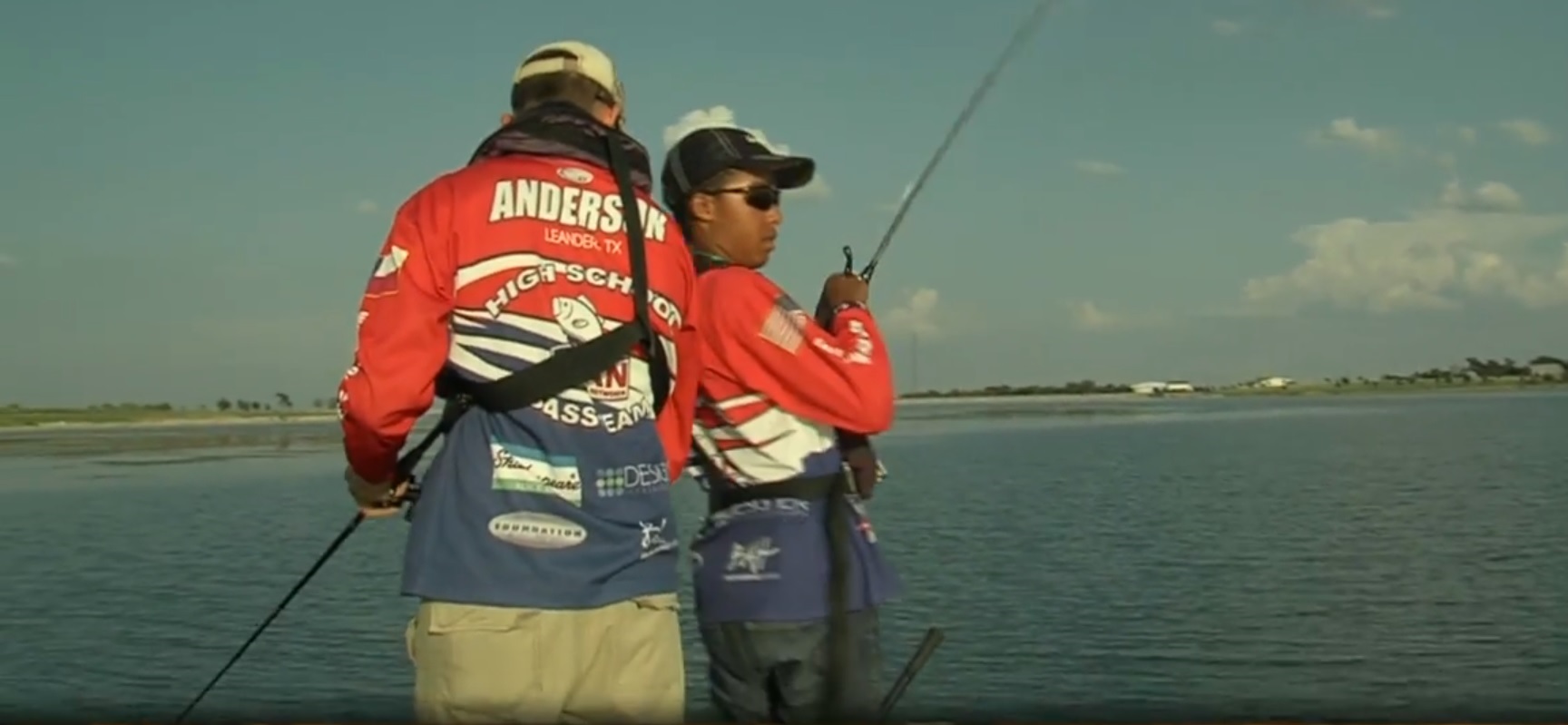
Colt Anderson and his fishing partner Jonathan Gray.
This is Passport to Texas
Size, strength and speed…important attributes for most high school athletes; unless, of course, the sport is fishing.
You don’t have to be the biggest kid, or tallest kid, or the most athletic kid to be a bass fisherman. It’s all about your knowledge.
Several years ago Colt Anderson was half of a high school fishing duo; Jonathan Gray was his teammate.
It’s kind of like playing golf a little bit, where you have different tools and you have to adapt to the conditions. You can never become perfect at fishing, and that’s a cool thing because you can always improve.
Another factor that makes competitive high school fishing a great sport is that young women can also participate – like Marinna Collins and Mia Sartor were the only female team at tournaments in which they participated.
It’s hard being the only girl team out there. We’re going to represent. This is my first year, so I am a little scared, but, you just have to relax. Chill. Just go with it.
Fishing is a terrific way to introduce young people to the outdoors.
Ooh. I think that’s the furthest I’ve cast yet. [giggles] That felt good. It’s really cool being in this club because you get to meet a lot of different people. And, we’re all like one big family – and that’s really good to have friends you can be really close with.
The Sport Fish restoration program supports our series.
For Texas Parks and Wildlife…I’m Cecilia Nasti.
Posted in Fishing, Freshwater | Comments Off on Fishing Builds Confidence
October 16th, 2018
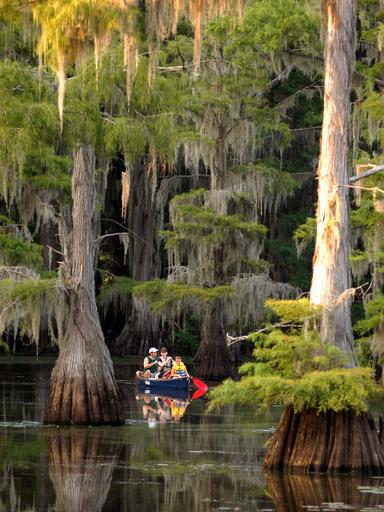
Paddling on Caddo Lake
This is Passport to Texas
Gliding along the paddling trails on Caddo Lake in East Texas is at once intimate and humbling: mist dancing on the water; banks flanked by giant, moss-covered bald cypress; the chorus of birds; habitat teaming with diverse and abundant wildlife. It’s a special place.
It’s beyond words to describe how wonderful this place is.
Vanessa Adams worked as a resource specialist with parks and wildlife.
The paddling trails here on Caddo Lake will get you back into some habitat that is just not everywhere, it’s unique. It gets you into a place that you may have never seen before.
Marshall, Texas resident, and Caddo Lake paddling enthusiast, Sandra Phillips, says she feels close to the earth when she’s on this enigmatic lake.
You can’t find this well really anywhere else. All the network of canals and the swampyness of it.
Caddo Lake is different every season; Adams says paddlers need to return often to experience the full effect.
You gotta get out on the boat, you gotta get in the swamp and you really gotta sit down and you gotta sit and listen.
Find more information about Caddo Lake and discover other unique Texas paddling trails on the Texas Parks and Wildlife website.
The Sport Fish restoration program supports our series.
For Texas Parks and Wildlife…I’m Cecilia Nasti.
Posted in Habitat, Nature Tourism, paddling | Comments Off on Caddo Lake Paddling Trail
October 15th, 2018

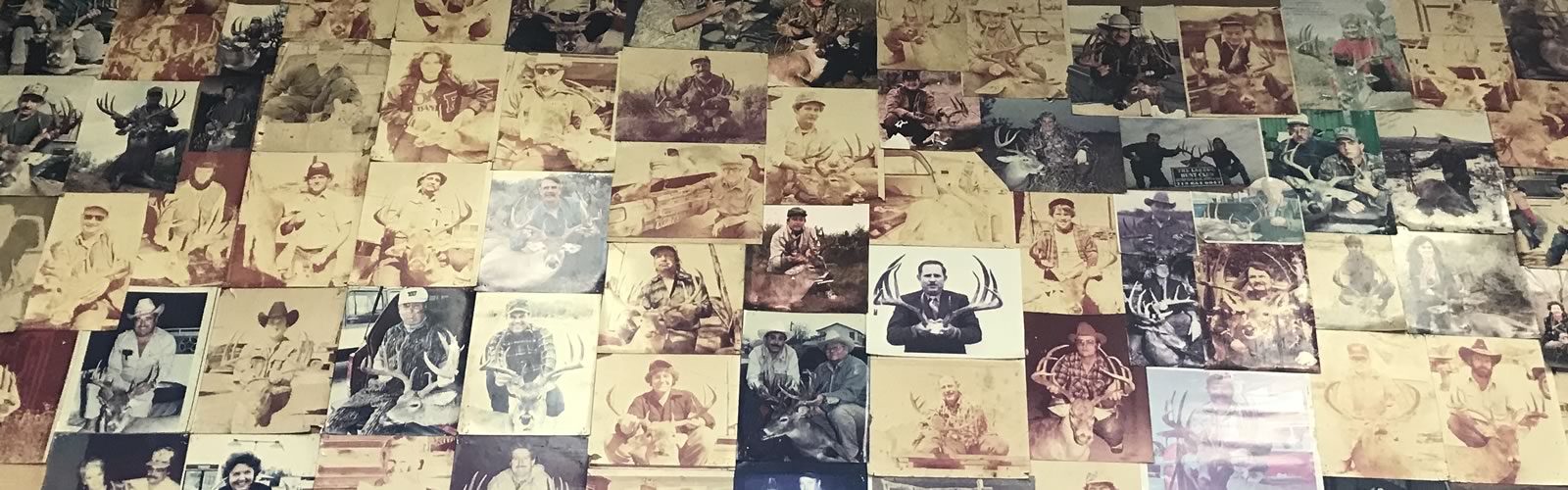
Muy Grande Deer Contest, Image: https://muygrandevillage.com/
This is Passport to Texas
The excitement mounts as hunters across Texas await the November 3rd deer season opener.
None are more eager than those who plan to participate in the annual Muy Grande Deer Contest–the granddaddy of all deer hunting contests. Read about it in an article by John Goodspeed, in the November issue of Texas Parks and Wildlife Magazine.
Goodspeed captures the thrills and disappointments of the final day of the competition–the last day of deer season. Hunters continue to vie for dominance in multiple categories until the final hour. They agonize as they watch their rankings rise and fall on the leader board.
Leonel Garza founded the contest in 1965. Operating out of his family’s gas station and convenience store in Freer in South Texas, Garza started Muy Grande to celebrate the bounty and quality of white-tailed deer in his region. He says South Texas Deer are as wide as the Rio Grande and as big as the state of Texas.
The contest and Mr. Garza have been honored at the Texas State Capital contributions to whitetail conservation, deer management, and major economic contributions to the state of Texas and South Texas.
Catch the excitement when you read John Goodspeed’s article on the Muy Grande Deer Contest in the November issue of Texas parks and Wildlife magazine. On Newsstands now.
We receive support from RAM Trucks: built to serve.
For Texas Parks and Wildlife…I’m Cecilia Nasti.
Posted in Hunting, TPW Mag, white-tailed deer | Comments Off on TPW Magazine – The Buck Stops Here


 Passport to Texas is a
  Passport to Texas is made available by: