Hunter Education: Using a Hunting Harness

December 15th, 2009

This is Passport to Texas

Parents harness their kids into high chairs to keep them from taking a tumble. Hunters should always use a similar device called a fall restraint system that keeps them safely tethered to elevated stands.

Most of them fit like a fishing vest, but they have straps that go under your legs and secure it to your body.

Hunting education coordinator, Terry Erwin, says not all fall restraint systems are created equal.

When you’re going into an elevated stand of any type, you should always use a tree stand manufactures association approved safety harness. And, if it’s not TMA approved, then you don’t want to use it because it’s not going to be the one that will protect you the most.

For the restraint system to work properly, it must fit snugly around the body, with no slack in the tether.

Tether yourself, or secure yourself, above your head, so that there‘s no slack in the harness itself and the tethering line. So, if you were to accidentally fall asleep and lean forward, it would catch you within about 3 or 4 inches.

Finally, before using a fall restraint system in the field, Erwin says—give it a test run.

Go out and give it a try. Climb with it; secure yourself going up, and also secure yourself coming down.

Find hunter safety information on the Texas Parks and Wildlife website.

That’s our show…We receive support from the Sport Fish and Wildlife Restoration Program…funded by your purchase of hunting and fishing equipment and motorboat fuel…For Texas Parks and Wildlife I’m Cecilia Nasti.

Fly-Fishing = Artful Angling

December 14th, 2009

This is passport to Texas

There are those who define fly-fishing as angling for trout in the Northwest US; but not Tink Pinkard.

In the Hill Country of Texas, and in particular South Texas, there are several rivers and streams that harbor several large populations of smallmouth, largemouth and sun perch. For instance, here in downtown Austin, it’s quite possibly the best urban fishery here in the United States.

Pinkard, a hunting and fishing guide and avid fly-fisher, considers fly-fishing artful angling.

You’re actually making and forming the flies; so it’s a lot more hands on and its more of an art form.

Like art, fly-fishing takes time to master.

It’s all about the process of learning to fly-fish instead of just, as we call it, chunking junk (laughter)

Pinkard says don’t let the process get you down; with perseverance, you will become proficient.

It’s just more patience in the end, and probably more practice to get the technique down. Because, as with any fishing, it’s the proper introduction that will get the fish to take your lure—or your fly, if you will. And with anything, practice makes perfect. So, as you practice more with the fly rod, you start to get the ability that you would have with the commercial tackle.

That’s our show… we receive support from the Sport Fish Restoration program…which funds fisheries research in Texas.

For Texas Parks and Wildlife…I’m Cecilia Nasti.

Out of State Hunting Trips

December 11th, 2009

This is Passport to Texas

As good as hunting is in Texas—sometimes a person just wants a change of scenery. That’s when hunters set their sites beyond state lines.

The first thing you need to do when you go out of state is find out what’s required—as far as legal requirements for hunter education. And make sure you do that well in advance.

Otherwise, says hunter education coordinator, Terry Erwin, you could be out of luck.

So many times we get called [where people say], ‘Well, I need a class to go to Colorado, and I’m leaving tomorrow.’ And that will not work.

Texas has reciprocal hunter education agreements with every state.

Weather usually isn’t a big concern when hunting at home, but when you go out of state to places like Colorado or Idaho—that changes—and so should you.

When you’re going up there, you’re going into multiple different types of weather. Carry clothing that you can actually dress fort the conditions as they change. Your feet are your most important aspect up there. Always carry a minimum of two pair of boots: one pair of waterproof boots, one pair of good hiking boots, and at least two changes of socks per day.

Find hunting information on the Texas Parks and Wildlife website.

Our show…receives support from the Sport Fish and Wildlife Restoration Program…funded by your purchase of hunting and fishing equipment and motorboat fuel…For Texas Parks and Wildlife I’m Cecilia Nasti.

Hunters for the Hungry

December 10th, 2009

This is Passport to Texas

Texas hunters are not only conservationists, they are also philanthropists who help feed hungry Texans.

This past season, we had 192,040 pounds of meat donated, which is the most that we have had donated in one season.

That translated to more than 768-thousand quarter-pound servings of ground venison. Anitra Hendricks coordinates the Hunters for the Hungry program, administered by the Texas Association of Community Action Agencies.

The way that the meat processors package it is in two pound servings. Some of the pantries will use the venison in soups, or they will use it in spaghetti, or they may just hand out the individual packages.

Hunters taking part, bring donated deer to participating processors, and pay a small processing fee.

He can request a receipt if he’s not automatically given one; and that receipt will be for what he paid for the processing. That cost may or may not be tax deductible. And that is up to the hunter to contact a tax consultant.

We have links to more information about Hunters for the Hungry at passporttotexas.org.

That’s our show, made possible by a grant from the Sport fish and Wildlife Restoration Program…working to increase fishing, boating, shooting and hunting in Texas.

For Texas Parks and Wildlife, I’m Cecilia Nasti.
______________________________________

2009-2010 Participating Processors

Panhandle
North Central
Post Oak Savannah
Pineywoods
Trans Pecos
Hill Country
South Texas
Oak Prairie/Coastal

Tips for Cooking Venison

December 9th, 2009

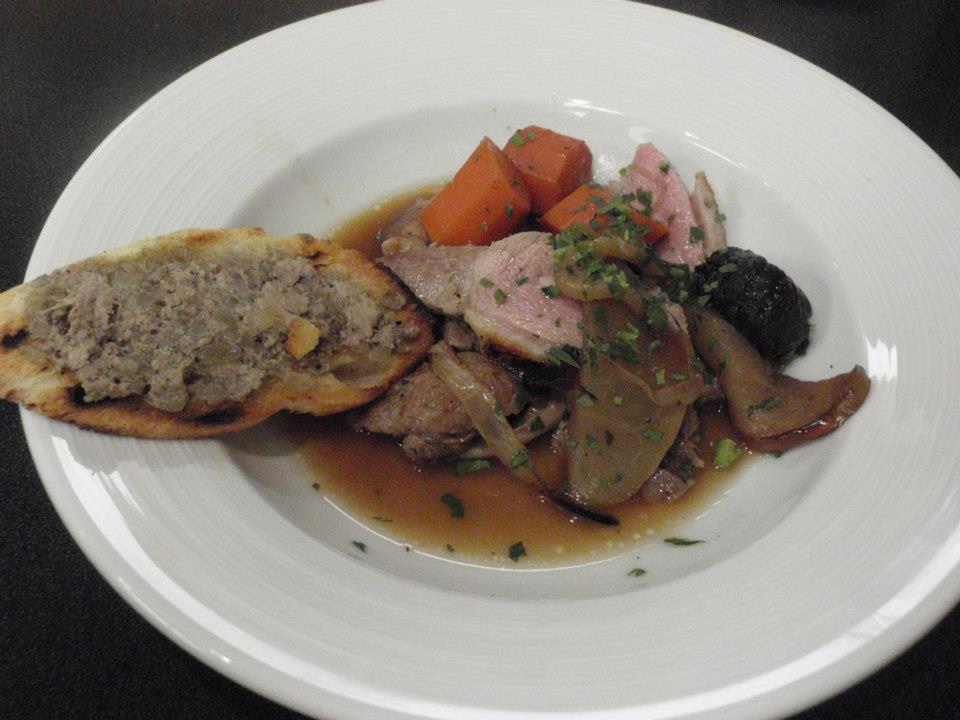
Wild Game for dinner

Wild Game for dinner, photo © Cecilia Nasti


This is passport to Texas

We’re in the thick of fall hunting season, which means venison is on the menu. When cooking this perfect protein, it’s important to use the correct method to achieve the best flavor and texture.

Either you’re going to cook it a very short amount of time or not even cook it at all—raw in the form of tartar—which is excellent. Or you’re going to cook it where it’s just got a nice brow crust on the outside, and it’s still rare or medium rare on the inside; or, you’re going to cook it at a very slow rate for a long time like a braise or a very slow roast.

Jesse Griffiths is a hunter and professional chef in Austin. He says slow cooking allows the fats, sinews and collagen to melt, which makes the meat juicy and tender.

So, braising is a good way, because it’s a moist cooking. You brown it off first, develop flavor, and then cook it in liquid. And so that keeps the moisture in there. Then cook it gently—don’t boil it—you have to get a nice simmer. Keep it in the oven. The secret is just to have patience.

Chef Griffiths also does all his own processing, because he uses all parts of the animal, including liver, kidneys, bones and more.

I think it’s just a shame to waste anything off of any animal. Especially when we put so much work into hunting.

We have a venison recipe from Chef Griffiths at passporttotexas.org.

That’s our show…For Texas Parks and Wildlife…I’m Cecilia Nasti.
_____________________________________________________
Stuffed Venison Flank
Recipe by Jessee Griffiths of Dai Due Supper Club, Austin, Texas

Tomatoes can be added to this dish to make a tomato-based sauce instead of just stock. Dried Fruit, mushrooms or other vegetables such as carrots or parsnips can be added to the braise as well.

Ingredients
2 boneless venison flanks
salt & pepper to taste
1 pound ground pork
chopped fresh herbs like thyme, rosemary & sage
1 cup fresh breadcrumbs
2 eggs beaten
olive oil
2 onions, sluiced thin
1 pint tomatoes (optional)
wine (optional)
stock or water, as needed.

Preparation

Preheat oven to 350 degrees
Lay the flanks in front of you with the grain running horizontally. Season them with salt & pepper. Mix the ground pork, herbs, breadcrumbs and eggs in a small bowl and season with salt & pepper. Spread this mix onto the flanks and roll the flanks around the stuffing. Tie the flanks with kitchen twine.

In a large pan (big enough to accommodate the rolled, stuffed flanks), heat a good amount of olive oil and patiently brown the stuffed flanks until browned. Remove the flanks to an ovenproof casserole. Add the onions (as well as other optional vegetables like carrots, celery, parsnips, garlic, ginger, etc.) to the pan in which you browned the flanks and cook until softened. Add the optional wine / or tomatoes and cook until reduced by half. Pour over the flanks and add enough water or stock to come halfway up the meat. Bring to a boil and place int eh oven, uncovered. Braise, turning the flanks every 30 minutes, for 2 to 5 hours, or until tender (this will depend on the animal). Add more liquid as necessary. Taste the finished sauce and season as needed with salt and pepper. Allow to rest for a few minutes or cool overnight; curt away twine, and slice thickly against the grain.
