TPW TV: The Bug Man

April 20th, 2018
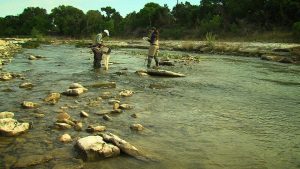
Dr. Grubh searching for bugs.

Dr. Grubh searching for bugs.

This is Passport to Texas

The Blanco River flood of 2015 devastated vegetation along the river banks, and demolished river substrate.

These flood levels were really huge. Regular discharge on the Blanco river is about 90cfs, which means cubic feet per second, and it peaked around 150,000 cfs.

Archis Grubh is an aquatic biologist.

 I primarily focus on the invertebrates.

He says that flood knocked out nearly 90 percent of the river’s invertebrates, which are essentially aquatic bugs.

Invertebrates are really good indicators of water quality. Because, if the water quality is going down, those are the first ones to disappear from the water.

Since the flood, Dr. Grubh’s collected specimens, which he’s taken back to his lab.

We collect three samples; we just dump all whatever we have. There’s gonna be tons of insects packed in it. It’s very important, because I’m studying and finding out what all the diversity of these invertebrates are. So, I am capturing a snapshot here and recording what all we find.

Diversity means a healthier river ecosystem overall. Grubh’s research will help in future river management.

[I want to find out] Which ones were most affected and how they are doing now.

Learn more about Dr. Grubh and his work next week on a segment of the Texas Parks and Wildlife TV series on PBS.

The Wildlife and Sportfish Restoration program supports our series.

For Texas Parks and Wildlife…I’m Cecilia Nasti.
Less can be More with Some Rare Species

April 19th, 2018
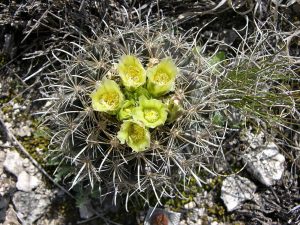
Tobusch fishhook cactus

Flowers of Tobusch fishhook cactus can be yellowish-green (or golden-yellow or bright yellow – not shown).

This is Passport to Texas

Sometimes the best course of action is no action at all. At least that’s the stance botanist, Jackie Poole, takes when it comes to the endangered Tobusch Fishhook Cactus and the insect grubs that eat it.

And that’s a real problem, because one of these insects is only known to lay its eggs in Tobusch Fishhook Cactus; so, it’s basically as rare as the cactus.

In the case of the Tobusch cactus – and its nemesis the Tobusch weevil – the best botanists can do is observe.

We’ve just been studying it for the last 10 or 15 years to see if there’s some kind of cyclical nature to this predator/prey relationship—where you have a big prey population buildup, like a lot of Tobusch fishhook cactus are out there, and then all of a sudden the insect population starts to boom because it has so many cactus to lay its eggs in. And then the cactus goes away and then it crashes, and then you just go through this cycle back and forth.

Other variables could also come into play to explain these fluctuations; making a hasty solution no solution at all. Patience is necessary.

That’s right. And that’s the main thing I think with endangered species. I often tell people to just to take a deep breath, because you just need to sit back and think about it and look at it and not think that the sky is falling.

Learn about rare and endangered plants on the Texas parks and Wildlife website.

The Wildlife Restoration program supports our series.

For Texas Parks and Wildlife, I’m Cecilia Nasti.

Birds on the Move

April 18th, 2018

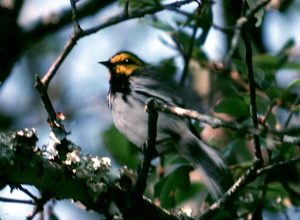
Some birds, like the golden-cheeked warbler are endangered because of habitat alteration.

This is Passport to Texas

According to a National Audubon Society report on birds and climate change, 314 of the 588 North American bird species studied will lose more than 50 percent of their current climatic range by 2080.

Ornithologist, Cliff Shackelford, says climate change is impacting these species. As the temperatures rise, birds move north. Another reason is habitat alteration.

The interesting thing is that probably four or five decades ago there was another pulse or movement of birds that might not have been related to climate change. And what some people have suggested is a lot of these birds are extending their range because of fire suppression where grasslands were probably a good barrier to a lot of these woodland birds. And now that we don’t have fires to maintain grass, we have trees encroaching. Things like mesquite, huisache and retama are increasing, and a lot of those South Texas birds are moving in response to that.

Some birds, like the golden-cheeked warbler, are already endangered because of habitat alteration. And if something’s not done to restore the habitat, many more birds could find themselves without a suitable home.

They’re specialized they need a very specific habitat and when that is whittled away, they’re not able to adapt to other environments.

The Wildlife Restoration program supports our series.

For Texas Parks and Wildlife I’m Cecilia Nasti.

Wildlife and the Law of Attraction

April 17th, 2018

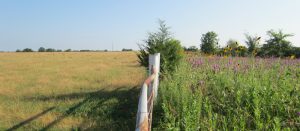
On which side of the fence do you imagine you will find more wildlife?

This is Passport to Texas

Habitat requirements vary between species, yet some critters make themselves at home anywhere.

Wildlife are really adaptable, and there’s going to be some wildlife that thrive in whatever type of habitat that’s provided.

Kelly Simon (SEE-mah) is an urban wildlife biologist. Even a perfectly manicured monochromatic monoculture known as lawn—will attract some wildlife.

In a typical urban area—where you’ve got really closely mowed Bermuda grass lawn, or St. Augustine lawn, and then just a few really tall mature trees and kind of nothing in the middle? That kind of habitat is really good for grackles, and pigeons, for possum and raccoon, and kind of the species that you see in a disturbed habitat.

Simon says most people don’t mind seeing those species sometimes, but not all the time.

And so what we try to do is to encourage people to create a more balanced habitat. And what I mean by that is to provide native plants that provide natural food sources—fruits, nuts, berries, leaves, etcetera—that provide a balanced source of nutrition for the animals.

This balanced habitat is called a wildscape. Find wildscape information on the Texas Parks and Wildlife website.

The Wildlife restoration program supports our series.

That’s our show… For Texas Parks and Wildlife…I’m Cecilia Nasti.
Every Day is Earth Day

April 16th, 2018

Happy Earth Day

This is Passport to Texas

On April 22, 1970—48 years ago—tens of millions of people worldwide demonstrated for a healthy, sustainable environment. Thus began the annual observance called Earth Day.

The demonstration evolved into a celebration—but the message is the same: let’s keep the planet healthy.

Celebrating our environment once a year is meaningless if that’s where it ends. So, let’s challenge ourselves to do something every day to care for our planet.

What can we do? Reduce, reuse and recycle comes to mind. So does upcycle—which is like reuse 2.0. It’s when you repurpose a product and create new value. Such as when we turn old truck tires into beautiful containers for ornamental gardens.

If you do plant a garden, use native species. They require less water and provide food and shelter for pollinators and other wildlife.

Leave the outdoors better than you found it. Pick up and discard trash you see. When fishing, be sure to properly dispose of monofilament fishing line. And choose to spend time outdoors with your family. Get in the middle of nature instead of just watching nature programs on television.

That’s our show for today… Funding provided in part by Ram Trucks. Guts. Glory. Ram

For Texas Parks and Wildlife…I’m Cecilia Nasti.