Helping Hummers After Hurricane Harvey

October 5th, 2017
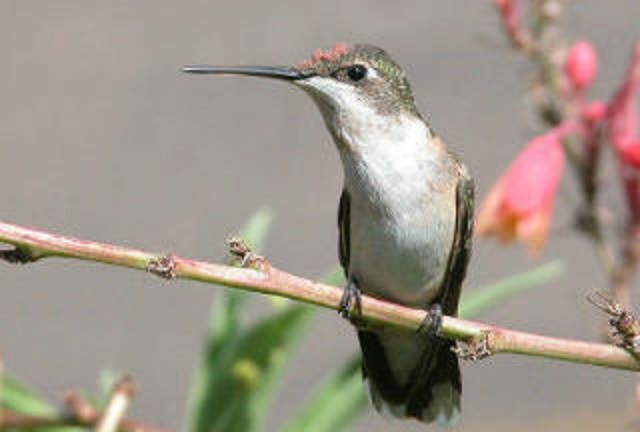
Hummingbirds are adaptable.

Hummingbirds are adaptable.

This is Passport to Texas

Rockport, hit hard by Hurricane Harvey, is famous as a fall/winter hummingbird migration stopover.

Hummingbirds are equipped to handle all kinds of environmental situations – [including] natural disasters. And, they are opportunistic: they look for opportunities in which to feed.

Urban wildlife biologist, Kelly Simon says residents are rightly focused on recovery, and may not hang nectar filled feeders this season.

Hummingbirds have endured natural disasters like this for as long as there have been hummingbirds. And so, while we’re focusing right now on human needs, the physical needs of hummingbirds will be met by the hummingbirds.

Folks along the migration path might consider hanging a few extra feeders, using a 3:1 ratio to increase energy content. However…

Hummingbirds don’t live by sugar water alone. They actually require spiders and mites that the find in native plants in order to gain the fats and proteins that will help fuel their journey. That may be a thing that’s hard for them to find. But, Corpus Christi is not that far away. And Corpus Christi has an abundance of flowers – they were not hit quite as hard. So, there’s a lot of natural food out there. It may not be in Rockport, but adding about 100 miles on top of the journey, when you’re looking at a 2-thousand mile journey, is probably not significant.

Hummingbirds, like those hit by Harvey, are survivors, but always appreciate help from their friends.

For Texas Parks and Wildlife, I’m Cecilia Nasti

_____________________________________

The following is from the TPWD publication about hummingbird gardens:

Food Resources for Hummingbirds
Remember, while sugar is important to these birds, it is not the only food resource. We need to provide for not only their energy needs, but vitamins, minerals, protein and other nutrients as well. This is done with a carefully planned and maintained garden. A good hummingbird garden will include:

  • Nectar producing plants designed for hummingbird attraction
    – Plants with trumpet shaped flowers usually oriented horizontal or downward
  • Insect attracting plants
    – Plants with large, flat flower heads usually oriented vertical or near so
    – These are generally yellow or blue in color Bloom season is important.

In Texas it is possible to have hummingbirds year-round, so you should aim to have plants in bloom as long as possible. In the northern reaches this becomes more difficult because of frost, but careful selection can extend the hummingbird season by weeks. Try to select plants with overlapping bloom periods so that there is always something in bloom.

Plant a food source: Nectar producers and insect attractors   

Shelter Trees and Shrubs

  • Pecans
  • Oaks
  • Elms
  • Cedar
  • Pines
  • Mountain laurel
  • Prairie flame leaf sumac
  • Evergreen sumac
  • Possum haw
  • Agarita Yaupon holly

Food Plants for Texas Hummingbirds

  • Any native sage such as autumn sage (Salvia gregii)
  • Trumpet vine
  • Cross vine
  • Coral honeysuckle
  • Texas lantana (Lantana urticoides)
  • Turk’s cap
  • Yellow bells
  • Flame acanthus
  • Native hibiscus

Layout Tips

  • Try to provide food at multiple levels of the garden
  • Plant islands of color
  •  Be sure to have plants s with overlapping bloom periods in each garden
Climate Change Lottery and its Affects

October 4th, 2017
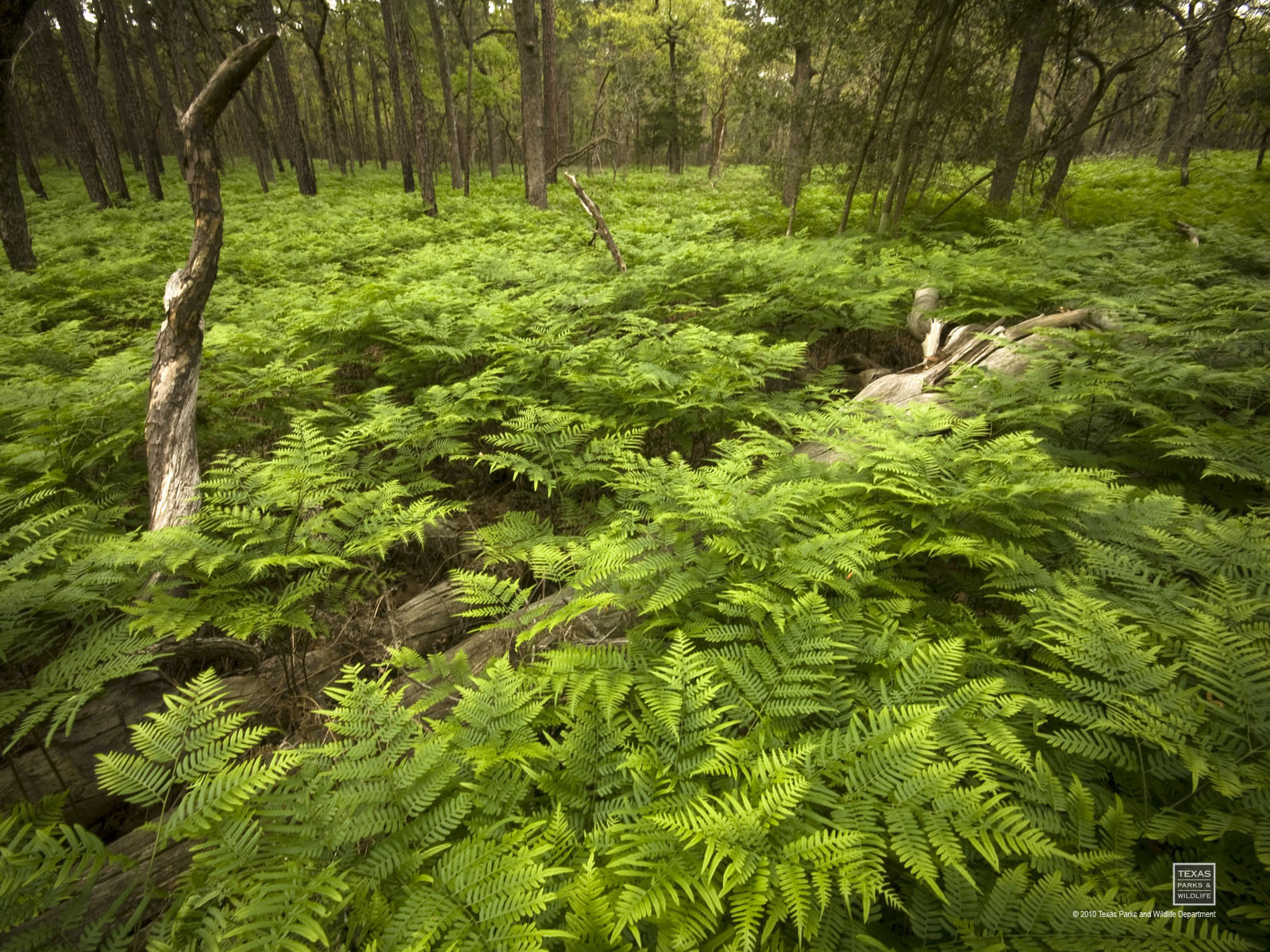
Bracken ferns at Bastrop State park

Bracken ferns at Bastrop State park

This is Passport to Texas

Texas wildlife has a stake in the climate change lottery.

Climate change is going to affect species that are found – and breed – in backyards here in Texas.

Former Texas Parks and Wildlife biologist, Cullen Hanks, says models that predict impacts of climate change on wildlife vary, so we need baseline information on each species.

To be able to document change, we need to know where things are before they change. And, this highlights the need of documenting the distribution of species that we have today in Texas. And, there aren’t enough biologists to do all of that. And so, what we do is we reach out to citizens. That’s exactly right! Texas is a big state with a lot of species, and the community of naturalists and citizens interested in wildlife in Texas can play a huge part in documenting wildlife in Texas.

Monitor backyard species, and then share your observations online.

ebird, a citizen science platform, created by the Cornell laboratory of Ornithology is a great way to maintain your checklist of birds. In addition, iNaturalist is a really useful platform for documenting your wildlife sightings of any species — not just birds.

Texas Parks and Wildlife has various projects on iNaturalist. Just go to the Texas Nature Trackers page on the Texas Parks and Wildlife website for details.

For Texas Parks and Wildlife…I’m Cecilia Nasti.

2017 Texas Pollinator BioBlitz

October 3rd, 2017
#TXPollinators

#TXPollinators

This is Passport to Texas

Love bugs? There’s still time to participate in the Pollinator BioBlitz, which continues through October 8th.

[We have] two goals in mind: to increase awareness about pollinators, and about the habitat that they require.

Johnnie Smith is Conservation Education Manager. Pollinators include bees, butterflies, beetles, moths and other critters that move pollen while foraging.

If you participate in the pollinator bio-blitz, you’re going to have an opportunity to observe pollinators at a site that you visit, like your local zoo or aquarium or nature center. And observe the pollinators that are there. Grab a picture of the pollinators you find, and you can post them onto Instagram. We’re asking all of the participants to use the hashtag #savethepollinators.

Post findings, on iNaturalist.org. Texas Parks and Wildlife’s website, has pages dedicated to the Pollinator Bioblitz.

Where people can learn what pollinators might be in their area. Links to what might be blooming in your area right now—that’s hosted out of the Wildflower center—and then also, to be aware of habitat you have that supports pollinators. And if you don’t have habitat in or near your home, school library… We’re encouraging people to try and get organized in planting pollinator habitat.

The Pollinator BioBlitz began September 23 and runs through October 8th.

The Wildlife restoration program supports our series.

For Texas Parks and Wildlife…I’m Cecilia Nasti.

TPW TV – Paddling the Trails at Port O’Connor

October 2nd, 2017
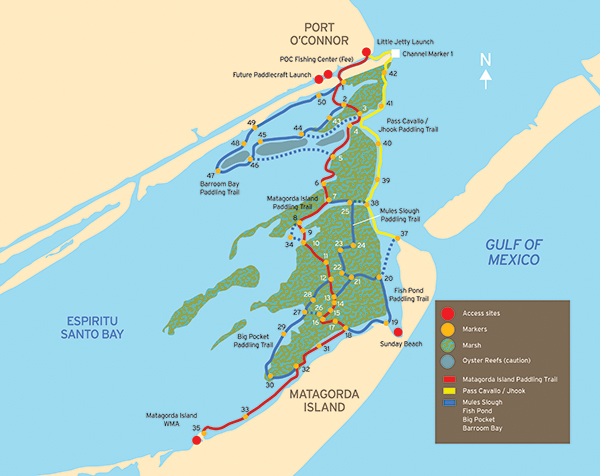
Map of Port O'Connor Paddling Trail

Map of Port O’Connor Paddling Trail

This is Passport to Texas

Port O’Connor offers outdoor enthusiasts an enticing paddling trail opportunity.

We are in Mule Slough in the back bay system of Port O’Connor, Texas. This is an isolated flat, and it is surrounded by black mangrove and cordgrass.

On a segment airing this week on the Texas Parks and Wildlife TV series, we follow Alan Raby with Dolphin Kayaks as he takes Xandra and Jade Alford on a tour of this unique place.

 This is my backyard. My backyard’s always been outdoors with everything. And you get to sit in a kayak and get to see pelicans, seagulls, herons – everything. You get to see it all.

Kayakers experience wildlife up close and personal.

[Alan] So, the Port O’Connor is unique in the way that it’s probably the most vast one on the Texas coast that’s easily accessible. There’s over 40 miles total of paddle trail. [Xandra] Look, Jade. Look at tht look. [Jade] That is just a camera ready loon. [Xandra] He’s getting his fifteen minutes in.

Alan Raby says the Port O’Connor trail, always feels new.

[Alan] It is an adventure almost every time you come. I mean, the saying goes, once you visit here once, you always come back a second time. [Xandra] You know, Port O’Connor has a way of bringing you back. It’s a great place to be.

Discover the Port O’Connor paddling Trail on the Texas Parks and Wildlife TV series on PBS through October seventh. Check your local listings.

The Sport Fish restoration program supports our series.

For Texas Parks and Wildlife…I’m Cecilia Nasti.

Big or Small, WMAs Are Places to Learn

September 29th, 2017
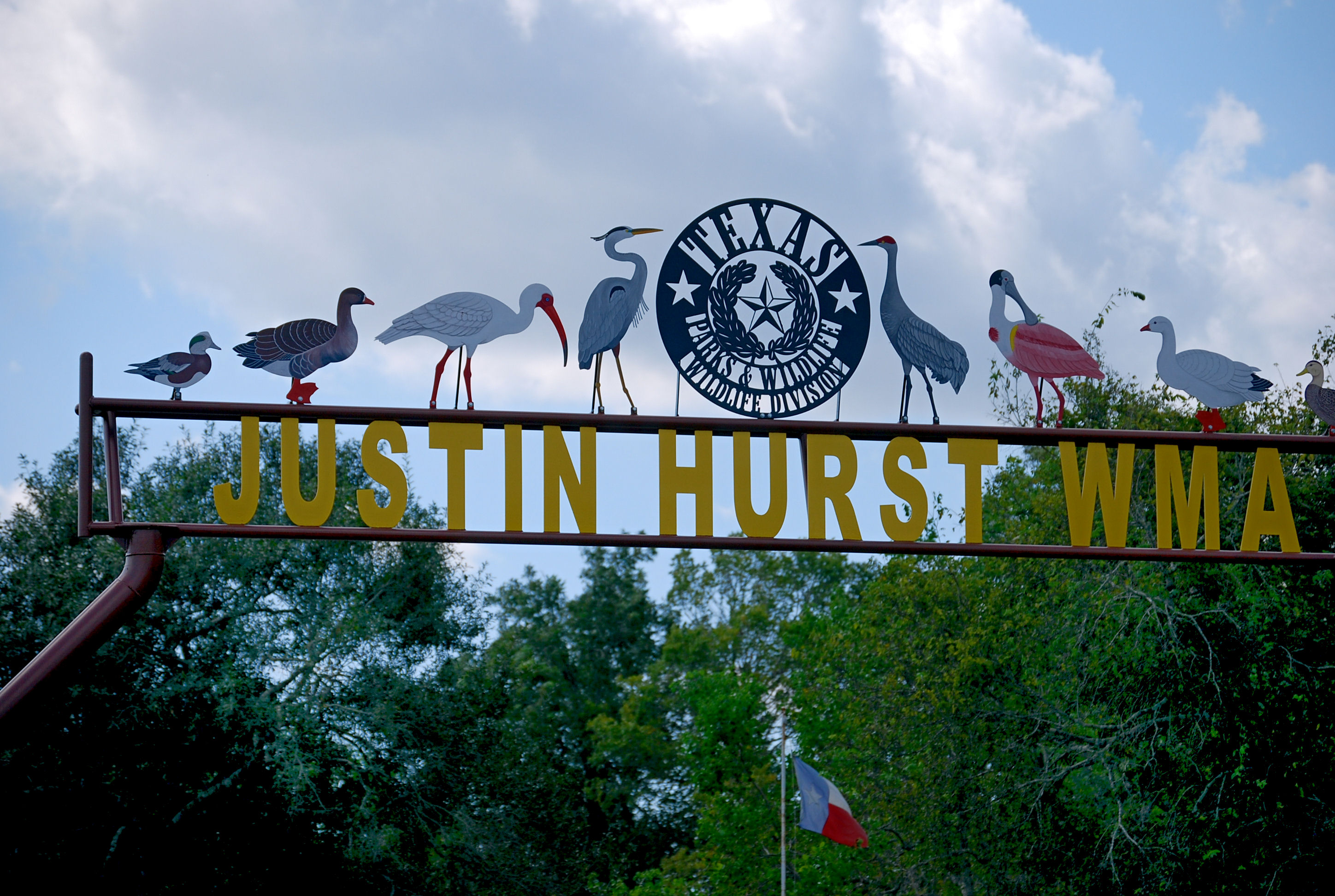
Entrance to Justin Hurst WMA

Entrance to Justin Hurst WMA

This is Passport

Texas Landowners learn how to manage their acreage by emulating wildlife biologists who keep the state’s Wildlife Management Areas in top form.

Wildlife biologists go out on the WMAs and they take a look at what we have; what the baseline is. And then they take a look at historically what has been there in terms of vegetation and wild animals. They’ll determine what it takes to restore that habitat, or to enhance that habitat.

Dennis Gissell is Wildlife Management Area facilities coordinator. Texas Wildlife Management Areas’ encompass about three-quarters of a million acres.

[The] largest WMA is in east Texas – the Sam Houston National Forest, which is actually a US Forest Service Property that we lease/license from them to manage. It’s over 160-thousand acres. The smallest is near Corpus Christi.

And that WMA is only 36 acres! The aim is to have WMAs for teaching and research in each of the state’s 10 ego-regions. Every one provides opportunities for discovery and learning, even when they are small.

These smaller tracts of land have really unique features. In this case – this particular property – has a wetland and a pond that has historically, been very attractive to waterfowl.

Find more information about WMAs on the Texas Parks and Wildlife website.

The Wildlife restoration program supports our series and helps to fund the management of Texas’ 50 Wildlife Management Areas.

For Texas Parks and Wildlife…I’m Cecilia Nasti.