December 31st, 2019
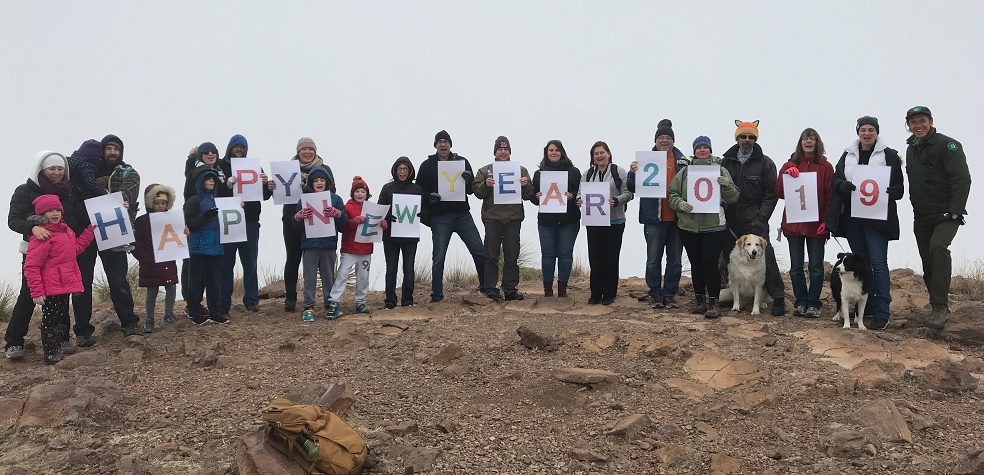
2019 First Day Hike at Davis Mountains State Park
This is Passport to Texas
If one of your resolutions is to sit less and move more in the New Year, may I suggest a First Day Hike to start things right.
First Day Hikes is a nationwide initiative that Texas State Parks has been participating in for the last several years.
Thomas Wilhelm is with state parks. He says many Texas state parks host First Day Hike Events. First day hikes have become a positive way for Texans to begin the New Year on the right foot…and left foot.
Essentially, it’s the concept of getting outside on January first, and doing something to kick the year off right. So, almost all of our parks have some sort of first day hike. A few of our parks take it a unique way. But many of our parks do have those first day hikes. And they’re, of course, guided hikes with a park ranger. And it’s just a way to start the year off right on the good foot. Literally.
You don’t have to go on a guided hike …or hike at all. How about a first day sunset stroll, or bike ride or paddle on a paddling trail or a first day birding outing? Make the first day of January the start of your best year.
Find a First Day Hike near you at texasstateparks.org. While you’re there check out other opportunities like Dutch oven cooking, stargazing, hikes with shelter dogs and more.
From everyone at Texas Parks and Wildlife and Passport to Texas—we wish you a Happy New Year!
And remember: Life’s Better Outside. I’m Cecilia Nasti.
Posted in First Day Hikes, Hiking | Comments Off on Start the New Year with a First Day Hike
December 26th, 2019
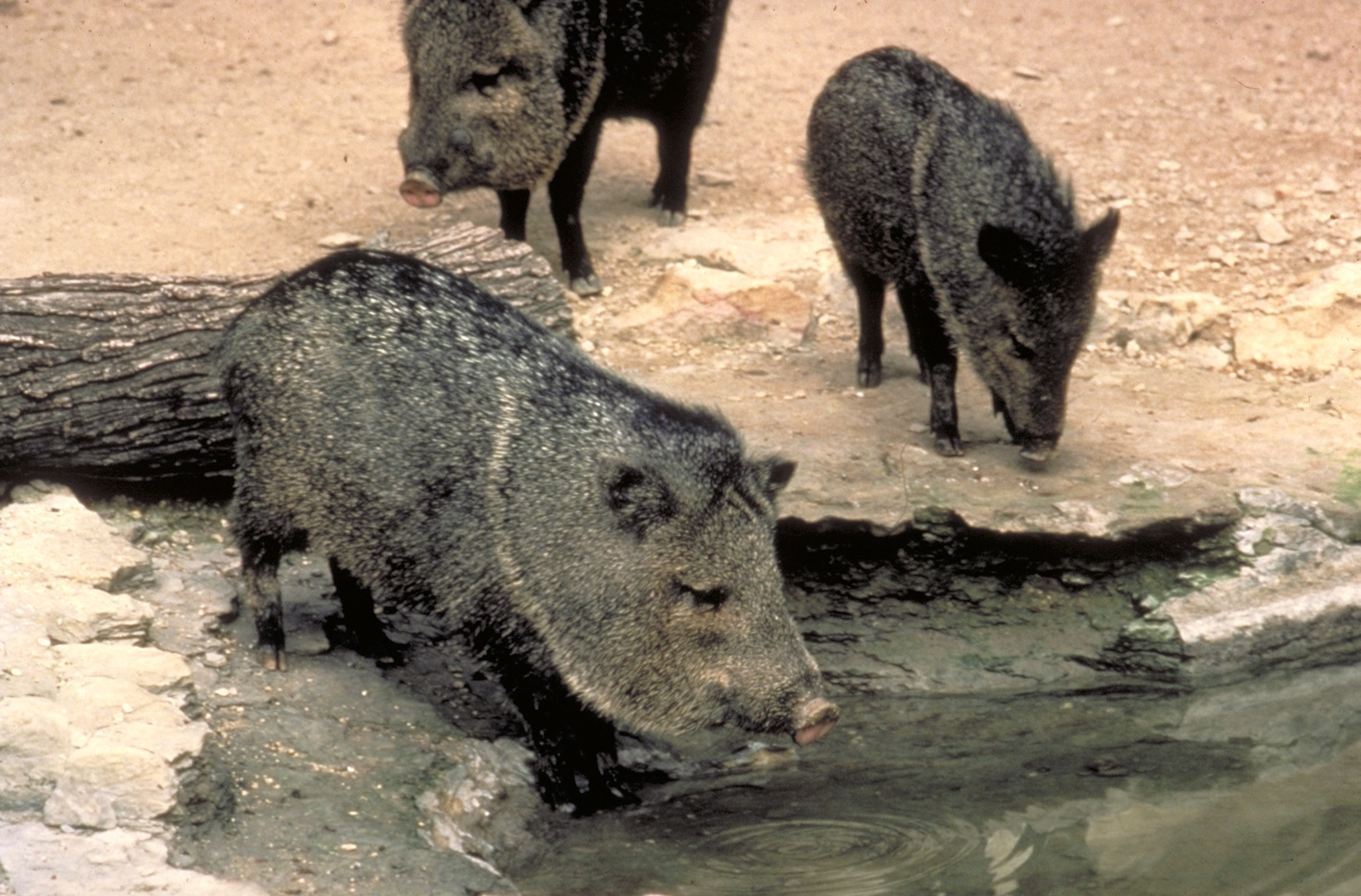
Javelina Happy Hour
This is Passport to Texas
Javelina, also called Collared Peccary, is a Texas native and lives in scrubby and arid regions of the state. Similar to hogs in appearance, they are not related. But mistaken identity doesn’t change their value in the ecosystem.
Javelina play a great role in nature, because they are an additional prey species for some of the predators out there.
Texas Parks and Wildlife biologist Froylan Hernandez explains why it’s important to keep track of the Javelina population.
Having Javelina out on the landscape is a sign of a healthy ecosystem. When you see declining populations that could also be a sign of declining habitat or degrading habitat and so they play an important role not just as a prey species but also an indicator of a good healthy system.
While Javelina act as an important indicator species, Froylan believes Javelina don’t always get the respect they deserve.
I like to call them the forgotten species, because they are seen often times as a pest or a nuisance species. You know they deserve the same type of respect as lets say a big whitetail would or a big mule deer.
Javelina have gained a stable population in Texas. Perhaps they’ll gain a little more respect as well.
The Wildlife Restoration program supports our series and funds Javelina research in Texas
For Texas Parks and Wildlife…I’m Cecilia Nasti.
Posted in Habitat, Hunting, Research, Wildlife and Sport Fish Restoration Program | Comments Off on Forgotten Species: Javelina
December 25th, 2019
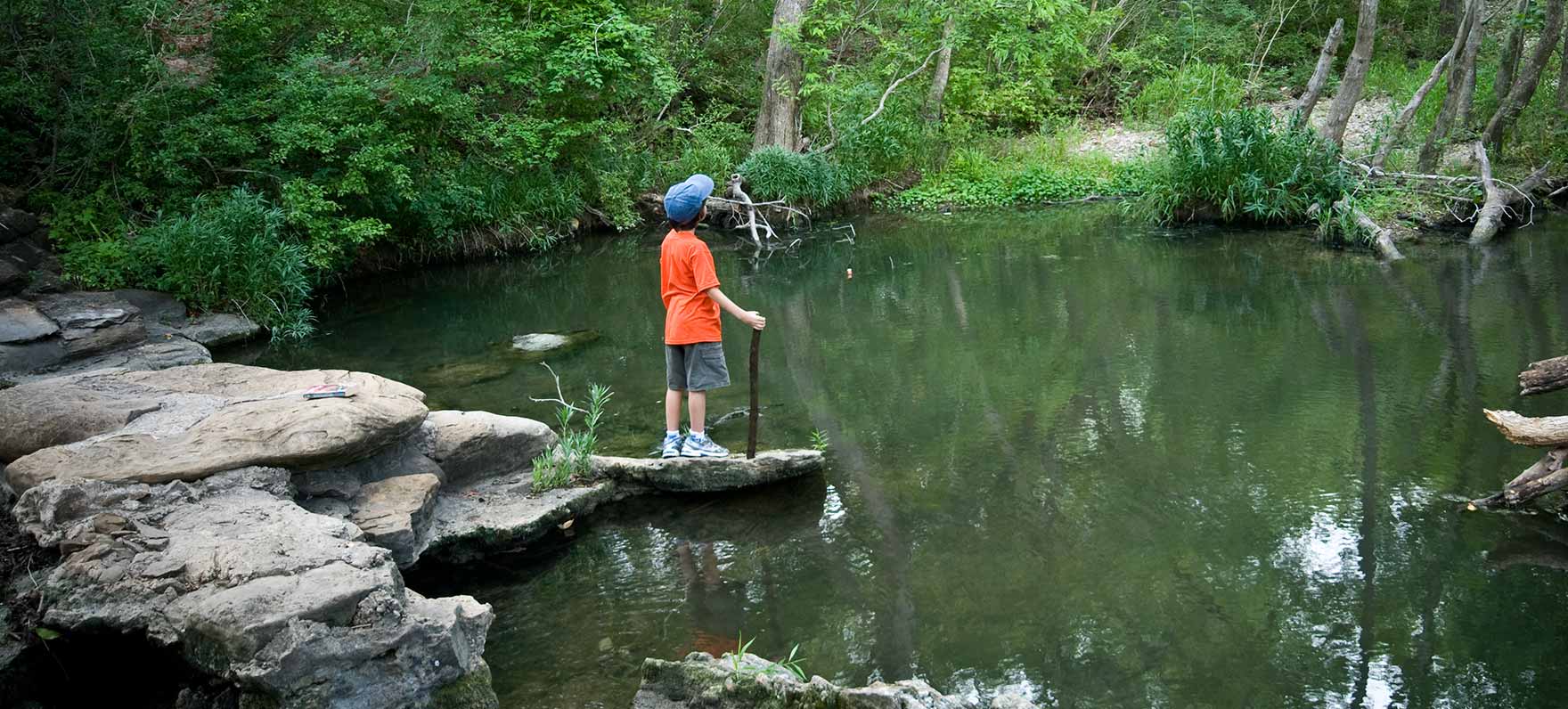
A moment of meditation at Lockhart State Park
This is Passport to Texas
An inspired Park Ranger at Lockhart State Park is introducing visitors to a Japanese practice called Shinrin yoku, or forest bathing.
Forest bathing is bathing in the forest atmosphere.
Lauren Hartwick first offered the program this past February.
So, we’re going to be soaking in the leaves and the trees and the sunshine and doing activities centered on your five senses. We’ll explore the sights of the forest the touches and smells of the forest and, at each of the stops, we’re going to have an activity to get us in tune deeper with the woods around us.
At each stop, a few minutes of guided meditation is followed by observation and quiet reflection without the noise, glare and distractions of modern life.
More and more research comes out every day that there are tons of benefits to spending time in nature. That forest bathing can reduce your blood pressure, lower stress, lift depression, etcetera, etcetera, etcetera
The practice has been gaining popularity around the world since the 1980’s.
I’m hoping that it continues to catch on and people start really becoming aware of all of the health benefits. People need nature to be happy and you can be your best self by spending some time regularly in nature.
Go to our website and check the calendar for this and dozens of interesting programs at state parks near you.
For Texas Parks and Wildlife, I’m Cecilia Nasti.
Posted in Birding, Botany, Habitat, State Parks | Comments Off on Forest Bathing
December 24th, 2019
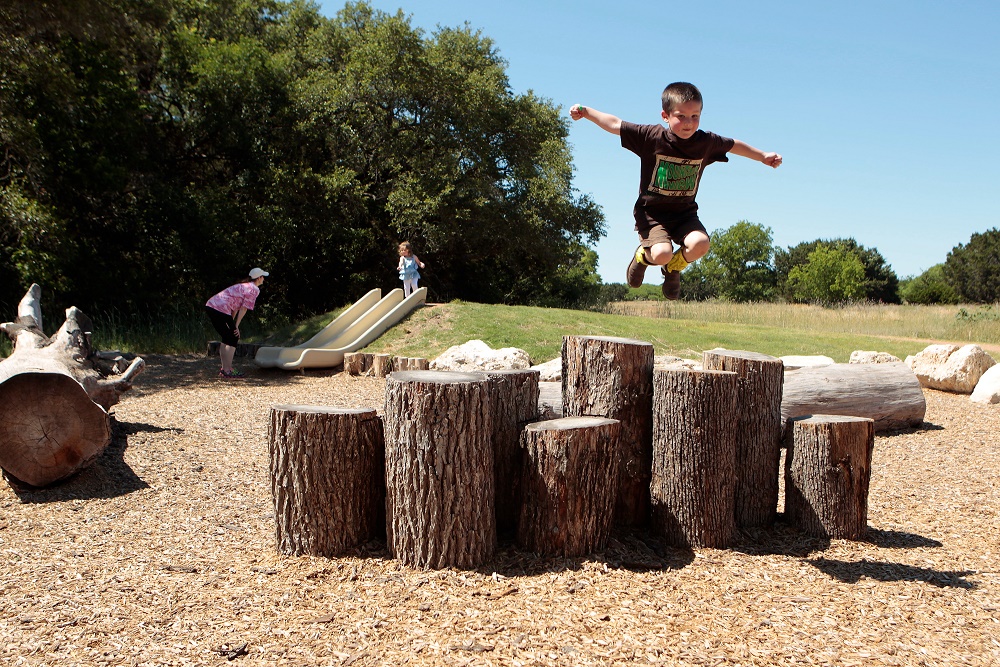
Nature’s Playscape
This is Passport to Texas
Thoughtful design plays a key role in meeting the conservation goals of Texas Parks and Wildlife.
We are an agency that says: “Life’s better outside.” So, how does that translate into how we make buildings and sites.
Christy Seals is an Architect with Texas Parks and wildlife
Building less, building simpler, this idea of a building as “shelter” instead of a hermetically sealed envelope … I had a professor at school that talked about climate control in a building as: “Well, you should start first by putting on your jumper” … and, then go to condition systems.
Park structures must also be long-lasting, robust and low maintenance.
I would say, sustainability and resiliency is really at the core of how we need to be thinking about our facilities. It starts with these passive solutions. What is the building made of? Is it sited appropriately? Do we use the wind and sun and rain to our advantage?
There’s also an opportunity to educate.
We also, I think, have a duty to interpret these things that we do for sustainability or resiliency so that we are showing the visitors something that they might do in their own lives or something we are doing for a reason of energy conservation.
Astute choices can conserve resources, reduce utility costs and create more resilient facilities.
For Texas Parks and Wildlife…I’m Cecilia Nasti.
Posted in Habitat, State Parks | Comments Off on Designing with Nature in Mind
December 19th, 2019
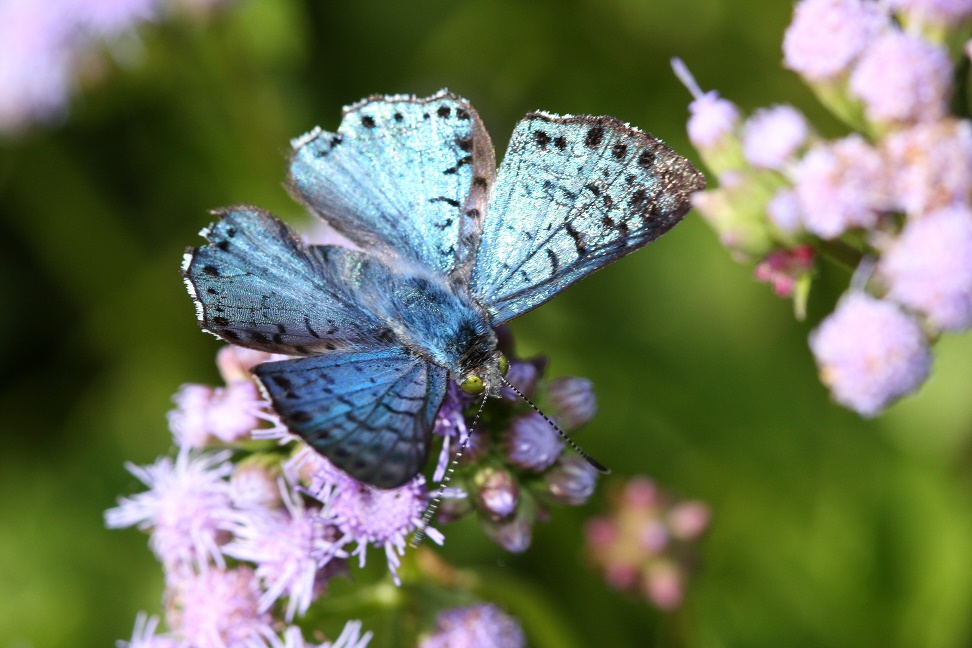
Blue Metalmark: This beautiful blue butterfly is often spotted in the butterfly garden at Resaca de la Palma State Park, and is one of the butterflies that makes the site unique.
This is Passport to Texas
Butterflies…. They flit. They flutter. And, Resaca de la Palma State Park is one of the best places to witness their flight.
The Rio Grande valley is one of the most ecologically diverse places in the world.
Kelly Ann Cummins is a Park Ranger Interpreter at Resaca de la Palma State Park.
She says, we’re fortunate as that level of diversity is what attracts and provides habitat for a lot of our interesting animals both insects, butterflies and wildlife.
Kelly says the park will see about 150 butterfly species during the year. A total of 300 are either residential or will migrate through the Rio Grande valley annually.
Coming here is a spoil of riches. Like some of the rarest butterfly types in north America you see them in parking lots, you see them in city parks, you see them in this park. A great way for folks to learn more, to be more engaged with what they are seeing is to come to a program.
The best time to go on a butterfly walk, says Kelly, is generally the afternoon. The later in the afternoon, the better. It’s a mellow activity and gives visitors the chance to focus and enjoy the beauty of being surrounded by maybe a couple thousand butterflies. But, it’s an opportunity to check in with the natural world and bet to enjoy the riches from the Rio Grande valley.
For more information, go to our website and search: Resaca de la Palma State Park.
For Texas Parks and Wildlife…I’m Cecilia Nasti.
Posted in Habitat | Comments Off on Butterfly Walks in the Rio Grande Valley


 Passport to Texas is a
  Passport to Texas is made available by: