Wildlife/Hunting: Why We Don’t Eat Road Kill

November 15th, 2012
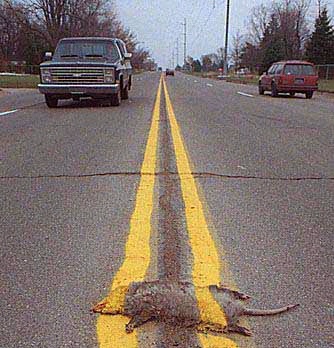
Roadkill image from, www.wildthingsblog.blogspot.com

www.wildthingsblog.blogspot.com


This is Passport to Texas

You may have heard about the flap that transpired after a Fort Worth reporter ran a story about a Pflugerville man who blogged about cooking and eating a white wing dove that died after flying into the side of his home.

04— This is highly unusual. This is not something I do…ever, actually.

Food blogger, Ryan Adams, did this time; it was dove season, and he says he doesn’t waste food. Parks and wildlife learned of Adams’ dove dinner via the reporter…and when the story went viral, Adams contacted the agency to make things right, and that’s when officials told him he’d broken the law.

06 – The subject was educated and it was over for everybody except the people who decided to make something out of nothing.

There was no investigation and no citation. Officer Scott Vaca, Assistant Chief of Wildlife Enforcement says to only harvest game in season by legal means and methods. In addition to being illegal, possessing and eating road kill or other “found” game is potentially unsafe.

22 – Road kill animals could have been there for awhile and may not be edible. They could be badly bruised by the impact of being hit by a vehicle. Also, found animals that may have run into a building or window – that’s not typical behavior for that animal. So, there could be some health issue for the animals, to being with, that would make it unsafe to consume.

Luckily Ryan’s dove was disease free and delicious.

For Texas Parks and Wildlife…I’m Cecilia Nasti.
Wildlife/Hunting: Rules of the Road (Kill)

November 14th, 2012

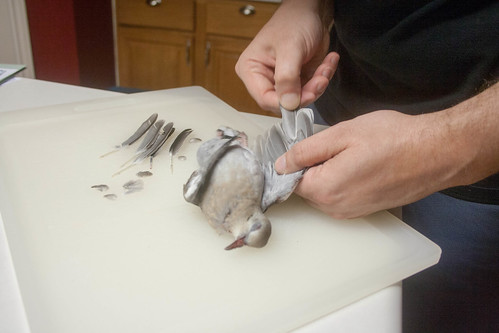
Ryan Adams Plucking Dove, from www.nosetotailathome.com

Ryan Adams Plucking Dove, from www.nosetotailathome.com


This is Passport to Texas

Ryan Adams was watching television with his wife when a white winged dove crashed into the side of their Pflugerville home and died. It was dove season, which made him think of his hunter friends in the field.

16— These people are going to go out, spend time, spend money and shoot doves. I just had one given to me; I was going to use it. So, I took it inside, plucked all the feathers, cleaned it, took care of all the innards, and then the next day I cooked it and ate it.

What Ryan, who is a food blogger, didn’t know was while his found feast was delicious and free, it was not legal.

09 – In order for game animals and game birds to be legally possessed, they need to be harvested during seasons, and with lawful means and methods appropriate for that game animal or game bird.

Officer Scott Vaca, Assistant Chief of Wildlife Enforcement says the side of a house does not constitute lawful means or methods. A reporter in Fort Worth saw Ryan’s blog, contacted TPW, and then wrote a story erroneously claiming Ryan was under investigation. It went viral, and the agency received heated criticism from the public.

24 – As soon as I found out I may have broken the law, there was no question: I contacted the department. I was just like, what do I need to do to set things right? Every single person has been beyond kind. It’s disheartening for me to see people who have done nothing wrong being demonized this way. Are there reasons to be upset about lots of things? Yes, but this is not one of them.

Tomorrow: why we don’t eat road kill…or house kill.

For Texas Parks and Wildlife…I’m Cecilia Nasti.

TPW TV: Women’s Goose Hunt

November 13th, 2012

Women's Goose Hunt

Women’s Goose Hunt


Passport to Texas with Support from the Wildlife and Sport Fish Restoration Program

Call it a sign of the times: hunting opportunities for women are on the rise. And Texas Parks and Wildlife TV producer, Abe Moore joined some women on a wild goose hunt.

60— We followed along some ladies on a goose hunt down by Bay City. It was a chance for more and more ladies to get interested in the sport of hunting. So, as part of our story, we like to find some interesting people – and we did. We found a couple of ladies – two Laurens, as a matter of fact. One, she’s a newcomer to the sport.

The big excitement is when you see that huge flock [Wow, look at that.] and there’s hundreds of them. [Y’all get ready.]

And the other, she’s into hunting big time; Lauren LaBorde is her name. And she does skeet shooting. She’s a hard core hunter. She likes to go out on this hunt as a way to escape the nine-to-five grind she has going on back in Houston.

We shot twenty birds today [Yeah?] pretty good for some ladies, here.

Normally the hunt ends at ten in the morning, eleven. And these ladies stayed past noon. I’m looking at the clock going: ‘Okay, I’ve got enough here. We can go home now – it’s windy. Cold.’ So, yeah, they did great. This show airs on Texas Parks and Wildlife Television the week of November 11-17.

Thanks, Abe.

The Wildlife and Sport Fish Restoration Program supports our series and is funded by your purchase of fishing and hunting equipment and motorboat fuel.

For Texas Parks and Wildlife…I’m Cecilia Nasti.

State Parks: Champion Trees

November 12th, 2012

Old Baldy, from www.austin.ynn.com website

Old Baldy, from www.austin.ynn.com website


This is Passport to Texas

Not all champions cross the finish line first. In state parks we have champion trees that earned their honors for simply existing. Our State park Guide Bryan Frasier explains.

69— By champion trees, we mean the biggest or the oldest or something that’s historically noted about these trees. And one that’s probably the least known, is the second oldest sycamore tree in Texas, which is inside Palmetto State park. I saw it for the first time the other day — could not believe my eyes. In fact, I thought it was a live oak, until I backed up and looked up and saw the leaves on it. It was amazing! And then there’s Old Baldy, which is inside McKinney Falls State Park, right in the city limits of Austin. And it’s a big bald cypress tree; the largest bald cypress tree on public land in the state of Texas. It’s a hundred and three feet tall and the circumference is sixteen feet on this tree, and it’s 500 years old — and it was named Austin’s tree of the year. And then, of course, we can’t not mention the Big Tree at Goose Island State Park. It’s the oldest coastal live oak in the United States at more than a thousand years old. In state parks, we take special care to make sure these champion trees are looked after and that they’re around for generations to see and enjoy in the future.

Thanks, Bryan.

That’s our show for today…with funding provided by Chevrolet, supporting outdoor recreation in Texas; because there’s life to be done.

For Texas Parks and Wildlife…I’m Cecilia Nasti.

Habitat: Master Naturalist Program

November 9th, 2012

Master Naturalist Group

Master Naturalist Group


Passport to Texas with Support from the Wildlife and Sport Fish Restoration Program

Protecting Texas’ natural resources requires effort from all Texans.

09 – Well, as a state agency, we are constrained by our budget, and so we can’t possibly put as many eyes in the sky and boots on the ground as we need.

Urban biologist, Kelley Bender, encourages folks to learn about and share the conservation message by becoming a Master Naturalist.

22 – The Texas Master Naturalist Program is a really exciting way for people to get involved in nature and wildlife in the state of Texas. There’s a nine-week course that’s provided by professionals in the field, where they get training that includes classroom training as well as field trips. And then we ask for a commitment back to provide 40 hours of volunteer service a year.

Master Naturalist training prepares people to become leaders in community-based conservation efforts.

19 – Most chapters offer a get-to-know you class where they introduce all the topics that are going to be discussed. They also talk about what the commitment is and what will be expected of the students as well as what will be expected of the program. And all people are welcome and invited to join. We ask that people be 18 years and over.

Find a local Master naturalist chapter near you on the Texas Parks and Wildlife website.

The Wildlife and Sport Fish Restoration Program supports our series and funds diverse conservations project throughout Texas…for Texas parks and Wildlife I’m Cecilia Nasti.