TPW Magazine–After Hurricane Harvey

November 2nd, 2017
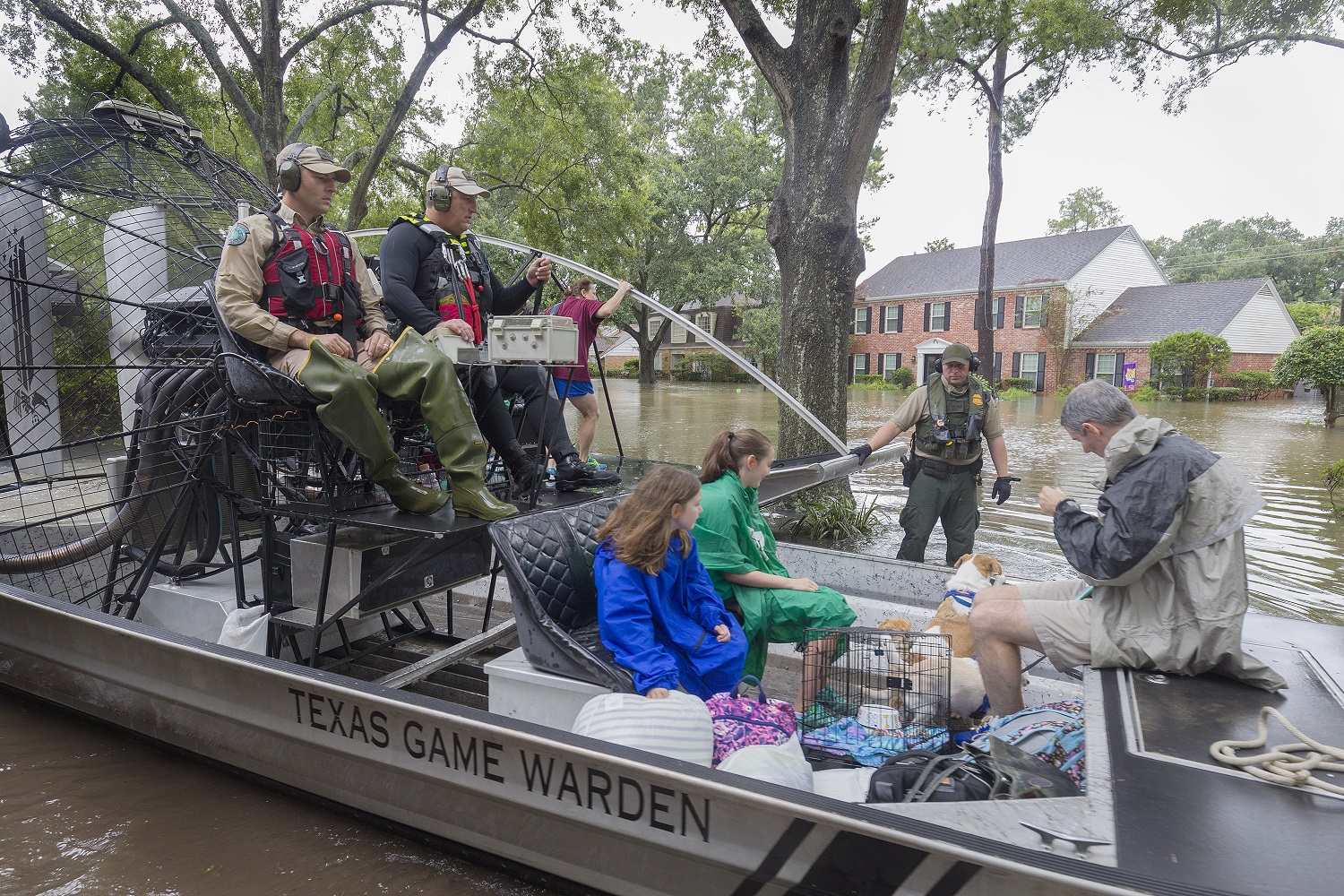
Game Wardens evacuating flood victims after Hurricane Harvey. Image by Earl Nottingham.

Game Wardens evacuating flood victims after Hurricane Harvey. Image by Earl Nottingham.

This is Passport to Texas

The November issue of Texas Parks and Wildlife magazine includes stories from Hurricane Harvey. But that wasn’t the original plan.

By the time we write about something, send it off to press, get it back—months can go by. So, we had to really fast-track this November issue, and decided to remove a couple of stories. We don’t have our usual travel feature or our wander list.

Editor, Louie Bond, says she wanted to tell the story of Harvey from the Texas Parks and Wildlife standpoint.

We decided to forego all of the stuff that people had been seeing over and over again and just tell our own story—and that’s what we did. So, we told the story from the perspective of game wardens and rescuers, from those who were being rescued. And the impact, of course, on state parks, wildlife management areas, and wildlife, itself.

Read about Game Warden Dustin Dockery, who spent days helping others, as his own home was consumed by floodwaters. Hear from Texas Parks and Wildlife Photographer Earl Nottingham, who also covered Hurricanes Ike and Katrina.

And I asked him what was different about Harvey. And he said he believed that the Texas spirit had never been more present. People would see the logo on his truck, and they would pull up with boats in the back of their trucks and say: Where can we go? What can we do? As the crisis is happening. They didn’t waste a moment.

The November issue of Texas Parks and Wildlife magazine is on newsstands now.

Our show receives funding from Ram Trucks. Guts. Glory. Ram

For Texas Parks and Wildlife…I’m Cecilia Nasti.
A Weed Walk on the Wild Side at WOB

November 1st, 2017
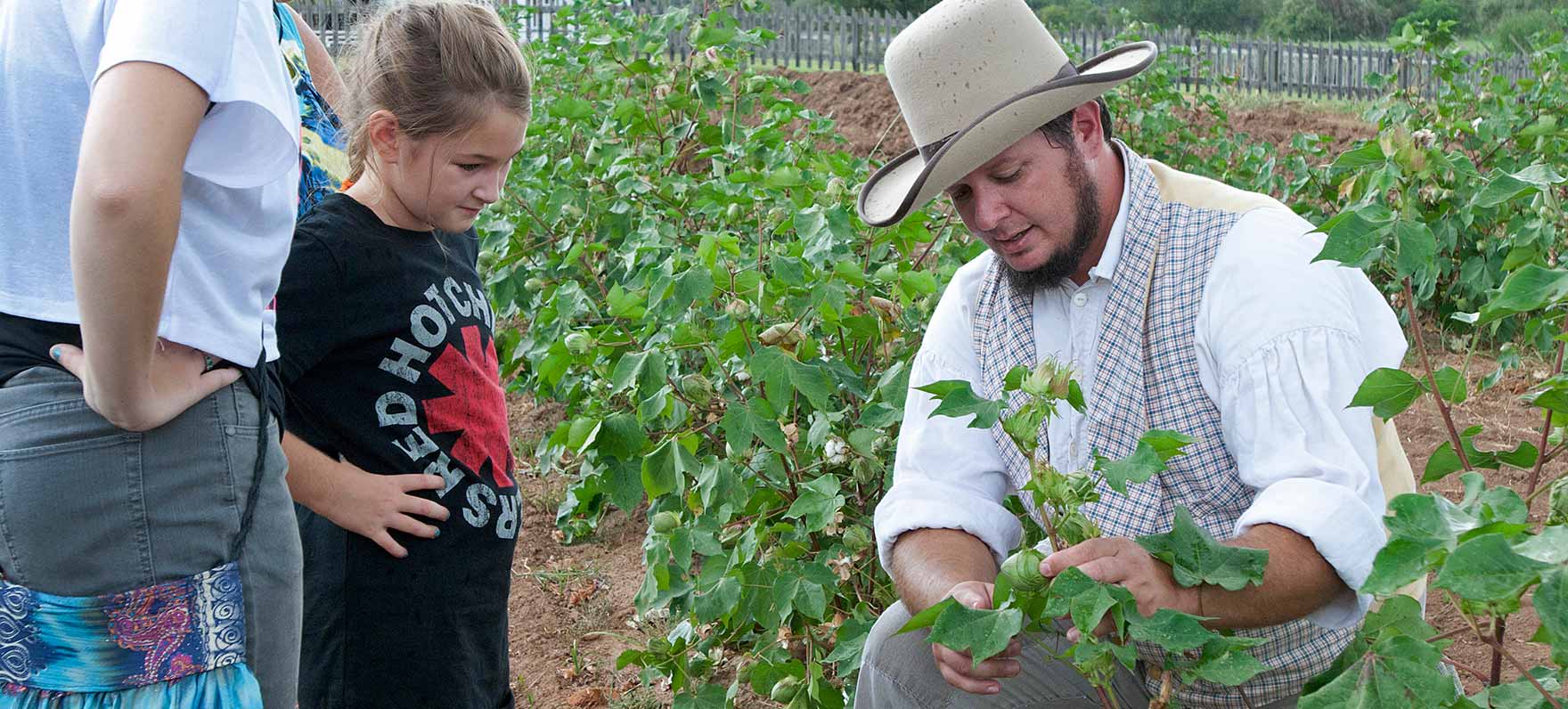
Park Interpreter at Barrington Living History Farm at Washington-on-the-Brazos.

Park Interpreter at Barrington Living History Farm at Washington-on-the-Brazos.

This is Passport to Texas

Try as she might, Perry Foskey’s efforts to grow a vegetable garden in her East Texas backyard failed.

The weeds did really well. And I just got to looking around [and wondered]: why am I fighting this? And I started doing
some research on the weeds and [discovered] they were actually edible.

Foskey–who works at Washington-on-the Brazos–Barrington Living History Farm–proposed a program for the historic site on identifying edible wild plants.

I thought it would be an excellent accent for the farm, itself. And visitors have liked that program, and it’s been a great success.

Dr. Mark “Merriwether” Vorderbruggen of Foraging Texas will facilitate two wild edible plant identification walks at the site on Saturday, November fourth.

Dr. Merriwether…he’s been foraging for a very, very long time. His parents even did it back in the depression; they subsidized their food source with foraging. He is one of the premier foragers in this area, and we’re so lucky to have him come out and teach these classes.

The plant ID walks with Merriwether are nine to noon, and one to four on November 4th. Interested? Give Perry Foskey a call.

And, we’ll be glad to put them on the list. We recommend the classes should be for 12 years of age and up. And the classes are absolutely free.

Find more information in the calendar section of the Texas Parks and Wildlife website.

For Texas Parks and Wildlife…I’m Cecilia Nasti.
Foraging for Food in the Wild

October 31st, 2017
Merriwether, from his Facebook page, https://www.facebook.com/ForagingTexas/

Mark “Merriwether” Vorderbruggen. Image is from his Facebook page: https://www.facebook.com/ForagingTexas/

This is Passport to Texas

By day, Mark Vorderbruggen is a chemist who works in research and development in Houston. By night he is Merriwether – plant forager extraordinaire.

Foraging is how we used to get food before HEB or Krogers or agriculture.

Foraging involves finding and harvesting food from the wild plants around you. Merriwether teaches people how to identify edible plants via his website Foraging Texas, and during workshops.

The running joke for years [was] that my classes were 50% hippies and 50% survivalists. In both cases, they were people that had some concerns about their food sources. It spread out from that into people who are just looking for new experiences, new flavors – looking for new ways to impress their friends.

Before you head outdoors to forage your next snack…

First thing you have to keep in mind is in the state of Texas, it is illegal to take plant material from a piece of property without the property owner’s permission. I will tell you right now: state parks, city parks – you will never get permission there. They don’t want people ripping up the plants.

Yet, state parks, Like Washington-on-the-Brazos, invite Merriwether to facilitate edible plant identification walks.

He has two coming up November 4th, find details in the calendar section of the Texas Parks and Wildlife website or on tomorrow’s show.

For Texas Parks and Wildlife, I’m Cecilia Nasti.

Circle the Birders and Start Counting

October 30th, 2017
Christmas Bird Count participants. Photo: Camilla Cerea/Audubon

Christmas Bird Count participants. Photo: Camilla Cerea/Audubon

This is Passport to Texas

The annual Christmas Bird Count, sponsored by the National Audubon Society, takes place any day between, and including, December 14th and January 5th.

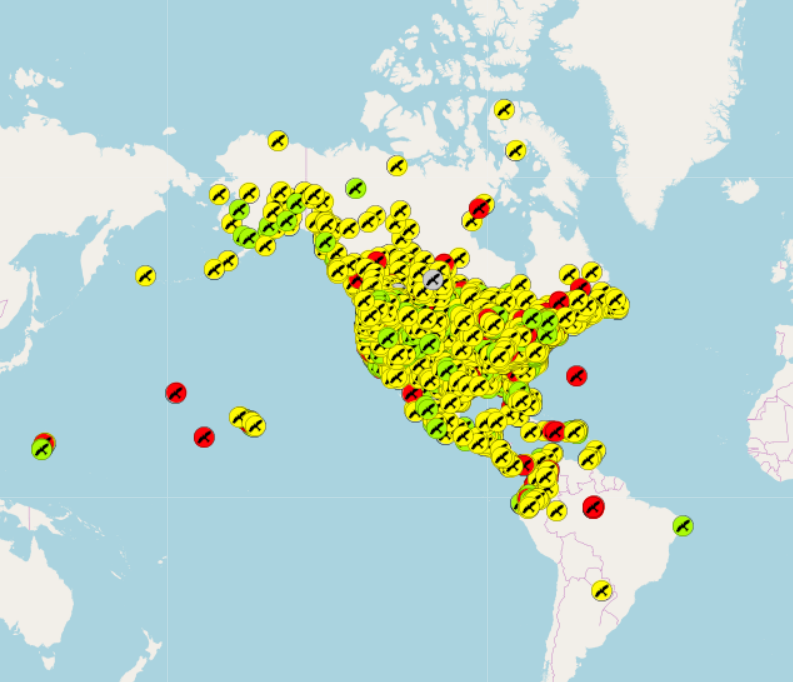
There are over a hundred count circles in Texas, and they have them on different days where people can move around and visit multiple Christmas counts during that Christmas count season.

Nongame ornithologist, Cliff Shackelford says many of the 15-mile diameter count circles are decades old.

Teams of birders go in that circle and they repeat that every year. And after decades, you have some really neat data to look at. You can see trends.

Bird count circles for 2017-18. Image from audubon.com.

Audubon.com counting circles.

You can see which ducks are maybe on the increase – or on the decline. You can [even] see certain species that we can irruptive species – like red breasted nuthatch and purple finch.

A compiler picks a day for participants to count birds within a specific circle over a 24-hour period.

We use that information to determine where hot spots are for certain species.

It’s easy to get involved. Just go to audubon.org.

Look for a Christmas Bird Count circle near you. And associated with that circle will be the compiler. Contact that person and say, ‘Hey. I’d like to contribute. I’d like to be partnered with a team that maybe has some experts.’ And that to me is the best way to learn birds: go out with experienced people. You will learn so much more than from a book.

The Wildlife Restoration program supports our series.

For Texas Parks and Wildlife, I’m Cecilia Nasti.

Christmas Bird Count: From Killing to Counting

October 27th, 2017
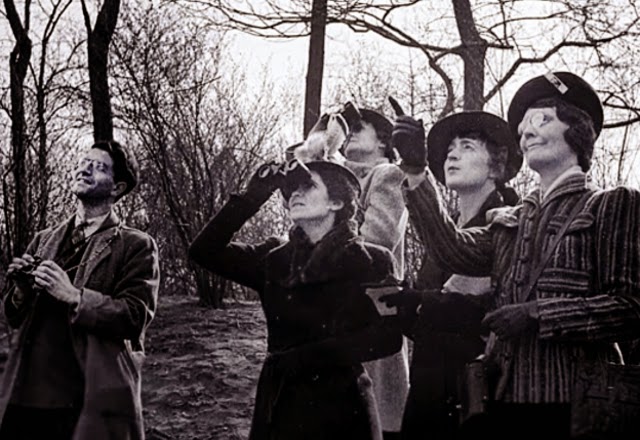
Christmas Bird Count -- the early years.

Christmas Bird Count — the early years.

This is Passport to Texas

No 19th Century American hunting family’s Christmas was complete without taking to forests and fields to binge kill birds and other woodland creatures, called the Christmas Side Hunt.

You competed against neighbors [to see] who had the biggest pile of birds.

Nongame ornithologist, Cliff Shackelford, says no feathered animal was off limits in this competition of carnage.

We’re not talking about things you eat. We’re talking about all birds. Even predators like owls and hawks. Songbirds. Just wasted.

It was the early days of conservation then, and scientists and bird lovers, alike, expressed their concern.

The bird people said: ‘This is not sustainable. Let’s try something different. Let’s get people out with binoculars, and count birds, and maybe compare numbers on a datasheet, instead of piles of dead birds.

Frank Chapman, an early ornithologist and officer of a new organization called the Audubon Society, proposed The Christmas Bird Census for a new century.

So that’s how the Christmas Bird Count came about 118 years ago.

There were 25 Christmas Bird Counts the first year, with 90 species tallied on all counts combined. It continues even now, and we tell you how to get involved next week.

The Wildlife Restoration program supports our series.

For Texas Parks and Wildlife, I’m Cecilia Nasti.