September 4th, 2014
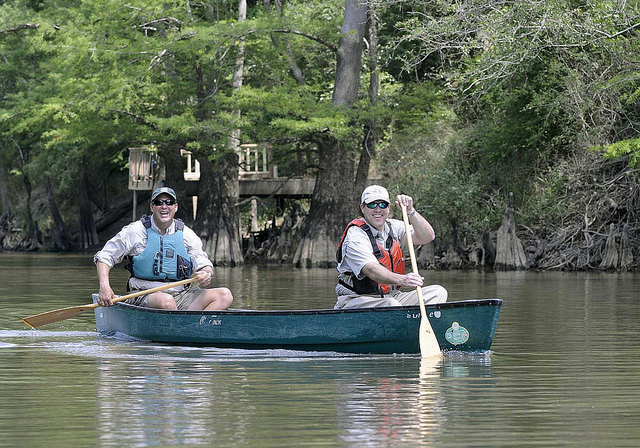
Paddling an East Texas Trail
This is Passport to Texas
Outdoor enthusiasts have access to more than 500 miles of paddling trails throughout Texas.
04— We want to grow our inventory of trails as large as the state will allow.
Toward that end, Ron Smith, of Inland Fisheries, says a new trail opens this week in East Texas.
06— It’s located right next to and through the Big Thicket down in Beaumont, Texas.
Smith says access to the trail is easy. And, while it’s suitable for novices, seasoned paddlers will enjoy it, too, as it offers variety.
10—The trail goes up through Cook’s Lake, and then it goes across the bayou back into Big Thicket; then it comes back out on Scatterman Lake, and then you come down the Neches River.
At which point you can head back to dry land at the take out point. And if you’re interested in paddling this new trail…
14—Well, they’re going to try and launch it with their Big Thicket rally on September the sixth, on a Saturday. And, from what I hear, they have already 100 boats signed up to do it. So, there’ll be a lot of paddlers out there that day.
Find information on all the paddling trails in Texas on the Texas Parks and Wildlife website.
Funding for our show is provided in part by Ram Trucks. Guts. Glory. Ram
For Texas Parks and Wildlife, I’m Cecilia Nasti.
Posted in Events, Kayaking | Comments Off on Recreation: New Paddling Trail
September 3rd, 2014
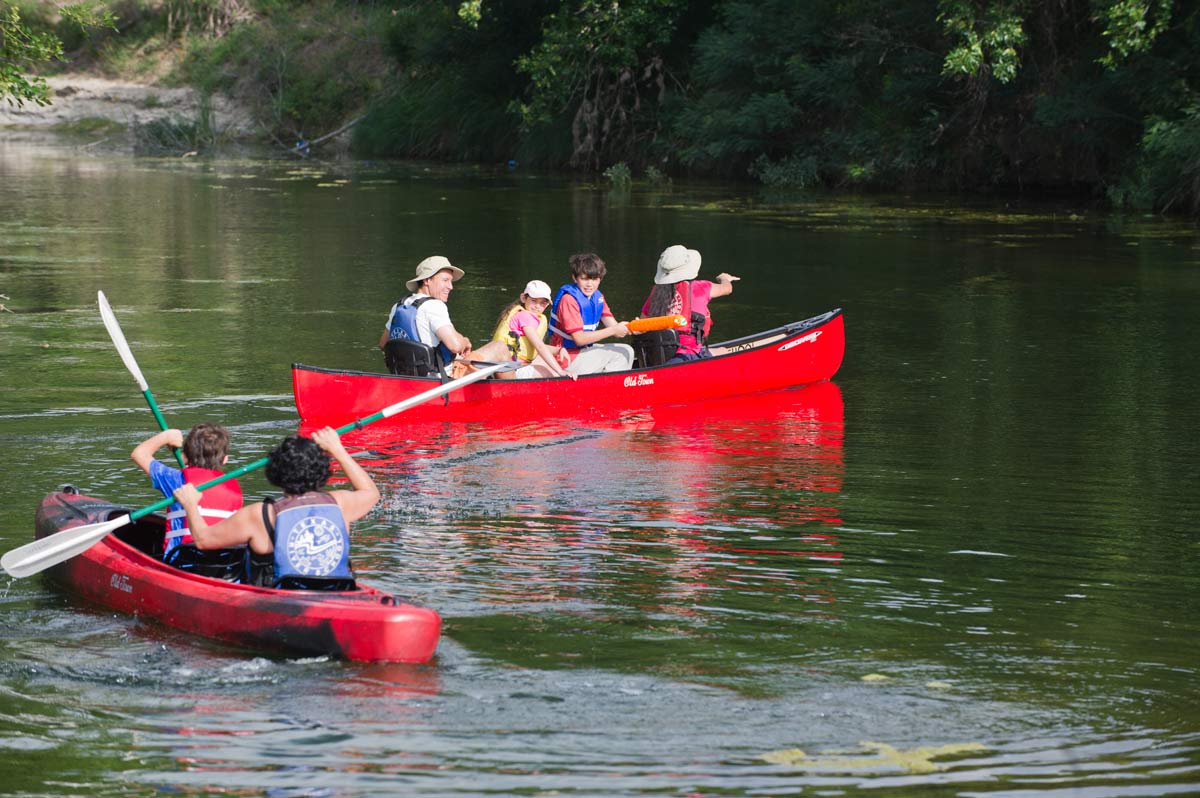
Family enjoying paddling on Texas paddling trail.
This is Passport to Texas
There’s nothing like being on the water, close to nature, in a kayak or canoe.
17— Our feeling is that if we can get people on the water, they will see what Texas is all about. Then they’ll start to get on board with the conservation, and the athleticism of paddling, and fall in love more with Texas and what we do here at Texas Parks and Wildlife.
Ron Smith, with Inland Fisheries, says Texas communities recognize the value of developing paddling opportunities with the Texas Paddling Trails Program. Trails benefit residents and visitors, but also the communities in which they exist.
21— We go back to the communities, and the communities report back to us, that there’s a stronger economic impact in their area because of the trails. They’re starting to see boats on top of cars going through town. People are cleaning up the waterways. [There are] just many, many indicators that the program is working.
Think your community could be the next great paddling destination? First, you need a community partner…
12— And organize it on a local level, and then submit an application to us. And that application is on our website; they can dill it out and submit it to us, and we’ll be happy to take a look at their trail.
A new trail opens this week in the Big Thicket…that’s tomorrow.
Funding for our show is provided in part by Ram Trucks. Guts. Glory. Ram
For Texas Parks and Wildlife, I’m Cecilia Nasti.
Posted in Boating, Kayaking, State Parks | Comments Off on Recreation: Texas Paddling Trails
September 2nd, 2014
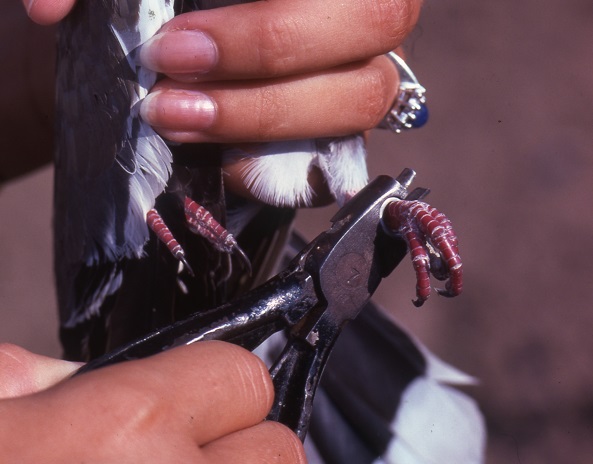
Banding a dove.
This is Passport to Texas
An important game bird in Texas, the mourning dove (although there are other dove species in Texas) is the subject of a nationwide banding program. By crimping tiny silver bands around their legs, biologists track the harvest rates of these birds.
08—We’ll also determine survival rates, where they go, when they get there, and when they leave. And all kinds of good information.
Jay Roberson… wildlife research supervisor at Parks and Wildlife…says the bands are small, but packed with information.
13—And it has the toll free number on it that people can call. And a nine digit number and the office location of the bird banding lab in Laurel Maryland.
Newer bands even have a website where hunters can report their findings. Roberson asks dove hunters to examine their harvest for leg bands. The information on the bands hunters supply is invaluable when managing the species.
19—All the work we put in on banding doves is for naught, if they’re not reported by hunters or people who find them. And, it’s very important that hunters check their birds that they bag – make sure that their birds are banded. If they are, we ask they report the number to the toll-free number: 1-800-327-BAND.
Find more information about reporting dove data when you visit the Texas Parks and Wildlife website.
Our show’s receives support from the Wildlife and Sport Fish Restoration Program, which provides funding for the Private Lands and Public Hunting Programs.
For Texas Parks and Wildlife…I’m Cecilia Nasti.
Posted in Hunting, Land/Water Plan, Research, SFWR | Comments Off on Research | Hunting: Reporting Banded Doves
September 1st, 2014
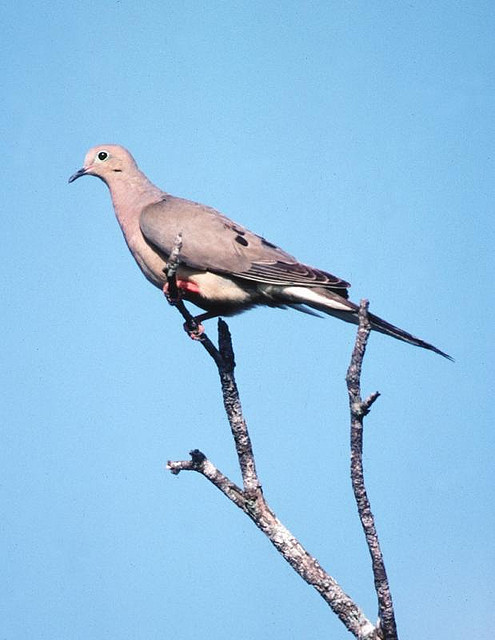
Mourning dove in Texas
This is Passport to Texas
Mourning doves are the focus of an ongoing, nationwide banding study.
17—We’re banding mourning doves to determine harvest rates or percent of fall population taken by hunters. We’ll also determine survival rates, and where they go, and when they get there and when they leave.
Jay Roberson, wildlife research supervisor, said returned bands also help estimate population size – which ties directly into the national harvest strategy. He invited me to observe as he banded doves.
07—And we’re going to go and take some birds out of the traps and see what we’ve got and put the right band on the correct leg.
The trapped bird flapped excitedly as we approached. Jay covered the cage with an old blanket to calm the animal. Taking it from its cage, he brought it to a picnic table for banding with a small silver ring that fit easily around the bird’s leg.
14—Those are the bands for the adults and the unknown age birds. Now I slip the open band in the pliers over the lower leg. And now I’m going to crimp that pliers down until it closes.
After Jay determined the animal’s age, he transcribed the number of the band, the date and location into a book, and then released the bird.
If you harvest a banded mourning dove, report it by calling the number on the band. The Wildlife and Sport Fish Restoration Program program supports our show and provides funding for the Private Lands and Public Hunting Program.
For Texas Parks and Wildlife…I’m Cecilia Nasti
Posted in Birding, Hunting, Land/Water Plan, Research, SFWR | Comments Off on Wildlife Research: Banding Mourning Doves
August 29th, 2014
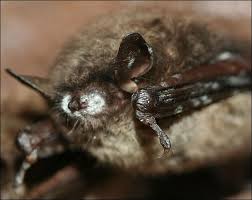
Bat with White Nose Syndrome, Image © Sweetbriar College. www.sbc.edu
This is Passport to Texas
If caving is one of your pastimes, here’s something you should know: a fungal disease called white nose syndrome has been is killing North American bats since 2006.
07—There are certain caves where bats hibernate where 90 to 100 percent of the bats that hibernate in that cave have died from the disease.
The fungus is also found in European caves though the bats there are essentially immune. This suggests the fungus may have evolved with their bats. Texas Parks and Wildlife mammalogist, Jonah Evans says researchers speculate people who visited European caves may have unwittingly brought fungal spores into North American caves on shoes or other gear. To prevent the spread of white nose fungal spores by humans…
10— Avoid entry into caves if at all possible, otherwise do a very stringent decontamination and be really careful about getting leaned
up when you leave a cave.
Find decontamination protocol at passporttotexas.org.
So why care? Bats are beneficial agricultural allies, eating tons of insects during their nightly flights, allowing farmers to reduce or eliminate insecticide use on food crops, and save money. They also serve as pollinators of important crops and are just fascinating animals.
The Wildlife and Sport Fish Restoration Program supports our series… and receives funds from your purchase of fishing and hunting equipment and motor boat fuel.
For Texas Parks and Wildlife, I’m Cecilia Nasti.
Posted in Education, SFWR, Wildlife | Comments Off on Wildlife: Prevention of White Nose Syndrome


 Passport to Texas is a
  Passport to Texas is made available by: